Denmark Imposes Annual Carbon Tax of 100 Euros per Animal
Methane from Livestock Accounts for 11% of Greenhouse Gases
New Zealand and EU Failures... Key Is Calming Farmer Protests
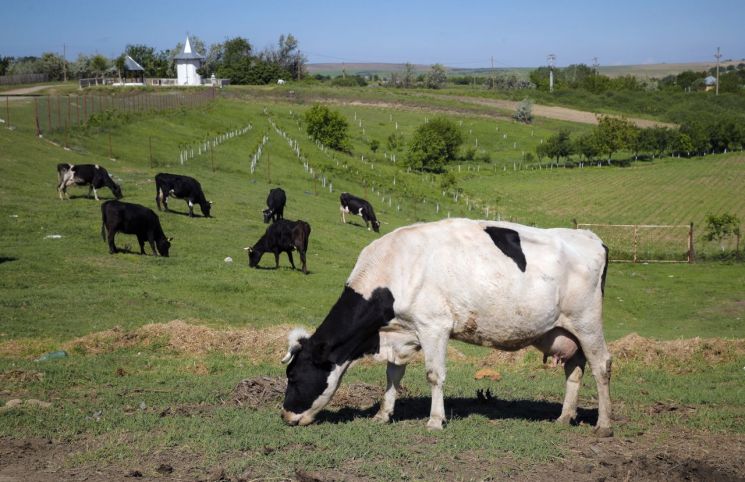
The Danish government has announced that it will impose the world's first carbon tax on livestock starting in 2030, sparking widespread controversy. Although several countries have considered such taxation, it was withdrawn due to strong opposition from farmers' groups. If Denmark becomes the first to implement a livestock carbon tax, legislative movements in various countries are expected to intensify amid concerns over global warming. However, Danish farmers, who adhere to traditional farming methods, are protesting, arguing that carbon regulations on agriculture that has not caused any environmental problems for over a thousand years are unjust.
"Livestock Carbon Tax Introduced from 2030... Main Culprit of Global Warming"

According to CNN, on the 25th (local time), the Danish government announced that it had successfully reached an agreement on the 'Green Denmark Agreement,' which includes the introduction of a livestock carbon tax, with all parties within the coalition government. Under this agreement, Denmark plans to impose an annual carbon tax of 100 euros (approximately 150,000 KRW) per head of livestock starting in 2030. The funds raised from the new tax will be used for eco-friendly projects such as forest and wetland creation.
The reason the Danish government is actively pursuing the introduction of a livestock carbon tax is that manure and carbon emissions generated during the livestock rearing and processing processes account for 30% of global carbon emissions. Methane gas emitted from livestock manure and flatulence alone accounts for more than 11% of greenhouse gases, and the Danish government believes it is essential to curb this.
Prime Minister Mette Frederiksen of Denmark congratulated the successful agreement, stating, "I hope the new tax will open the way locally and globally to create green initiatives." The Danish government also plans to minimize the burden on farmers by raising funds worth 40 billion kroner (approximately 5.2 trillion KRW) in the future to provide various tax deductions and investments.
In fact, the tax burden on farmers is expected to increase gradually each year. In the first year of implementation in 2030, with a 60% tax reduction and other deductions combined, the tax will be around 100 euros per cow, but it will be significantly increased to 240 euros starting in 2035, five years after the deductions end.
Danish Farmers' Groups "Bureaucratic Disaster and Insane Act"... Unified Opposition
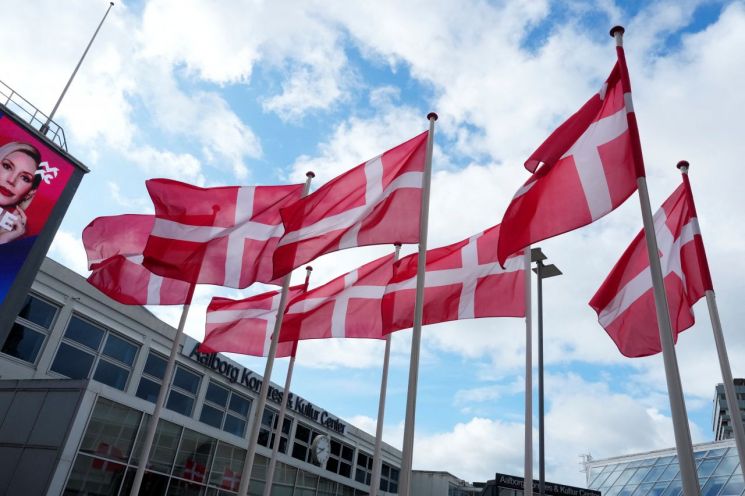
Farmers' groups are strongly opposing the Danish government's announcement of the livestock carbon tax. Peter Kiær, chairman of the Danish farmers' group Berediktigt Landbruk, stated in a press release, "This plan is excessively bureaucratic, unnecessary, and insane," adding, "This measure will rather be a major obstacle to green investment in agriculture and is not considered a solution."
Christian Hundebøl, CEO of DLG Group, one of Europe's largest agricultural companies with 25,000 Danish farmers as members, also criticized, saying, "For Danish farmers to maintain competitiveness, this policy must align with European Union legislation," and "Denmark acting alone will not help climate, agriculture, or related industries."
The reason farmers are even more opposed is that Denmark, one of the world's largest dairy-producing countries, already has strong environmental regulations, with its farming methods introduced as eco-friendly practices worldwide. Imposing a carbon tax on top of this could severely undermine agricultural competitiveness. Denmark is known as an agricultural powerhouse exporting more than 70% of its dairy products, but the introduction of a carbon tax could significantly reduce the price competitiveness of dairy products.
New Zealand and EU Also Tried to Introduce but Failed... Managing Farmers' Opposition is Key
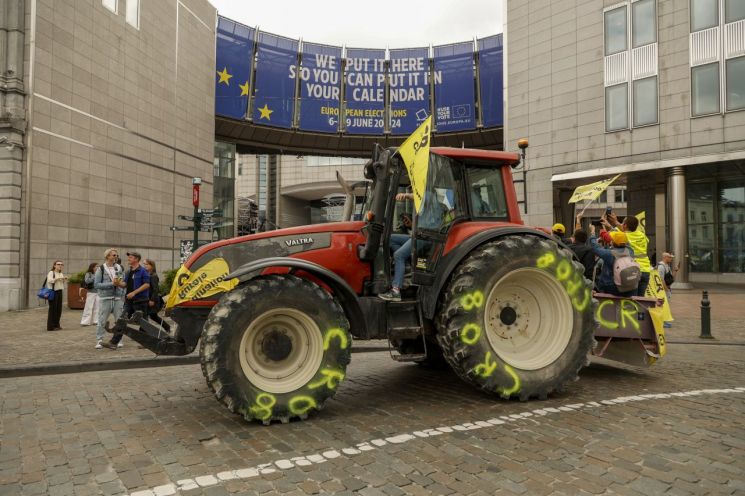 On the 4th (local time), farmers parked tractors in front of the European Parliament building in Brussels, Belgium, protesting against the carbon tax. [Image source=AP·Yonhap News]
The controversy over Denmark's livestock carbon tax has become a major concern across European countries. Earlier this month, the European Union (EU) attempted to announce the imposition of an agricultural carbon tax across the EU ahead of the European Parliament elections but was forced to abandon the plan due to fierce opposition from farmers.
Following the EU's announcement of new environmental regulations, including livestock carbon tax, fertilizer use reduction, and fallow land expansion, farmers from major European countries such as France, Germany, and Poland drove tractors to block the European Parliament and major highways, staging intense protests. Consequently, governments negotiated to appease the farmers, and the implementation of the agricultural carbon tax in the EU was indefinitely postponed.
Previously, countries like New Zealand and Ireland, which considered introducing a livestock carbon tax in 2022, also scrapped the proposals due to strong opposition from farmers. CNN reported that if the Danish government succeeds in actual implementation, governments in the EU and other countries are likely to revisit the consideration of imposing agricultural carbon taxes.
© The Asia Business Daily(www.asiae.co.kr). All rights reserved.



















