New Type of Tomb Confirmed at Gyeongju Jjoksaem Site
"Definition of Dolmen Tombs May Change"
A new type of tomb has been discovered at the Jjoksaem District site in Gyeongju, where tombs of the Silla royal family and aristocrats are concentrated. It is expected to provide important clues for understanding the funerary culture and tomb structures of the period.
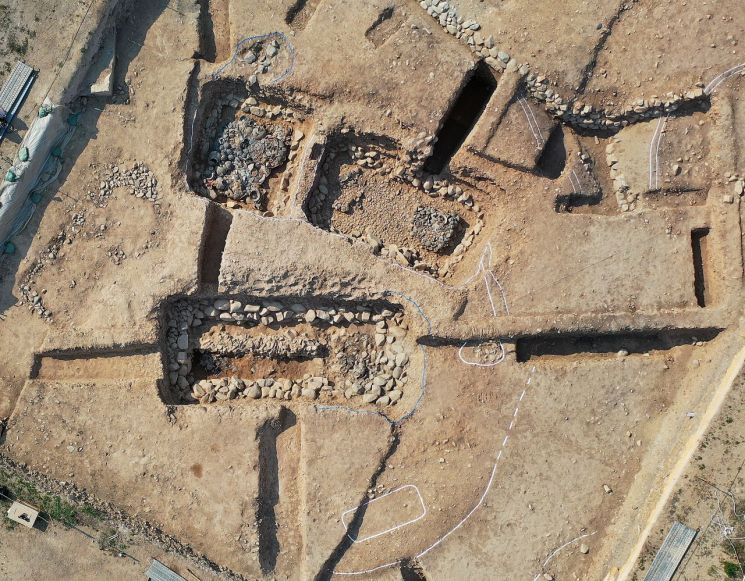
According to the National Gyeongju Cultural Heritage Research Institute on the 26th, the confirmed tombs are two stone-cist tombs without perimeter stones (護石, Hoseok). Stone-cist tombs are characterized by wooden coffins surrounded by stones and covered with earth. This is considered a unique tomb structure found within the Silla cultural sphere. Examples include Hwangnamdaechong, Cheonmachong, and Geumgwanchong.
The tombs were discovered in District J, one of fourteen districts within the Jjoksaem site. They were constructed side by side to the south and north. The former (J171) is a single-chamber type (單槨式) where the tomb owner and grave goods buried with the body were placed in one coffin, while the latter (J172) is a main-sub chamber type (主·副槨式) where these were separated.
Uniquely, both tombs lacked perimeter stones that typically mark the tomb area or protect the burial mound. Generally, stone-cist tombs consist of a coffin, stone mound, burial mound, and perimeter stones. The institute explained, “This is a tomb type confirmed for the first time in Korea.”
Perimeter stones are considered clues to past funerary culture and rituals, as pottery related to ancestral rites is often found nearby. The institute stated, “It is estimated to have been constructed around the same time as Hwangnamdaechong, but it lacks perimeter stones,” adding, “This is a significant discovery that could redefine the definition of Silla stone-cist tombs.”
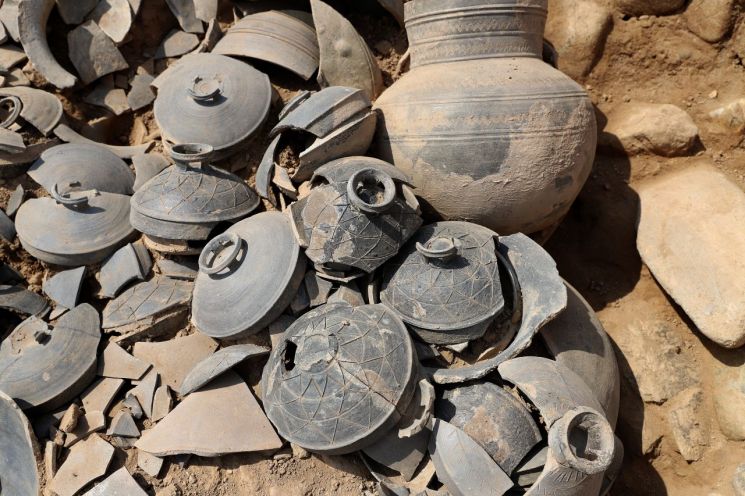
Various artifacts were also discovered within the tombs. Notably, in J172, a lid repeatedly carved with petal patterns and a three-holed footed plate were excavated. Based on their unique forms, it is presumed they were made in the outskirts or surrounding areas of the Silla royal capital.
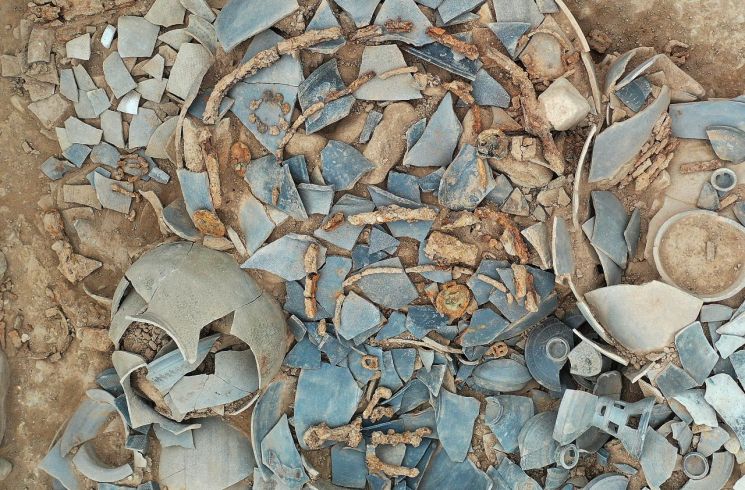
‘Malgat-chum’?a term referring to various horse equipment such as saddles, stirrups, belt pendants, and belt ornaments?was also found arranged as if placed atop a large jar. The most notable item is the belt pendant, a decoration hung from the horse’s belt. It featured a gilt-bronze ornament resembling a convex lens with an iron frame plated in silver. The institute explained, “This is a rare find with very few comparable cases,” and “It will provide important clues for research on horse equipment.”
The institute will reveal the results of the investigation and the excavated artifacts on the morning of the 27th. It is estimated that there are more than 1,300 tombs of Silla royalty and aristocrats at the Jjoksaem District site, which has been under investigation since 2007.
© The Asia Business Daily(www.asiae.co.kr). All rights reserved.



















