The Supreme Court has ruled that files recorded by police officers who entered a business pretending to be customers to crack down on prostitution establishments, as well as photos taken at the scene, can be used as evidence in criminal trials.
The Supreme Court holds that 'sting operations,' where investigative agencies use tricks or schemes to induce criminal intent in individuals who originally have no criminal intent in order to catch criminals, are illegal, and thus prosecutions based on such operations are invalid due to procedural violations of legal regulations. On the other hand, investigative methods that merely provide opportunities for crimes or facilitate crimes to individuals who originally have criminal intent are permitted, and in such cases, the evidentiary value of evidence collected by the police is also recognized.
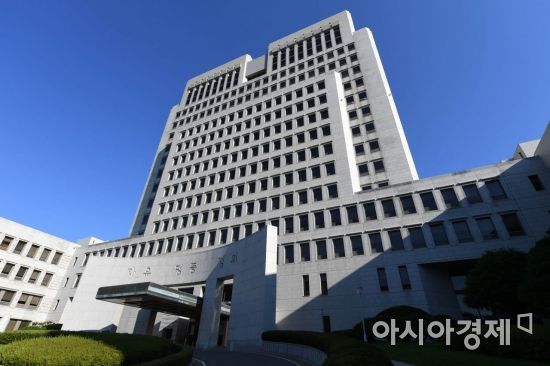
According to the legal community on the 26th, the Supreme Court's Third Division (Presiding Justice No Jeong-hee) overturned the lower court's ruling that acquitted Mr. A, who was indicted for violating the Act on the Punishment of Acts of Arranging Sexual Traffic (such as prostitution mediation), and remanded the case to the Uijeongbu District Court.
The court stated, "The lower court erred in not recognizing the evidentiary value of the recorded CD, the photos in this case, and the testimony of the female employee to the investigative agency, and in concluding that there was no proof of the crime, thereby acquitting the defendant. This misapplication of the law regarding the evidentiary value of recordings made by investigative agencies at the crime scene, seizure, search, and inspection at the arrest scene as stipulated in Article 216, Paragraph 1, Subparagraph 2 of the Criminal Procedure Act, and the suspect's right to refuse to testify and its notification, resulted in insufficient necessary examination and influenced the judgment, which is the reason for reversal and remand."
Mr. A operated a massage parlor in Goyang-si, Gyeonggi Province, and was caught and prosecuted for mediating prostitution by accepting 110,000 won from a male police officer disguised as a customer on May 17, 2018.
The police officer secretly recorded conversations with Mr. A and the employees and, after revealing the crackdown, took photos of contraceptives found inside the establishment and the facilities. The prosecution submitted the recorded CD and photos obtained in this way as evidence to the court.
In the trial, Mr. A claimed that he never mediated prostitution and that even if he did, the prosecution was invalid due to illegal sting operations.
The issue in the trial was whether the files recorded and photos taken by the police officer at the scene could be used as evidence.
The first-instance court recognized the evidentiary value of the evidence and sentenced Mr. A to a fine of 3 million won.
Regarding Mr. A's claim that he never mediated prostitution, the court cited Supreme Court precedents, stating, "The 'mediation of prostitution' defined in the Act on the Punishment of Acts of Arranging Sexual Traffic means standing between parties intending to engage in prostitution to mediate or facilitate it. For mediation to be established, it is not necessary that the parties actually engage in prostitution due to the mediation; it is sufficient that the mediator connects the intentions of the parties to the extent that prostitution can occur between them without further intervention by the mediator."
Furthermore, the court added, "The 'intentions of the parties intending to engage in prostitution' referred to above only need to be explicitly or implicitly expressed externally so that the person mediating prostitution can recognize them. If the mediator recognizes these externally expressed intentions and facilitates the parties to the extent that prostitution can occur through business operations, the crime of mediation under the Act on the Punishment of Acts of Arranging Sexual Traffic is established. The 'intentions of the parties intending to engage in prostitution' do not necessarily mean the parties' inner true intentions to actually engage in prostitution."
Regarding the claim of 'illegal sting operation,' the court, citing Supreme Court precedents, stated, "A sting operation refers to an investigative method where investigative agencies use tricks or schemes to induce a person who originally has no criminal intent to commit a crime to catch criminals. Therefore, if the person already has criminal intent and the investigative agency merely provides an opportunity to commit the crime or uses tricks or schemes to catch the criminal, it cannot be considered a sting operation."
The court concluded that the operation was not an illegal sting operation based on the following facts: the undercover police officer visited the establishment following a tip that illegal prostitution was taking place; the defendant was the owner of the establishment; the defendant did not refuse when the undercover officer expressed intent to purchase sex, agreed on the prostitution fee, and guided the female employee to a room; and there was no evidence that the undercover officer persistently demanded mediation by promising an irresistible reward or appealing to the defendant's sympathy or emotions.
However, the second-instance court reversed the decision. The appellate court overturned the first-instance ruling and acquitted Mr. A.
The appellate court ruled that the recordings made by the police officer without consent at the scene and photos taken without a warrant had no evidentiary value. It also judged that the female employee's testimony was not evidence because it concerned a crime involving the employee and the owner together, not a crime against a third party, and the right to refuse to testify was not notified in advance.
The appellate court stated, "Judging by the investigation process, the evidence recognized as guilty by the lower court was collected without due process or is secondary evidence added without breaking or diluting the causal relationship. Therefore, the lower court's ruling recognizing guilt based on this evidence is illegal."
However, the Supreme Court's judgment differed. The Supreme Court recognized the evidentiary value of the recordings and photos taken by the police officer.
Regarding the evidentiary value of the recordings, the court stated, "If an investigative agency lawfully investigates a crime using proper procedures and methods, and the crime is currently being committed or was committed immediately before, with the necessity and urgency of preserving evidence, and the conversation between the related parties and the investigative agency at the crime scene is recorded by generally accepted reasonable methods, the recording cannot be deemed illegal simply because it was made without a warrant."
It added, "Even if the conversation partners present at the scene, such as the perpetrators, did not recognize the recording, it is the same unless it falls under the case of recording 'unpublished conversations between others' prohibited by Article 3, Paragraph 1 of the Protection of Communications Secrets Act."
Regarding the photos taken by the police officer, the court stated, "The police officer arrested the defendant as a suspect at the scene and searched the prostitution establishment, taking photos related to the charge of prostitution mediation that caused the arrest. This falls under the exceptional cases where forced measures without a warrant are permitted under the Criminal Procedure Act."
Regarding the female employee's testimony, the court noted that since attempts at prostitution are not punishable, the employee is merely a witness. Therefore, even if the right to refuse to testify was not notified in advance, the testimony can be used as evidence of the owner's crime of prostitution mediation.
© The Asia Business Daily(www.asiae.co.kr). All rights reserved.

















