Cut Campbell, U.S. Deputy Secretary of State
"Providing What Is Needed for Response"
A senior U.S. State Department official drew a line against South Korea's renewed calls for its own nuclear armament amid North Korea and Russia's strengthening military cooperation, stating that the extended deterrence (nuclear umbrella) currently provided by the U.S. to South Korea is at an appropriate level.
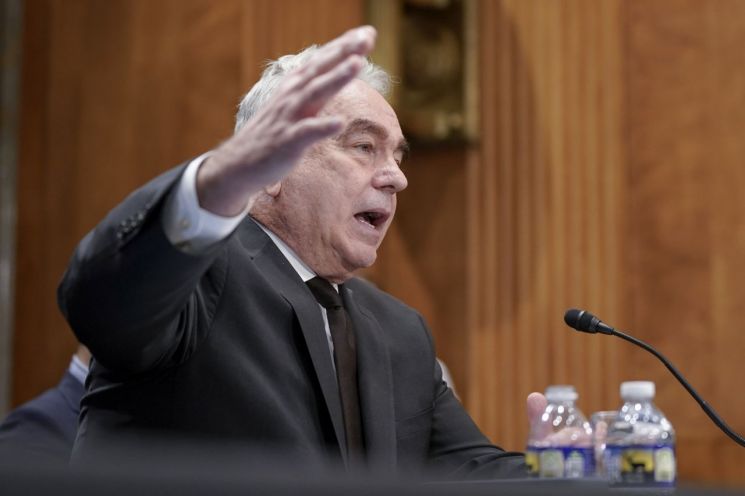
On the 24th (local time), Kurt Campbell, U.S. Deputy Secretary of State, said at an event hosted by the Council on Foreign Relations (CFR) in Washington D.C. that regarding whether additional measures beyond the Washington Declaration are needed to strengthen nuclear deterrence on the Korean Peninsula, he believes the Washington Declaration "provides what we need to respond now."
The Washington Declaration, announced by South Korea and the U.S. in April last year, is an agreement in which the U.S. strengthens its extended deterrence provision to South Korea in exchange for South Korea not pursuing its own nuclear armament. The agreement was reached amid rising North Korean nuclear threats and growing voices in South Korea advocating for its own nuclear weapons.
Deputy Secretary Campbell stated, "Since the Washington Declaration, I think South Korea has recognized the U.S. intention to clearly demonstrate that the U.S. stands with its allies and partners and that the nuclear umbrella in Northeast Asia is strong and enduring." He added, "However, I agree that the actions of Russia and North Korea are causing regional countries to reconsider all their military and other measures. We have witnessed significant increases in military spending and a changed focus in South Korea, Japan, and other parts of the Indo-Pacific. The U.S. is very focused on emphasizing the strength of its extended deterrence commitments to Northeast Asian countries, especially Japan and South Korea."
Earlier, Allison Hooker, former senior director for Asia at the White House National Security Council (NSC), diagnosed on the 21st that the deepening North Korea-Russia relationship is pushing South Korea toward its own nuclear armament.
Regarding the recent North Korea-Russia summit, Deputy Secretary Campbell said, "While there are limits to the North Korea-Russia partnership, we cannot ignore them," and responded that he is analyzing and concerned about the implications of the North Korea-Russia security treaty.
When asked whether he expects Russia to support North Korea's nuclear weapons development, he said, "I think discussions are ongoing about what North Korea will receive in return," adding, "It could be related to North Korea's nuclear and long-range missile development plans or other things like energy."
On a question about China's stance on North Korea-Russia cooperation, Deputy Secretary Campbell explained, "It would be fair to say that China is somewhat uneasy about what is happening between North Korea and Russia," adding, "China has hinted at this in some of our conversations, and we can see some tensions related to this." He further added, "Perhaps China is concerned that (North Korea-Russia cooperation) could encourage North Korea to engage in provocative actions that could trigger a crisis in Northeast Asia."
© The Asia Business Daily(www.asiae.co.kr). All rights reserved.
![Clutching a Stolen Dior Bag, Saying "I Hate Being Poor but Real"... The Grotesque Con of a "Human Knockoff" [Slate]](https://cwcontent.asiae.co.kr/asiaresize/183/2026021902243444107_1771435474.jpg)
















