Even if an acquaintance secretly takes the car keys and drives while the owner is asleep after drinking together, the Supreme Court has ruled that the vehicle owner must bear operator liability under the Automobile Damage Compensation Guarantee Act if it is difficult to conclude that the owner has completely lost control and benefit of operation of the vehicle.
According to the legal community on the 24th, the Supreme Court's Third Division (Presiding Justice Lee Heung-gu) overturned the lower court ruling that dismissed the claim and remanded the case to the Seoul Central District Court in the appeal trial of a damages claim lawsuit filed by Hyundai Marine & Fire Insurance Co., Ltd. against vehicle owner Mr. A.
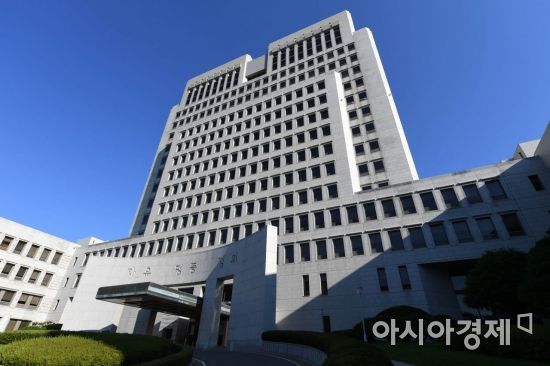
The court stated, "The lower court erred in dismissing the plaintiff's claim by judging that the defendant had completely lost control and benefit of operation of the vehicle at the time of the accident and was not in the position of an operator, thereby misapplying the legal principle under Article 3 of the Automobile Damage Compensation Guarantee Act concerning 'a person who operates a vehicle for themselves,' which affected the judgment," explaining the reason for overturning and remanding.
On the evening of October 23, 2019, Mr. A parked his car in front of the house of acquaintance Mr. B, whom he met through a gaming club, and they each drank about 2 to 3 bottles of soju at a nearby bar until dawn before returning to Mr. B's house and falling asleep.
However, around 10:15 a.m. the next day, while Mr. A was asleep, Mr. B secretly took Mr. A's car keys and, in a state of intoxication with a blood alcohol concentration of 0.122%?a level warranting license cancellation?drove Mr. A's car and caused an accident. At the time, Mr. B, intoxicated, drove against a one-way street and while reversing, struck the leg of Mr. C, who was walking behind, with the car bumper. As a result, Mr. C sustained injuries including a right ankle fracture requiring approximately 14 weeks of treatment.
Mr. C claimed insurance benefits under the uninsured motorist coverage from Hyundai Marine & Fire Insurance, which paid Mr. C 146.27 million KRW and then filed a subrogation lawsuit seeking damages equivalent to the paid insurance amount plus interest. Hyundai Marine sued vehicle owner Mr. A for operator liability under the Automobile Damage Compensation Guarantee Act and driver Mr. B for damages under general tort liability.
The first-instance court found both parties liable and ruled that Mr. A and Mr. B jointly pay Hyundai Marine the insurance amount of approximately 146 million KRW plus interest paid to Mr. C.
Only Mr. A appealed, and the appellate court's judgment differed from the first instance. The court stated, "It cannot be considered that Mr. A's negligence was so serious as to condone Mr. B's driving as described above, nor can it be evaluated that the defendant's control and benefit of operation over the vehicle remained at the time of the accident," thereby canceling the part of the first-instance judgment that accepted Hyundai Marine's claim against Mr. A and dismissing Hyundai Marine's claim.
The court cited reasons such as the fact that the two met 2 to 3 years prior through a gaming club and were not family or particularly close friends, that Mr. A, who likely fell into a deep sleep after drinking 2 to 3 bottles of soju, could not have anticipated Mr. B, who drank a similar amount, secretly taking his car keys and driving 6 to 7 hours later.
It was also considered that before the accident, Mr. B never asked Mr. A to drive the vehicle, and after the accident, Mr. A agreed to receive 12.3 million KRW from Mr. B with the understanding of not pursuing criminal charges, and did not immediately file complaints against Mr. B for theft or illegal use of the vehicle. The court judged that Mr. A's filing of a complaint 3 years and 6 months later was likely to resolve a large subrogation debt that differed from the agreement.
The key issue in this case was whether the vehicle owner can be held operator liability when an acquaintance drives the car without permission.
According to Supreme Court precedents, even if a third party drives a vehicle without permission and causes an accident, the owner must bear operator liability if it is difficult to conclude that the owner has completely lost control and benefit of operation.
The court judged, "Considering the circumstances leading to Mr. B's unauthorized driving, the duration of the unauthorized driving, especially the storage and management status of the vehicle and its keys, the driver's intention to return the vehicle, and the possibility of the owner's subsequent approval after the unauthorized driving, it is difficult to conclude that Mr. A had completely lost control and benefit of operation of the vehicle at the time of the accident."
The court cited that Mr. A and Mr. B were close enough to drink late into the night and sleep at Mr. B's house, that Mr. A's negligence allowed Mr. B to easily obtain the car keys, and that Mr. B only drove a relatively short distance near his home for a short time, indicating an intention to return the vehicle to Mr. A.
It also considered that Mr. A filed complaints against Mr. B for theft and illegal use of the vehicle only after a significant period following the incident.
The court stated, "If this accident had not occurred, it cannot be ruled out that Mr. A would have subsequently approved Mr. B's unauthorized use."
© The Asia Business Daily(www.asiae.co.kr). All rights reserved.
!["The Woman Who Threw Herself into the Water Clutching a Stolen Dior Bag"...A Grotesque Success Story That Shakes the Korean Psyche [Slate]](https://cwcontent.asiae.co.kr/asiaresize/183/2026021902243444107_1771435474.jpg)
















