As a change of government to the Labour Party is expected for the first time in 14 years in the UK general election this July, there are growing concerns that the economic situation, including rising unemployment rates, will hinder the next prime minister. Despite the recent trend of slowing inflation, the so-called 'Misery Index' is projected to rise steadily until the end of 2025 due to soaring unemployment rates.
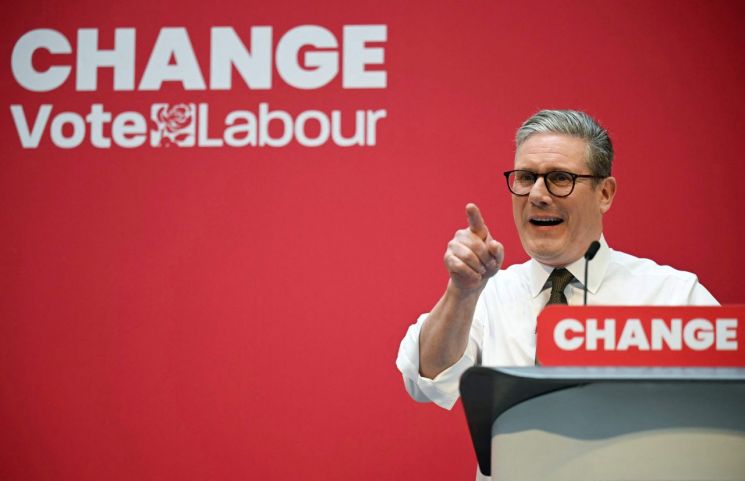 Keir Starmer, leader of the Labour Party and a strong candidate for the next Prime Minister
 [Photo by AFP]
According to Bloomberg on the 23rd (local time), an analysis of data from the UK Office for National Statistics and the Bank of England (BOE) forecasts that the 'Misery Index'?the sum of the unemployment rate and inflation rate?will rise to an average level of around 7.5 during the first 18 months after the new government takes office.
The Misery Index is primarily used to measure social instability from an economic perspective. Since the inauguration of current Prime Minister Rishi Sunak in October 2022, the average has been about 11, far exceeding the average during the previous Labour government under former Prime Minister Tony Blair, due to high inflation. However, recently, with inflation retreating to the 2% target level and real wages increasing, the index has recorded around 6.
Bloomberg reports that the Misery Index is expected to worsen again in the future, diagnosing that this time the cause will be unemployment rather than inflation. According to the BOE, the UK's unemployment rate is expected to rise from the current level of around 4% to 5.5% by the end of 2025. This would be the highest level since 2015. In particular, within the BOE, there are warnings that unemployment could rise even more than expected as companies, pressured by prolonged high interest rates, halt their hiring plans. Despite the monthly Consumer Price Index (CPI) hitting 2% for the first time in three years, the BOE last week kept interest rates steady at 5.25%.
Andrew Oswald, Professor of Economics and Behavioral Science at the University of Warwick, warned, "There is still strong underlying wage pressure, and to restore (labor market) balance, unemployment must rise," adding, "This will be much more painful than inflation." According to Oswald's past research, a 1 percentage point increase in unemployment has the same effect as a 2 percentage point rise in inflation.
Additionally, below-trend economic growth is also feared to put pressure on various indicators, including unemployment. The government's fiscal capacity is also insufficient. Hetal Mehta, Head of Economic Research at St. James's Place, pointed out, "Whoever the new government is, this will be a difficult message to manage," adding, "Without very intensive tax increases, we do not have the fiscal power to promote growth through large-scale public investment programs."
The Labour Party, which is expected to decisively defeat the ruling Conservative Party in the July 4 general election, has set 'economic growth' as its primary goal. Keir Starmer, the Labour Party leader and a leading candidate for the next prime minister, emphasized at a previous policy announcement, "During 14 years of Conservative rule, potential growth has been suppressed due to housing shortages, the cost of living crisis, and low wages," adding, "Our priority is wealth creation." He also clearly stated his intention not to increase the tax burden on workers individually, including income tax, value-added tax, and National Insurance rates. Bloomberg noted, "The next prime minister will face economic difficulties immediately after the election."
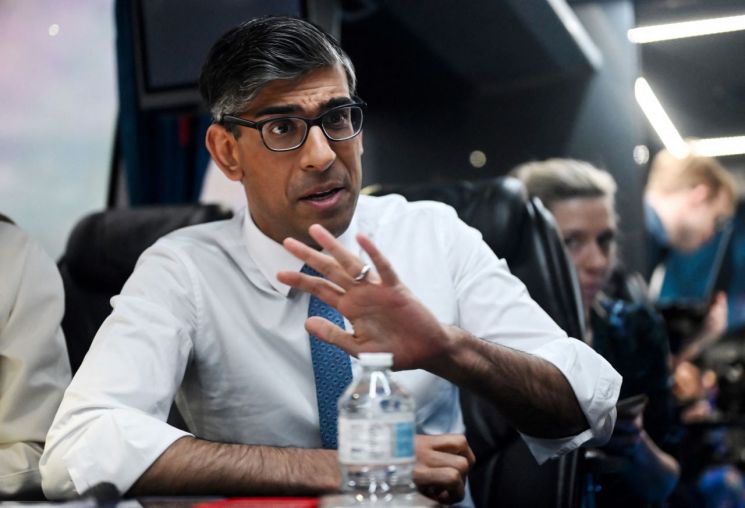
Prime Minister Sunak, trailing in approval ratings, has recently come under increased pressure as the Conservative Party's gambling scandal has expanded. So far, five people, including security police officers, have been identified as Conservative candidates or associates of Sunak who placed bets on the date of the early general election. The Labour Party sent a letter to the Gambling Commission the day before, urging, "For the public interest, the list of others currently under investigation should also be disclosed."
According to a recent Ipsos poll, the main opposition Labour Party's support rate stands at 26.7%, far surpassing the ruling Conservative Party's 12.9%. Major foreign media analyzed that among those who said they would vote for the Conservative Party in the same survey at the end of January, 32% had changed their stance by June. However, some undecided voters moved toward the Conservative Party, so there was no significant impact on the overall support rates of the two parties. As of January, the Labour Party and Conservative Party had support rates of 26.1% and 14%, respectively.
© The Asia Business Daily(www.asiae.co.kr). All rights reserved.
![Clutching a Stolen Dior Bag, Saying "I Hate Being Poor but Real"... The Grotesque Con of a "Human Knockoff" [Slate]](https://cwcontent.asiae.co.kr/asiaresize/183/2026021902243444107_1771435474.jpg)

















