Prevention of Fire Blight and Other Diseases, Farmers Must Strictly Follow Guidelines
Thorough Early Pest Control and Crop Management During High Temperatures
The Jeonbuk Special Self-Governing Province Agricultural Research and Extension Services (Director Choi Jun-yeol) announced information on the occurrence of summer pests and diseases such as fire blight in fruit trees, rice leaf blast, and vegetable pests in the second half of June.
According to the provincial agricultural research institute on the 24th, they urged efforts to minimize crop damage through field monitoring and timely control measures.
Fire blight is a bacterial disease that causes apple and pear trees to wither and die as if burned by fire. Once infected, the entire tree dies, making it a quarantined pest and disease. It has occurred again this year following last year in the province, so caution is required. Thorough orchard inspections, disinfection of tools, and management of visitors are essential. If symptoms suspected to be fire blight are found, report immediately to the nearest agricultural technology center.
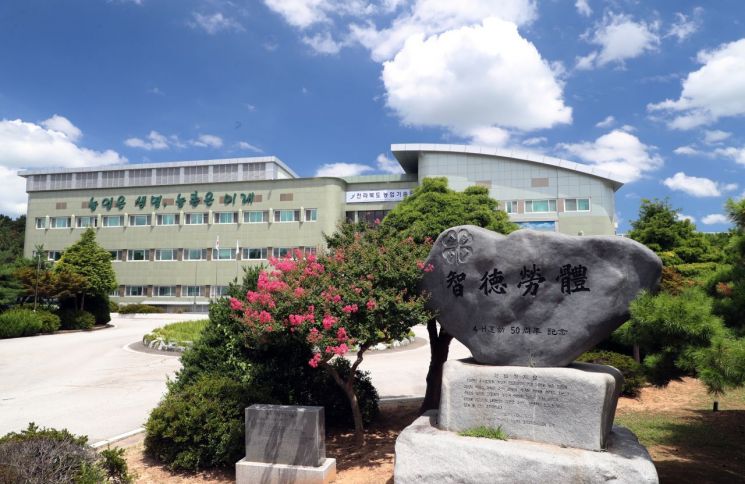 Jeonbuk Provincial Agricultural Research and Extension Services building. [Photo by Jeonbuk Province]
Tropical fall armyworm and rice leaf folder are invasive pests that arrived from China. Damage occurs mainly to forage crops such as corn from late May to July when control is neglected. On May 17, larvae were found in Goheung, Jeonnam, and on May 27, adults were found in Gochang, Jeonbuk, so caution is necessary.
Rice leaf blast occurring from late June to early July is a disease whose spores spread through the air by rain and wind. It occurs frequently in years with frequent rain and low temperatures. Avoid excessive use of nitrogen fertilizers and control with appropriate pesticides applied at the early stage of disease occurrence.
Rice stem borer overwinters as larvae. Recently, there has been a high incidence in some cities and counties. If seedling bed treatment is not possible, apply granular pesticides two weeks after transplanting to minimize damage.
Stink bugs and rice water weevils overwinter as adults in surrounding mountainous areas and weeds, then move to the main paddy fields. Use seedling bed treatments or spray appropriate pesticides within two weeks after transplanting to control them.
Anthracnose and downy mildew in chili peppers tend to occur easily during the rainy season. Once they occur, they spread rapidly and are difficult to control, so preventive management is required. Use protective fungicides before disease occurrence for preventive control, and if symptoms are visible to the naked eye, switch to systemic fungicides and spray accordingly.
Tobacco budworm larvae bore holes into fruits immediately after hatching from eggs, causing the affected fruits to soften and rot. Remove fruits with holes and spray pesticides in the morning or evening when adults are active.
Anthracnose in fruit trees appears as small spots on the fruit skin that eventually crack and turn brown. It occurs frequently in hot and humid conditions, so caution is needed after rainfall. For orchards where it occurred last year, apply fungicides preventively and manage ventilation and drainage within the orchard to prevent moisture buildup.
Director Kwon Taek of the Technology Extension Division urged, "With higher temperatures and more rainfall expected than usual, please make efforts to minimize pest and disease occurrence by maintaining drainage channels in advance and applying appropriate pesticides at the early stage of outbreaks."
© The Asia Business Daily(www.asiae.co.kr). All rights reserved.
![Clutching a Stolen Dior Bag, Saying "I Hate Being Poor but Real"... The Grotesque Con of a "Human Knockoff" [Slate]](https://cwcontent.asiae.co.kr/asiaresize/183/2026021902243444107_1771435474.jpg)
















