Survey of 7 Korean Banks by Bank of Korea Beijing Office
Chinese Real Estate Market Still Contracted, Threatening Financial Market
Korean commercial banks operating in China identified the delayed recovery of the real estate market as the biggest risk factor for China’s financial economy in the third quarter.
According to the report titled "Survey Results on Loan and Fund Management of Korean Commercial Banks in Beijing," released on the 24th by the Bank of Korea’s Beijing office, the main risk factors expected by Korean commercial banks in China’s financial economy in the third quarter are an increase in credit risk of private real estate development companies due to delayed recovery of the real estate market, US-China conflicts, and local governments’ hidden debts, in that order.
According to the Bank of Korea, China’s real estate market this year has shown an overall contraction, with housing prices and transaction volumes continuing to decline, and real estate development investment remaining sluggish. While demand related to the housing market remains weak, the financing conditions for real estate development companies have also deteriorated.
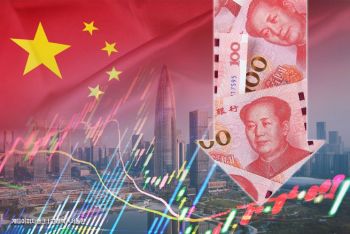
The Bank of Korea’s Beijing office conducted this survey targeting seven Korean banks operating locally: Woori, Shinhan, Hana, KB Kookmin, IBK Industrial Bank, NH Nonghyup, and KDB Industrial Bank. Korean commercial banks had also identified the Chinese real estate market as the biggest risk in surveys conducted in the first and second quarters.
Korean commercial banks forecast that credit risk for Korean companies in China will somewhat increase in the third quarter due to a decline in the market competitiveness of Korean companies within China. This is analyzed as being because the overall market competitiveness of Korean companies operating in China is decreasing. However, as the parent companies in Korea have expanded payment guarantees, banks’ lending attitudes are expected to remain at a neutral level similar to the previous quarter.
Loan demand from Korean companies to Korean commercial banks is generally expected to increase due to the need to secure liquidity in preparation for uncertainties and increased payment fund demand caused by partner companies’ requests to shorten bill payment terms.
During the third quarter, Korean commercial banks’ lending attitudes toward Chinese state-owned enterprises (SOEs) somewhat eased. This considered the policy of expanding loans to SOEs and the Chinese government’s policy support for SOEs during economic stimulus efforts. However, for Chinese private enterprises, lending attitudes are expected to remain neutral, considering the slow recovery in the real estate sector.
A Bank of Korea Beijing office official stated, “Lending attitudes of Korean commercial banks will be neutral toward Korean companies and Chinese private enterprises, but somewhat accommodative toward Chinese SOEs, considering the Chinese government’s policy support during economic stimulus efforts.”
Credit risk for Chinese SOEs expected by Korean commercial banks in the third quarter is generally forecasted to decrease due to the Chinese government’s expanded fiscal capacity and policy support, such as the issuance of ultra-long-term special government bonds, and deleveraging efforts by SOEs related to real estate.
Credit risk for Chinese private enterprises showed mixed forecasts: some expect a slight increase due to continued US pressure on China, including high tariffs, while others expect a slight decrease due to lower funding costs from low interest rates.
© The Asia Business Daily(www.asiae.co.kr). All rights reserved.

















