"Consistent with the 2018 Announcement"
Main Causes: US-China Trade and Cross-Strait Conflicts
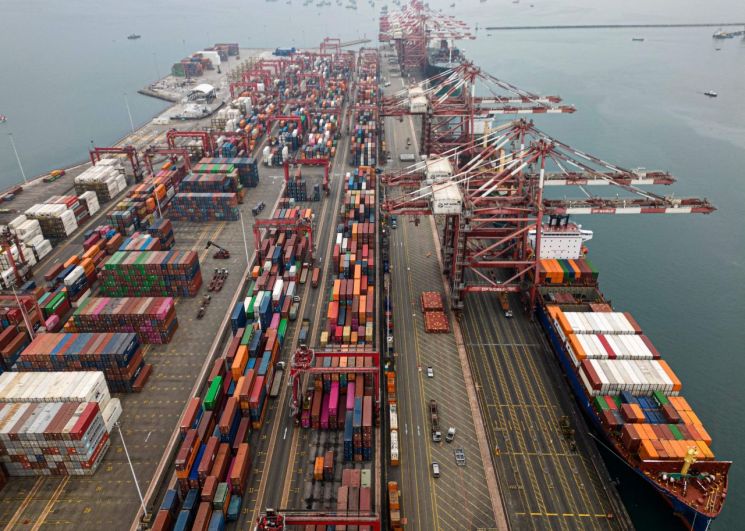
The Chinese Ministry of Commerce announced that it will extend the anti-dumping tariffs imposed on styrene imports from South Korea, the United States, and Taiwan for the next five years. Amid escalating trade tensions between the U.S. and China, worsening cross-strait relations, and rising military tensions, concerns are growing that China’s trade retaliation measures will be further strengthened.
On the 21st, the Chinese Ministry of Commerce posted a notice on its website stating, "The anti-dumping tariffs on styrene from the United States, South Korea, and Taiwan will be extended for five years." It added, "Based on a one-year investigation, if the anti-dumping measures were to end, products from these countries and regions could continue or resume dumping into mainland China, causing ongoing damage to China’s styrene industry."
According to this measure, China will continue to impose anti-dumping tariffs ranging from 3.8% to 55.7% on these products for another five years starting from the 23rd. The Ministry specified the companies and tariff rates subject to the extension over the next five years, explaining that "this is consistent with the contents of the notice announced in 2018." Styrene, also known as styrene monomer (SM) or phenylethylene, is an organic chemical raw material widely used in the manufacture of polystyrene, synthetic rubber, plastics, and ion-exchange resins.
In 2018, tariffs on U.S.-made styrene products ranged from 13.7% to 55.7%, making the U.S. the most affected among the sanctioned countries. South Korean products were subject to tariffs of 6.2% to 7.5%, while Taiwanese products faced tariffs of 3.8% to 4.2%. One reason for this is the increasing market share of styrene from South Korea, the U.S., and Taiwan in China since 2013, which has narrowed the position of Chinese products. However, the main factors are believed to be the intense trade conflict between the U.S. and China and issues related to Taiwan.
The U.S. government began a trade war with China in 2018 during former President Donald Trump’s administration, sanctioning Chinese high-tech companies including those in the semiconductor sector and imposing high tariffs. China, in turn, has continuously strengthened its retaliatory measures.
© The Asia Business Daily(www.asiae.co.kr). All rights reserved.

















