Real Estate R114 Analysis
May Apartment Sales Expected to Surpass 5,000 in Seoul and 20,000 in the Metropolitan Area
Regional Polarization Deepens
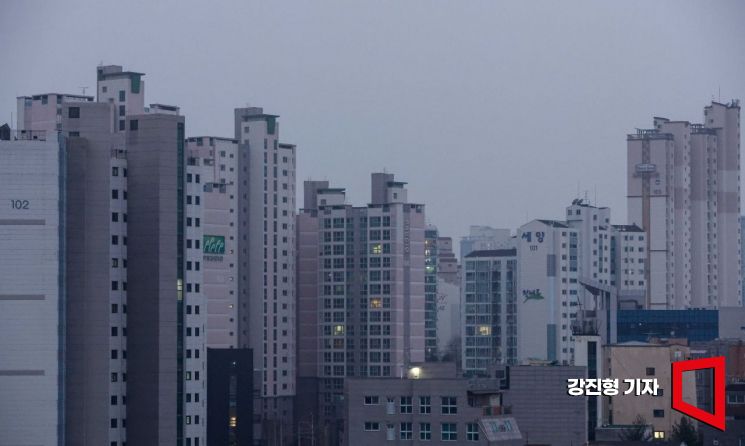
Since March of this year, the volume of apartment sales transactions, which began a clear upward trend, is expected to surpass key thresholds with 5,000 transactions in Seoul and 20,000 in the metropolitan area as of May. In April, apartment sales volumes recorded 4,840 transactions in Seoul and 19,507 in the metropolitan area, and currently, under the leadership of Seoul city, even more transactions are being recorded in May.
On the 22nd, Real Estate R114 stated in its 'Major Price Change Rates in Metropolitan Area Sales for the Third Week of June' report that "the market is gradually absorbing the urgent sale properties that had accumulated, with the highest transaction volume in about three years since August-September 2021." Due to this increase in transaction volume, both sales and jeonse prices expanded their rise mainly centered in Seoul during the third week of June.
Seoul apartment sales prices ended a 12-week flat trend (0.00%) and rose for two consecutive weeks (0.01% → 0.02%). Reconstruction projects remained flat (0.00%), while general apartments increased by 0.02%. In reconstruction projects, where conflicts over construction costs and additional charges are intensifying, these issues are acting as significant obstacles to smooth entry for demand groups. New towns showed no significant price changes, while Gyeonggi and Incheon rose by 0.01% for two consecutive weeks.
In Seoul, areas where urgent sale properties have been partially absorbed showed an expansion in the rate of increase, whereas areas still accumulating urgent sale properties experienced a larger decline. This is interpreted as a supply-demand characteristic where the cheapest properties are sold first.
By individual areas, prices rose in Gangseo (0.06%), Gangnam (0.06%), Yeongdeungpo (0.02%), Seongbuk (0.02%), Dobong (0.02%), and Gangdong (0.02%), while they fell in Geumcheon (-0.06%), Jongno (-0.04%), and Yangcheon (-0.02%). In new towns, Sanbon declined by 0.01%, but Pangyo rose by 0.02%. All other areas remained flat (0.00%). In Gyeonggi and Incheon, prices increased in Incheon (0.03%), Yangju (0.02%), Gwangmyeong (0.01%), and Gwacheon (0.01%), while they decreased in Uijeongbu (-0.03%), Guri (-0.02%), and Paju (-0.01%).
The jeonse market has continued its upward trend for nearly a year since July last year, with the rate of increase actually expanding, reflecting a complex situation involving absorption of listings, shortage of new supply, and a preference concentration on apartments. Seoul rose by 0.03%, marking the highest increase in nine weeks since the 0.03% recorded on April 19. Gyeonggi, Incheon, and new towns all rose by 0.01%.
In Seoul, Gangnam-gu, which is highly preferred by demanders, rose by 0.14%. This is attributed to the jeonse price of the mammoth-scale DH Firstier I-Park (6,702 households) increasing by about 25 million KRW. Following that, Guro (0.08%), Dongdaemun (0.07%), Gangseo (0.07%), and Nowon (0.06%) showed significant increases. In new towns, Sanbon (0.04%), Gwanggyo (0.03%), and Dongtan (0.02%) rose, while in Gyeonggi and Incheon, Gunpo (0.04%), Hwaseong (0.02%), Goyang (0.02%), and Incheon (0.02%) showed notable increases.
A Real Estate R114 official explained, "The polarization by region within the real estate market, as well as the demand concentration according to asset type, appears to be intensifying," adding, "While record-high prices continue to emerge mainly in premium areas like Gangnam in Seoul, the recovery in non-Gangnam areas, new towns, Gyeonggi, and Incheon is relatively slower."
They also stated, "Additionally, due to the impact of jeonse fraud and residential preferences, polarization by property type such as apartments versus villas is severe. Recently, even within the same type of apartment market, conflicts over additional charges and construction costs for reconstruction and remodeling projects in older buildings are intensifying, widening the price gap with new buildings." They continued, "The polarization trend by region and property, driven by high inflation and demand preferences, is expected to be difficult to resolve in the short term."
© The Asia Business Daily(www.asiae.co.kr). All rights reserved.
![Clutching a Stolen Dior Bag, Saying "I Hate Being Poor but Real"... The Grotesque Con of a "Human Knockoff" [Slate]](https://cwcontent.asiae.co.kr/asiaresize/183/2026021902243444107_1771435474.jpg)
















