March 1960: 3.3 People → 1.5 People in 2022, Halved
"Measures Needed for Immigration Influx and Productivity Expansion"
Due to the economic burden caused by childbirth and childcare, the fertility rates of member countries of the Organisation for Economic Co-operation and Development (OECD), known as the "advanced countries club," have fallen to historically low levels. South Korea recorded the lowest rate at 0.7 children per woman. The OECD warned that if this trend continues, maintaining the current population will be difficult, emphasizing the need to expand immigration and increase productivity.
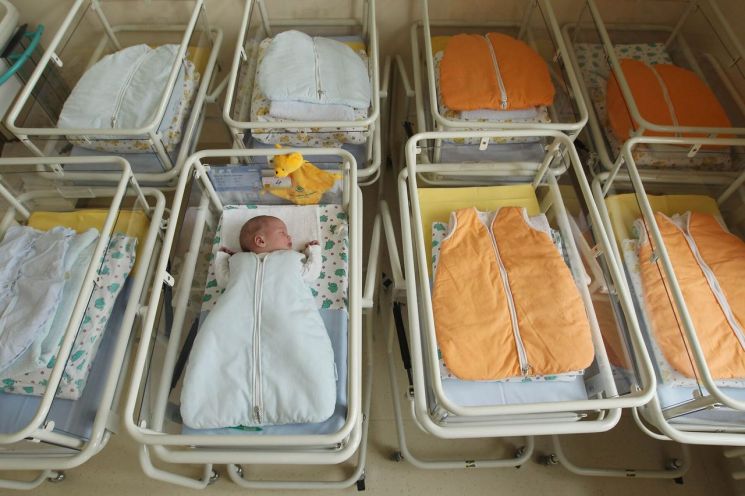
On the 20th (local time), the OECD announced that the average total fertility rate (the expected number of children a woman of childbearing age will have in her lifetime) across its 38 member countries decreased from 3.3 in 1960 to 1.5 in 2022.
The fertility rate required to maintain a stable population without immigration is 2.1. However, except for Israel, the fertility rates of the other 37 member countries were significantly lower than this level.
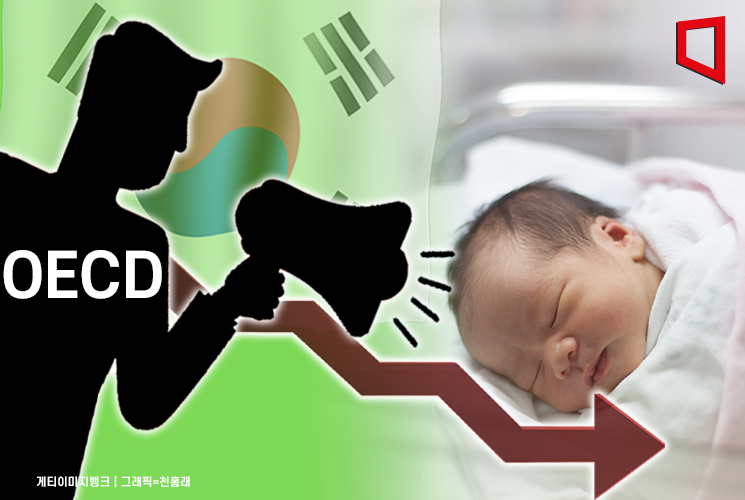
In particular, South Korea's total fertility rate was the lowest at 0.72 in 2023. In 1960, South Korea's fertility rate was as high as 6, double the OECD member average of 3.34, but it has steadily declined, dropping below 2 in 1984 (1.74) and below 1 in 2018 (0.98). Italy (1.2) and Spain (1.16 as of 2022) were also among the countries with low fertility rates.
Economic burdens, including high housing costs, were identified as causes of the decline in fertility rates.
Stefano Scarpetta, Director of Employment, Labour and Social Affairs at the OECD, stated, "Although OECD countries are employing various policy options to support families, the economic costs associated with having children and long-term fiscal uncertainties continue to significantly influence decisions to become parents."
The average age at which women in OECD member countries have their first child rose from 26.5 years in 2000 to nearly 30 years in 2020. In South Korea, the average age at first childbirth was 32.53 years, with Italy (31.95 years) and Spain (32.13 years) also exceeding 30 years. The OECD analyzed that as the age of first childbirth is delayed, the risk of women choosing not to have children at all is also increasing.
Low fertility is expected to severely impact economic growth in major advanced countries. The decline in the working-age population will exacerbate labor shortages, and aging due to increased life expectancy will intensify government tax revenue pressures and fiscal deterioration.
The OECD warned, "This decline in fertility rates will change the nature of society, communities, and families, potentially having a significant impact on economic growth and prosperity."
As alternatives to low fertility, the OECD called for increased female employment, expanded immigration policies, and measures to boost productivity.
Willem Adema, Senior Economist in the OECD Social Policy Division, emphasized, "For the future of low fertility, it is necessary to focus on immigration policies," adding, "Efforts to increase productivity should also focus on enabling people to maintain their health and work longer."
© The Asia Business Daily(www.asiae.co.kr). All rights reserved.


















