Each Platform Offers View Count Rewards and Reduces Marketing Costs
Creators Earn 48%, Averaging 20.71 Million KRW Annually
There is an analysis that the social networking service (SNS) marketing and creator market, which exploded during the COVID-19 period, has peaked and is now on a downward trend. On the 18th (local time), The Wall Street Journal (WSJ) published an article titled "Influencers barely making a living, let alone getting rich." In the article, WSJ stated, "The lives of influencers who earned money through SNS content are getting worse," and diagnosed that "platform companies are reducing the rewards paid according to the number of views, and companies are also becoming more stringent in paying SNS marketing costs."
 An analysis has emerged that the social networking service (SNS) marketing and creator market, which exploded during the COVID-19 pandemic, has peaked and is now on a downward trend. On the 18th (local time), The Wall Street Journal (WSJ) published an article titled "Influencers Barely Making a Living, Let Alone Getting Rich." The photo is not directly related to the article. [Image source=Getty Images]
Quoting a Goldman Sachs report, WSJ said, "Until last year, about 50 million people worldwide earned money using SNS platforms," and predicted, "The number of SNS creators will increase by 10-20% annually over the next five years, making competition even fiercer."
Over the past five years, SNS platforms such as TikTok, YouTube, Instagram, and Snapchat have distributed advertising revenue to creators who recorded many followers and views. In particular, TikTok created a fund worth $1 billion (about 1.38 trillion KRW) from 2020 to 2023 and distributed it to SNS creators. YouTube launched the 'Shorts' service for short videos lasting 30 seconds to 1 minute as short videos gained popularity, paying creators between $100 and $10,000 (about 138,000 KRW to 13.8 million KRW) per month based on views. Additionally, WSJ analyzed that "not all creators using SNS handle 'big money.'"
According to a report by SNS marketing agency 'NeoRich,' only 13% of SNS creators earned more than $100,000 (about 138 million KRW) last year. Among them, 48% of creators had an annual average income of less than $15,000 (20.71 million KRW).
Platform Influence Has Grown, but Compensation to Creators Has Become Stingy
After the pandemic, companies reducing their budgets poured into SNS also led to a decrease in creators' income. WSJ analyzed that platform companies reduced costs by changing the criteria for advertising revenue settlements. Instagram set a standard that "accounts with more than 10,000 followers are compensated only when a single content records more than 100,000 views." YouTube also announced that since last year, it pays only 45% of advertising revenue if the criteria of "more than 1,000 subscribers and over 10 million views per Shorts video within 90 days" are met.
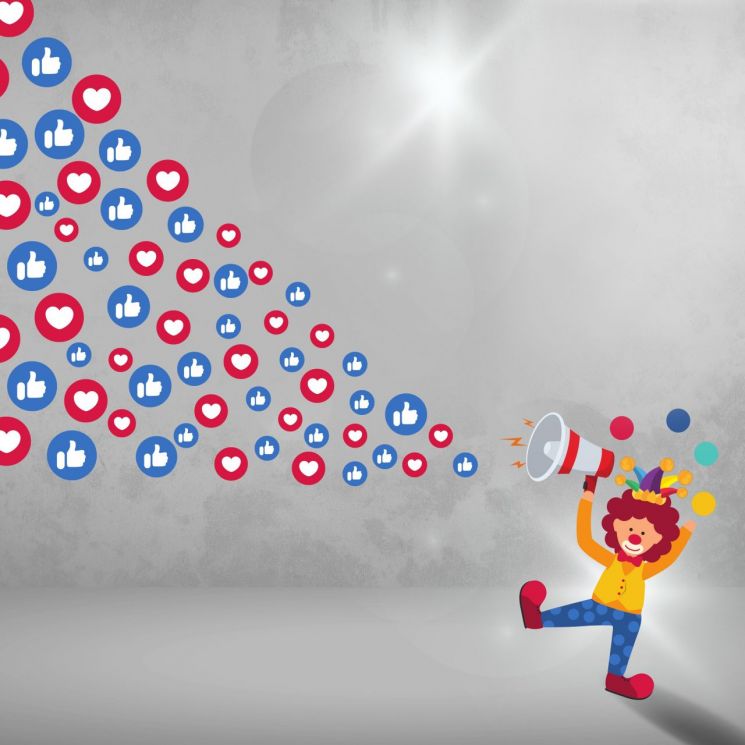 The reduction in budgets that companies poured into social media after the pandemic also led to a decrease in creators' income. According to the Wall Street Journal's analysis, platform companies cut costs by changing the criteria for advertising revenue sharing.
 [Photo by Pixabay]
According to eMarketer, the total income of creators in the United States is expected to be $13.7 billion (about 19 trillion KRW) this year. Of this, $8.14 billion (about 11.25 trillion KRW), accounting for 59%, is estimated to be sponsorship income. Advertisers who used to pay based on views are now also reflecting post saves and shares in advertising cost calculations. However, this is a part that creators find difficult to predict easily. There is also a growing tendency for advertisers to intervene directly in content production.
Moreover, as social media algorithms change, it is becoming increasingly difficult to increase followers and views. As the number of creators grows, competition to secure sponsorships intensifies. Recently, advertisers tend to sign long-term contracts with a small number of creators. Finally, WSJ expressed concern, stating, "SNS creators are self-employed and do not receive various welfare benefits that company employees get, such as paid leave, health insurance, and retirement pensions," and "If income sharply decreases amid high inflation and high interest rates, making a living could become difficult."
The Rich Get Richer, the Poor Get Poorer Phenomenon Is Serious in the Domestic Market as Well
 The wealth gap in the creator market is severe not only in the United States but also domestically. According to data on "Income Status of Individual Media Creators (YouTubers, etc.)" disclosed by Rep. Yang Kyung-sook of the Democratic Party of Korea in May last year, which was obtained from the National Tax Service, the number of people who reported income as individual media content creators in 2021 was counted at 34,219.
 [Photo source=Pixabay]
Meanwhile, the rich-get-richer, poor-get-poorer phenomenon in the domestic creator market is also at a serious level, not only in the United States. According to the 'One-person Media Creator (YouTubers, etc.) Income Status' data disclosed by Representative Yang Kyung-sook of the Democratic Party of Korea in May last year, which was obtained from the National Tax Service, the number of people who reported income as one-person media content creators in 2021 was 34,219. Compared to 2019 (2,776 people), this is more than a 12-fold increase. As of 2021, the number of YouTubers exceeds that of lawyers (6,292), tax accountants (9,611), architects (8,122), and judicial scriveners (6,783).
Among them, the annual income of the top 1%, corresponding to 342 people, averaged 713 million KRW per person. This is a 6.3% increase compared to the average annual income of the top 1% (27 people) in 2019, which was 671 million KRW. On the other hand, the average annual income of the bottom 50% (17,110 people) was 400,000 KRW, down from 1 million KRW in 2019. This means that if someone jumps into becoming a YouTuber without preparation, it is difficult to earn even 400,000 KRW in a year.
© The Asia Business Daily(www.asiae.co.kr). All rights reserved.



















