"Specialists Will No Longer Be Trained and Will Disappear"
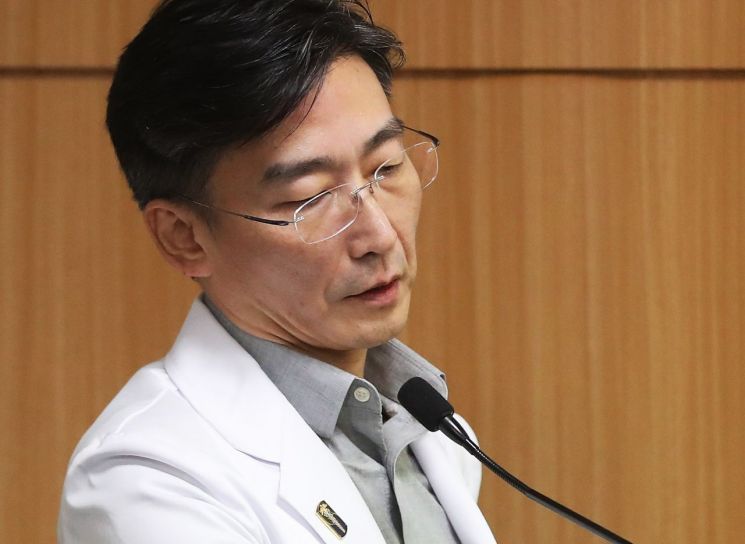
Lee Guk-jong, director of Daejeon Armed Forces Hospital, pointed out that expanding medical school quotas is unlikely to help secure essential medical doctors.
On the 19th, Lee attended the 'Master Lecture Concert' held for local teachers at the National Science Museum in Yuseong-gu, Daejeon, and said, "The medical field is currently like a beehive that has been destroyed, and no more specialists are being produced, so they will disappear," adding, "'Essential medical departments are collapsing' has been said since I was a medical student 30 to 40 years ago. This is a failure of government policy."
Regarding the expansion of medical school quotas, he criticized, "Medical education is not lecture-based but conducted through one-on-one apprenticeship between seniors and juniors, so it is not possible to train a large number recklessly."
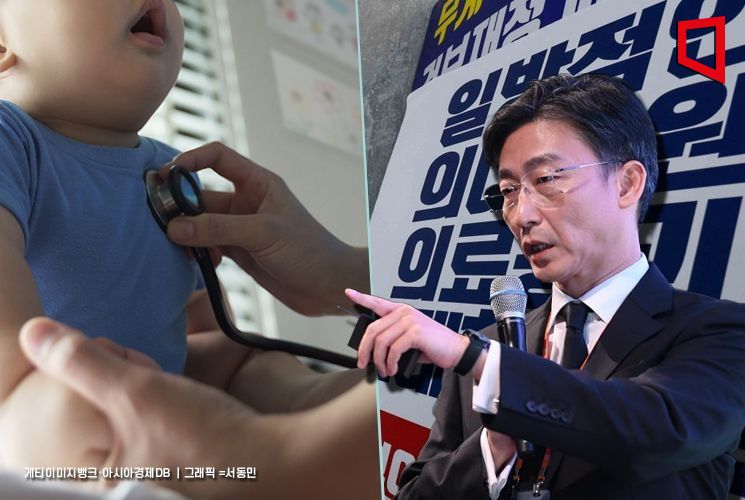
He continued, "Compared to 30 years ago, the number of pediatric specialists has tripled, and newborns have decreased to a quarter, but parents actually do 'open runs' because there are no hospitals," and asked, "In this situation, do you think increasing medical students by 2 million will lead them to choose pediatrics?"
He also argued that a system to revive essential medical care must be established first. He said, "When the administration changes, medical policies also change," adding, "Now they say there is a shortage of doctors, but in 1999 when I obtained my specialist certification, there were too many doctors and they said we should export them overseas. Until recently, they promoted medical tourism for cosmetic purposes, and now they say essential medical care must be revived."
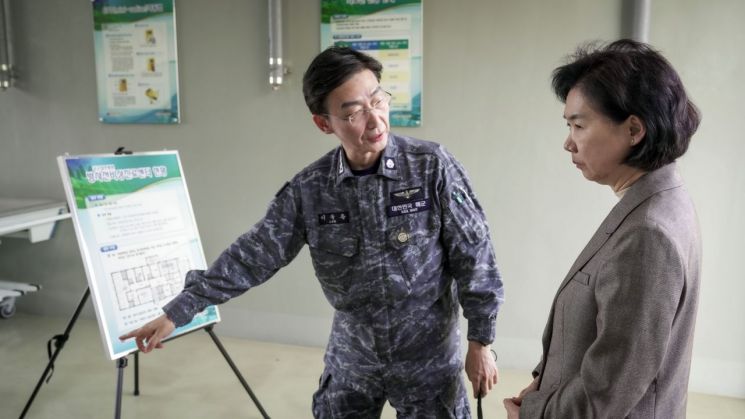 Director Lee Guk-jong of Daejeon Armed Forces Hospital and Director Ji Young-mi of the Korea Disease Control and Prevention Agency listening to an explanation [Image source=Yonhap News]
He went on, "However, essential medical care in Korea is already devastated," and added, "If Japan dispatches doctor helicopters 1,800 times a year, Korea does not even reach 300 dispatches even when using US military helicopters. This is essential medical care, and this system must be built first."
© The Asia Business Daily(www.asiae.co.kr). All rights reserved.



















