Legal Ruling Allows Korean Medicine Doctors to Use Ultrasound Diagnostic Devices
Medical Association Opposes: "Many Victims Will Emerge"
Medical Device Usage Sparks Tug-of-War Between Medical Association and Korean Medicine Association
The medical community is opposing the Supreme Court's final ruling that the use of ultrasound diagnostic devices by Korean medicine doctors is legal.
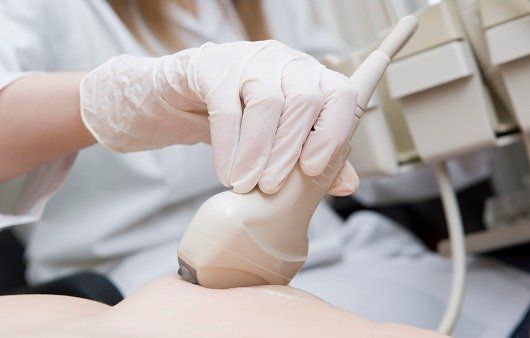
On the 18th, the Supreme Court's 2nd Division dismissed the appeal in the retrial regarding the use of ultrasound diagnostic devices by Korean medicine doctor A, ruling the appeal as 'ineligible.' This ruling is the final decision following the prosecution's appeal in October last year against the retrial verdict that acquitted Korean medicine doctor A, who used an ultrasound diagnostic device.
Previously, Director A, who operated a Korean medicine clinic, conducted 68 ultrasound scans of patient B's internal body parts from March 2010 to June 2012 but failed to diagnose endometrial cancer. A was also indicted for violating Article 27, Paragraph 1 of the Medical Service Act for using an ultrasound diagnostic device to treat patients.
In the first trial held at the Seoul Central District Court in 2016, A was fined 800,000 KRW for violating the Medical Service Act, as the court judged that using the ultrasound diagnostic device was a medical act beyond the scope of the license. A appealed the first trial verdict, but the second trial court, also the Seoul Central District Court, dismissed A's appeal in December of the same year.
A further appealed the second trial verdict, and the Supreme Court, as the third trial court, ruled that A's medical practice did not violate the Medical Service Act and remanded the case back to the Seoul Central District Court for retrial. The retrial court acquitted A in September last year, but the prosecution appealed again. This time, the Supreme Court dismissed the appeal, finalizing the ruling that the use of ultrasound diagnostic devices by Korean medicine doctors is legal.
The Supreme Court emphasized that to determine whether the use of diagnostic medical devices by Korean medicine doctors constitutes medical acts beyond their license, it is necessary to comprehensively consider ▲whether relevant laws prohibit Korean medicine doctors from using diagnostic medical devices ▲whether the use of diagnostic medical devices as an auxiliary diagnostic tool by Korean medicine doctors poses health and hygiene risks beyond the usual level ▲and whether the use of diagnostic medical devices by Korean medicine doctors is clearly unrelated to the application or adaptation of Korean medical principles.
Furthermore, considering the 'new judgment criteria,' the court stated that a reasonable judgment should be made based on social norms and ruled that this case does not constitute medical acts beyond the licensed scope of Korean medicine doctors.
In response, the Korean Medical Association (KMA) immediately issued a statement opposing the ruling. On the 19th, the KMA said, "Due to the Supreme Court's judgment, medical acts by Korean medicine doctors beyond their licensed scope will proliferate, causing numerous victims," and criticized, "The Supreme Court is undoubtedly the cause of this situation."
The KMA pointed out, "The purpose of distinguishing licensed acts in the Medical Service Act is solely to protect public health," and stated, "This does not align with the acts prescribed for Korean medicine doctors under the Medical Service Act." Although the Supreme Court judged that the use of ultrasound diagnostic devices by Korean medicine doctors does not pose fatal health and hygiene risks because the devices do not emit radiation and are technically safe, the KMA countered that misdiagnoses can occur when individuals lacking expertise and proficiency use ultrasound diagnostic devices.
They added, "We strongly condemn the Supreme Court's erroneous judgment, which clearly risks missing the golden time for treatment and seriously harming public health," and claimed, "More victims will be produced in the future."
Conflict Intensifies Between Korean Medicine Association and Medical Association Over Use of Diagnostic Medical Devices
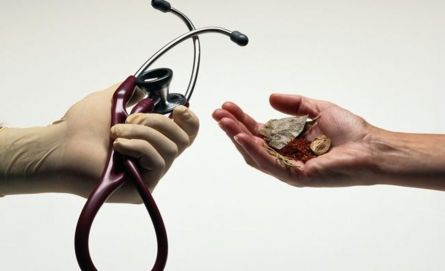
The Korean Medicine Association (KMA) and the Medical Association have long been in conflict over the use of medical devices. In April, Yoon Seong-chan, the 45th president of the KMA, advocated for the free use of diagnostic devices by Korean medicine doctors and the expansion of their role in primary care during his inauguration speech.
At that time, President Yoon stated, "Korean medicine is the most suitable medicine for primary care, which should be further strengthened in the future," and added, "If Korean medicine is established in primary care through the free use of diagnostic devices and institutional improvements, we are confident that K-MEDI can be widely promoted worldwide."
On the 13th, when the Medical Association and university hospitals, along with some private practitioners, announced collective strikes, the Korean Medicine Association recommended night-time treatment on the days of doctors' strikes and urged the government to improve the system. The KMA stated, "In preparation for possible future collective actions such as strikes by the Western medical community, the government needs to improve the system so that Korean medicine clinics can play a more central role in primary care." They also expressed confidence that they could efficiently coordinate and treat emergency patients, including common diseases like colds and indigestion, within primary care.
According to Article 27, Paragraph 1 of the Medical Service Act, no one other than licensed medical personnel may perform medical acts, and even medical personnel cannot perform medical acts beyond their license. Typically, X-rays, computed tomography (CT), and magnetic resonance imaging (MRI) are prohibited for use by Korean medicine doctors under regulations such as the 'Safety Management Rules for Diagnostic Radiation Generating Devices' and the 'Special Medical Equipment Installation and Operation Rules.' However, since ultrasound diagnostic devices do not emit radiation and are not classified as special medical equipment, there is increasing criticism that the law should be amended.
© The Asia Business Daily(www.asiae.co.kr). All rights reserved.



















