'Expansion of Mandatory Moving Duties - Abolition of Breach of Trust Crime' Pushed Together
Business Community Opposes, Fearing Litigation Flood
Abolition of Breach of Trust Crime... Difficult to Pass National Assembly Threshold
If the leading issue in the capital market in the first half of the year was value-up, the revision of the Commercial Act, which includes the expansion of directors' duty of loyalty, is expected to be the hot topic in the second half. Since Lee Bok-hyun, Governor of the Financial Supervisory Service, mentioned the need to revise the Commercial Act, the financial investment industry, academia, and business circles have been pouring out opinions on the direction of the revision and ways to alleviate the management burden caused by the revision. The Ministry of Justice, the competent authority, plans to hold a seminar on the revision of the Commercial Act in July and gather opinions from various sectors.
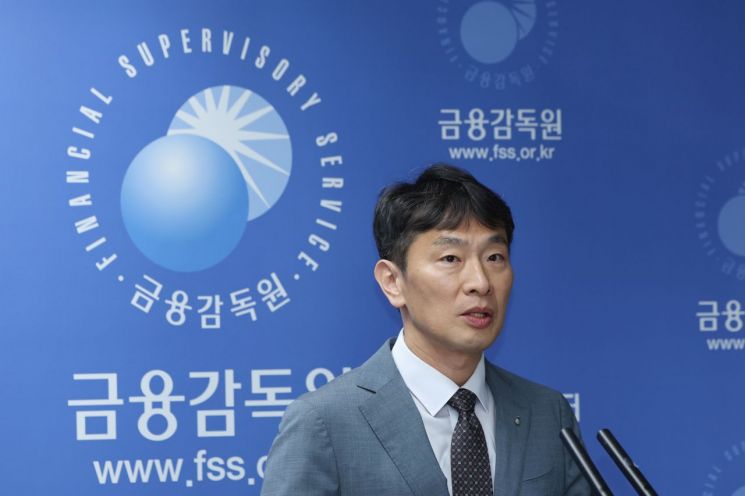
The revision of the Commercial Act emerged as a capital market issue after Lee Bok-hyun, Governor of the Financial Supervisory Service, spoke about the necessity of revising the Commercial Act at a corporate briefing (IR) in New York, USA, last May. Subsequently, the Korea Capital Market Institute and the Korean Securities Association held a 'Corporate Governance Policy Seminar for Capital Market Advancement,' emphasizing the need for the revision and suggesting its direction. The core of the amendment is to include not only the company but also the proportional interests of shareholders in Article 382-3 of the Commercial Act concerning directors' duty of loyalty. The law will explicitly stipulate related content so that the interests of shareholders can be proportionally protected without distinguishing between the company and shareholders.
The financial investment industry points out that the fundamental cause of the undervaluation of the Korean stock market lies in outdated corporate governance, so without the revision of the Commercial Act, the effect of the value-up policy will inevitably be limited. Value-up is a guideline to increase the value of listed companies and was the biggest issue in the capital market in the first half of this year. After President Yoon Seok-yeol's remarks on resolving the 'Korea Discount' (undervaluation of the Korean stock market), financial authorities promoted a corporate value-up program to address the undervaluation problem.
Following the seminars by the Korea Capital Market Institute and the Securities Association, the Korea Corporate Governance Forum will also hold a seminar on the 20th titled 'Value-up and Directors' Duty of Loyalty' to emphasize the necessity of revising the Commercial Act. Lee Nam-woo, Chairman of the Korea Corporate Governance Forum, said, "Since the fundamental cause of the Korea Discount lies in outdated corporate governance, there will inevitably be limitations to the value-up policy unless the revision of the Commercial Act, which forms the institutional foundation and framework of the capital market, accompanies it."
On the other hand, the business community is concerned that if the Commercial Act is revised, the board of directors may degenerate into a 'plantation board' that avoids risks in decision-making, including new investments. The business community plans to hold a seminar on the 26th, hosted by the Korea Listed Companies Association, the KOSDAQ Association, and the Korea Economic Association, which are corporate groups. Although the seminar's theme is 'Value-up Policy Seminar,' the main agenda focuses on measures to alleviate the burden of the Commercial Act revision, such as easing directors' responsibilities and the absence of management rights defense measures. The differences in opinions between the business community, academia, and the financial investment industry regarding the revision of the Commercial Act are being expressed through the format of seminars.
While debates about the revision of the Commercial Act are in full swing, the Ministry of Justice, the competent authority, maintains only the position that "it is reviewing measures to strengthen shareholder protection by collecting opinions from experts in various fields." According to the government, the Ministry of Justice had planned to hold a seminar in July, referring to various opinions raised at recent seminars, but the specific schedule has not yet been decided.
Discussions on the revision of the Commercial Act are expected to continue in the second half of the year. Initially, the main topics of discussion were the introduction of directors' duty of loyalty and the relaxation of the business judgment rule, but with Lee Bok-hyun suddenly bringing up the abolition of the crime of breach of trust, there is a possibility that the discussion on the revision of the Commercial Act may return to square one. The differences in positions between government departments, the financial investment industry, and the business community are significant, making it difficult to coordinate and present a revision bill.
A financial investment industry official said, "The introduction of directors' duty of loyalty is being promoted with the intention of making directors responsible for their duties, but if the abolition of the crime of breach of trust is pursued as a package, the directors' duty of loyalty will be practically ineffective even if introduced. Moreover, the Democratic Party of Korea is unlikely to support the abolition of the crime of breach of trust," adding, "It is desirable to create an environment where civil lawsuits such as damages claims operate before abolishing the crime of breach of trust."
© The Asia Business Daily(www.asiae.co.kr). All rights reserved.

















