Succeeded in Expanding China's Industrial Scope but Struggles with Plummeting Prices and Sales
Chinese Subsidies No Longer as Effective
US and Europe Counter Low-Price Tsunami with Tariffs
Xi Jinping Criticizes Overinvestment in Solar and More
As the world suffers from a tsunami of low-priced Chinese products, there are forecasts that the business conditions of local Chinese industries may not be very bright. The solar power industry, which has seen prices fall to record lows, is a representative example.
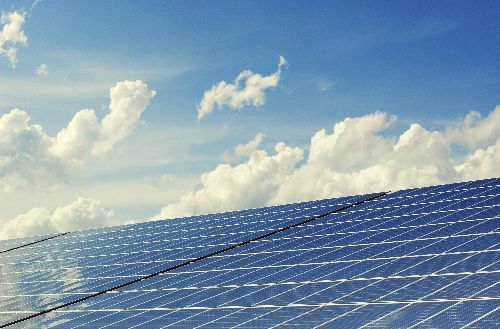
On the 17th (local time), the British weekly magazine The Economist reported, "China's massive solar power industry has fallen into crisis as prices and profits plummet due to overproduction."
The Chinese solar power industry has risen to a dominant position at every stage of the supply chain, from raw materials such as polysilicon to finished products like modules. According to consulting firm Wood Mackenzie, China's solar module production capacity last year was about 1000 gigawatts (GW), which is approximately five times the combined production capacity of the rest of the world. It is predicted that the capacity will expand to about 1700 GW by 2026. According to market research firm PV Insights, solar module prices recently dropped to an all-time low of less than 10 cents per watt. This is the result of China overproducing solar products and selling them cheaply overseas.
While this has led to a downturn in the solar industries of major countries such as the United States and Europe, the Chinese industry was not free from the 'chicken game.' According to The Economist, despite a surge in exports from the Chinese solar industry last year, related sales decreased by 5.6% compared to the previous year. The stock price of Longi, which cut about 5% of its workforce in March, has fallen 25% this year. The stock prices of other Chinese solar companies such as Trina Solar (27%), JA Solar (31%), and Jinko Solar (32%) also dropped sharply. The impact on small and medium-sized Chinese companies is believed to be even greater. For example, Lingda recently canceled plans to build a $1.3 billion cell factory.
The reason the Chinese industry has managed to endure despite difficulties lies in government subsidies. The Economist stated, "Local Chinese governments have supported the solar industry for decades by providing free land and electricity and various forms of interest-free loans," adding, "This accounts for about 35% of solar companies' costs, but in some cases, it can rise to 65%."
The problem is that there are signs that support is not as strong as it used to be, according to The Economist. Many local governments in China are now reaching debt saturation. As a result, there is a structure where limited subsidies must be competed for among other green industries such as electric vehicles and lithium batteries.
Moreover, advanced countries such as the United States and Europe are responding to the low-priced Chinese offensive with tariffs. The European Union (EU) announced on the 12th that it would impose provisional tariffs of up to 48% on Chinese electric vehicles, and since it is conducting anti-dumping investigations on solar power as well, similar measures may be taken. The United States announced last month a tariff increase plan worth $18 billion on Chinese imports, including solar power products.
Chinese President Xi Jinping also urged during a meeting with company executives and economists on the 23rd of last month, "Do not concentrate resources only on electric vehicles, batteries, and solar power." This statement implies that the overinvestment in green high-tech industries, which recently drove China's economic growth, is inefficient. Analysts suggest that this remark may have been made with Western pressure on China's overproduction in mind.
The Economist concluded, "All of this indicates that a crisis is approaching for China's solar power industry," and "China's solar power industry must prepare for a difficult journey."
© The Asia Business Daily(www.asiae.co.kr). All rights reserved.
![Clutching a Stolen Dior Bag, Saying "I Hate Being Poor but Real"... The Grotesque Con of a "Human Knockoff" [Slate]](https://cwcontent.asiae.co.kr/asiaresize/183/2026021902243444107_1771435474.jpg)
















