Last Year Illegal Private Loans New Inflow 53,000~91,000 People
Usage Amount Up to 1.43 Trillion KRW... "Flexible Interest Rate Adjustment Needed"
Analysis revealed that nearly 90,000 vulnerable individuals who were rejected for institutional loans last year turned to illegal private loans. There is a growing need to flexibly adjust the legal maximum interest rates according to the financial market conditions.
According to the report titled ‘Survey Analysis on Low-Credit Borrowers and Loan Businesses’ released on the 18th by the Korea Inclusive Finance Agency, the number of low-credit borrowers (credit grades 6?10) who newly shifted from loan businesses to the illegal private loan market last year was between 53,000 and 91,000. This represents an increase of about 20,000 compared to the previous year (39,000?71,000).
The amount these individuals procured through illegal private loans also increased. Last year, the procured amount ranged from 830 billion to 1.43 trillion KRW, which is approximately 200 billion KRW more than the previous year. It was found that borrowers paid interest rates exceeding the legal maximum when using illegal private loans. About 50% of respondents reported paying interest exceeding the principal within one year. The proportion of those bearing interest rates exceeding 1,200% per annum reached 10.6%.
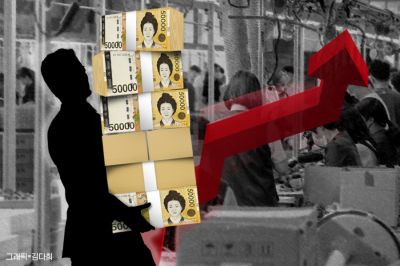
The increase in inflow to illegal private loans is due to the difficulty of obtaining loans even from loan businesses, which are considered the last bastion of institutional inclusive finance. The proportion of respondents who said they had experienced loan rejection from loan businesses was 74.1%, up 6.1 percentage points from 68% last year. This was especially high among those with uncertain income such as public officials, university (graduate) students, and the unemployed, as well as low-credit and low-income groups. Eight out of ten borrowed money despite recognizing it was from illegal private loans.
The Korea Inclusive Finance Agency suggested that the legal maximum interest rate should be set flexibly. Since the maximum interest rate is capped at 20% per annum regardless of economic conditions, it should be adjusted according to the financial market situation. There was also an opinion that different maximum interest rate regulations should be applied between deposit-taking financial institutions and non-deposit financial institutions such as loan businesses. They mentioned that raising the interest rate ceiling to 36% per annum for short-term and small-amount loans should also be considered.
There is also a need to devise fundamental debt countermeasures. For example, to resolve the debt problem of self-employed individuals, measures should be established to prevent them from entering livelihood-type self-employment without prior planning or experience when there are no alternatives other than starting a business. Additionally, the ‘all-in’ borrowing problem among young people increased during the COVID-19 pandemic, and a fundamental improvement measure is to provide financial education when the younger generation borrows excessively. The Korea Inclusive Finance Agency stated, “Strong crackdowns and punishments to eradicate illegal private loans may have only temporary effects,” and “To win the war against illegal private loans, it is effective to implement various measures simultaneously.”
The survey was conducted from February 1 to February 29, targeting 1,317 low-credit borrowers using loan businesses and illegal private loans.
© The Asia Business Daily(www.asiae.co.kr). All rights reserved.
![Clutching a Stolen Dior Bag, Saying "I Hate Being Poor but Real"... The Grotesque Con of a "Human Knockoff" [Slate]](https://cwcontent.asiae.co.kr/asiaresize/183/2026021902243444107_1771435474.jpg)
















