All Concrete Manhole Covers to Be Replaced with Steel; Enhanced Monitoring Planned
Sewer and Manhole Cleaning Completed to Prevent Urban Flooding During Summer Heavy Rains
Busan City has completed the full replacement of all concrete manhole covers, which posed a threat to pedestrian safety, with steel manhole covers.
The concrete manhole cover replacement project was initiated to ensure a safe walking environment for citizens after a pedestrian safety accident occurred on December 6, 2023, in Jwacheon-dong, Dong-gu, when an old concrete manhole cover broke and a passerby fell through.
Concrete manhole covers, which have a purple hue, were intensively installed in the early 2000s to improve pedestrian environments. However, they lack internal safety reinforcements such as rebar, making them vulnerable to external impacts and cracks due to aging.
In particular, since these covers can break without warning, it was difficult to predict when and where accidents might occur. Through this project, they have been replaced with steel manhole covers, which are stronger and safer than concrete ones.
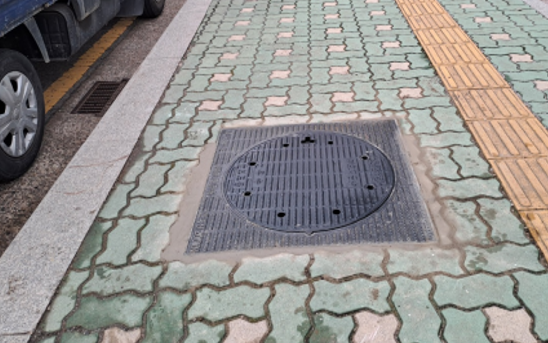
The damaged concrete manhole covers were installed on sidewalks in 2006 during the construction of apartments in Jwacheon-dong to manage stormwater runoff, and nearly 20 years have passed since then.
For this full-scale replacement, the city conducted a comprehensive survey of all 170,000 manhole covers installed throughout the city. Through this, 16,191 concrete manhole covers were identified and all were replaced with steel covers.
For concrete manhole covers installed on private property, the city has requested that facility owners replace the covers and will continue to strengthen monitoring activities to prevent safety accidents.
Additionally, the city plans to continuously maintain the 21,075 side gutter covers installed along roadways and any remaining concrete manhole covers that may have been missed in this round of maintenance.
In connection with the replacement of concrete manhole covers, the city has also selected urban riversides and low-lying areas as priority sites for dredging to prevent urban flooding during heavy summer rains. The city supported districts and counties with 3.5 billion KRW for dredging projects, completing the dredging of 7,088 cubic meters of sewage pipelines and manholes.
Furthermore, a dredged material reduction facility (one unit) was installed at the riverside public sewage treatment plant and has been operating since October 2023, processing 1,100 tons of dredged soil monthly. This has helped increase the amount of dredging by reducing waste disposal costs for districts and counties.
Additionally, three more dredged material reduction facilities (36,000 tons/year) are under construction in the riverside sewage treatment area. When these additional facilities are completed in December 2025, the city will be able to process all dredged soil internally, which is expected to significantly increase dredging capacity thanks to the reduced waste disposal budget.
Lee Byungseok, Director of the City’s Water Environment Policy Office, stated, “With the complete replacement of concrete manhole covers, we are now able to provide citizens with a much safer pedestrian environment. In particular, as this year’s dredging of sewage pipelines and manholes was carried out in connection with this project and completed early, we expect to proactively prevent urban flooding during heavy summer rains and further ensure citizen safety. The city will do its utmost to maintain and manage sewage pipelines and manholes so they function properly, and in the long term, we will work to secure sewer pipe diameters that meet disaster prevention performance targets.”
© The Asia Business Daily(www.asiae.co.kr). All rights reserved.
![Clutching a Stolen Dior Bag, Saying "I Hate Being Poor but Real"... The Grotesque Con of a "Human Knockoff" [Slate]](https://cwcontent.asiae.co.kr/asiaresize/183/2026021902243444107_1771435474.jpg)
















