With the official candidate registration process closing about two weeks before the early general election in France, the election campaign has officially begun. The key question now is whether the far-right party, which caused a sensation in the European Parliament elections, will now seize power in the French Parliament. The ruling party led by French President Emmanuel Macron is under attack from both the far-right forces and the left-wing coalition, and is currently trailing in third place in opinion polls.
According to The Economist and others on the 16th (local time), the candidate registration process for each party running in the French early general election closed at 6 p.m. that day. Accordingly, candidates officially began their election campaigns from midnight on the 17th. In France, confusion has continued since President Macron's surprise announcement of early general elections on June 30 and July 7, shortly after the European Parliament elections. The Economist reported the atmosphere, saying, "Since President Macron's unexpected decision to dissolve Parliament on the 9th, drama and betrayal have intensified among both the left and right."
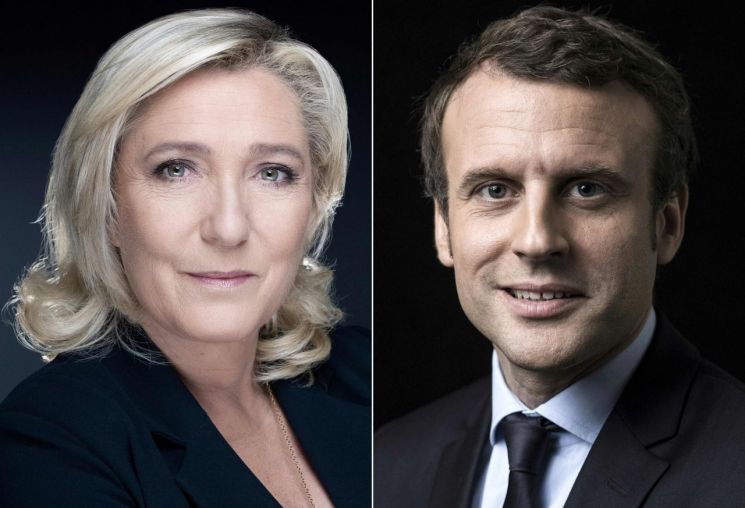 French President Emmanuel Macron (right) and Marine Le Pen, member of the far-right National Rally (RN) party [Image source=AFP Yonhap News]
Political Blocks Divided into Three...Ruling Party Squeezed Between Left and Right, Falls to Third Place
The current major political blocks are classified into three factions: the far-right National Rally (RN) led by far-right politician Marine Le Pen; the left-wing New Popular Front (NPF), an electoral alliance formed to block RN's rise to power; and the centrist coalition centered on Renaissance, led by President Macron.
In various opinion polls released ahead of the general election, RN is clearly leading. RN, which previously secured only 88 out of 577 seats in the lower house, topped the IFOP poll released on the 15th with 35% support. The NPF, a coalition of four parties including La France Insoumise (LFI), the Communist Party (PCF), the Socialist Party (PS), and the Greens (EELV), trails RN by 9 percentage points. The third place is held by the coalition led by Macron's Renaissance party, which is lagging behind.
The Economist analyzed, "What is important in the two elections on June 30 and July 7 is that either the far-right or the hard-left could come to power," adding, "This could mean extremist politics, economic populism, and financial instability." Bloomberg noted, "President Macron's Renaissance party is under attack from both left and right and is far behind in the polls, ranking third." Moreover, the ruling party has not been able to expand its base like the NPF ahead of the early general election. The news agency reported, "There has been an implicit agreement in France to prevent the far-right party from gaining national power, but this model is collapsing."
This general election is only for the lower house. Unless a candidate wins more than 50% of the vote in the first round, all candidates who receive at least 12.5% of registered voters' support advance to the final second round. Accordingly, The Economist reported that the number of seats held by each faction will shift depending on political movements between the first and second rounds.
Le Figaro, analyzing based on the European Parliament elections, predicted that RN could take first place in two-thirds of the constituencies in this early general election. It also forecasted that in the second round, RN candidates would face off against NPF candidates rather than those from Macron's camp. On the other hand, the ruling coalition centered on the Renaissance party is expected to advance to the second round in only 41 constituencies, half of which are in the Paris area.
Former President Hollande Also Declares Candidacy...Disputes Over Nominations Within Left-Wing Coalition
Concerns that the far-right forces might seize parliamentary power have led to an unexpected candidate declaration. Former President Fran?ois Hollande, a member of the left-wing Socialist Party, has declared his candidacy in his political stronghold of Corr?ze. He said the day before, "How can one remain indifferent when the danger of the far-right has become clear? This is an exceptional situation," adding, "The situation is serious." Hollande's main pledges include reintroducing the wealth tax and reconsidering pension reforms.
Within the left-wing coalition, disputes over candidate nominations have also continued. Adrien Quatennens, a candidate from La France Insoumise, announced his withdrawal from the race just before the candidate registration deadline amid allegations of spousal abuse. Another left-wing lawmaker, Fran?ois Ruffin, claimed that Quatennens was nominated earlier than other candidates due to his loyalty to leader Jean-Luc M?lenchon, escalating the controversy.
Additionally, ?ric Ciotti, leader of the traditional right-wing Republicans, broke the taboo of not allying with the far-right by expressing his intention to cooperate with RN in this election, which led to a threat of expulsion. He narrowly retained his leadership position by filing an injunction to suspend the expulsion decision. Former President Nicolas Sarkozy criticized this, saying, "The party leadership should have discussed the coalition and held a vote first."
Noting the confirmed turmoil ahead of the general election, The Economist warned, "The more likely it becomes that two extremist political groups will hold a majority in Parliament, the more unstable the market will be," adding, "France is moving closer to uncharted territory. This could be far-right, far-left, or a chaotic Parliament without a government."
However, Marine Le Pen, RN's leading candidate in the polls, stated in an interview with Le Figaro released that day, "I do not want institutional chaos," and said she would not demand President Macron's resignation even if she wins this election.
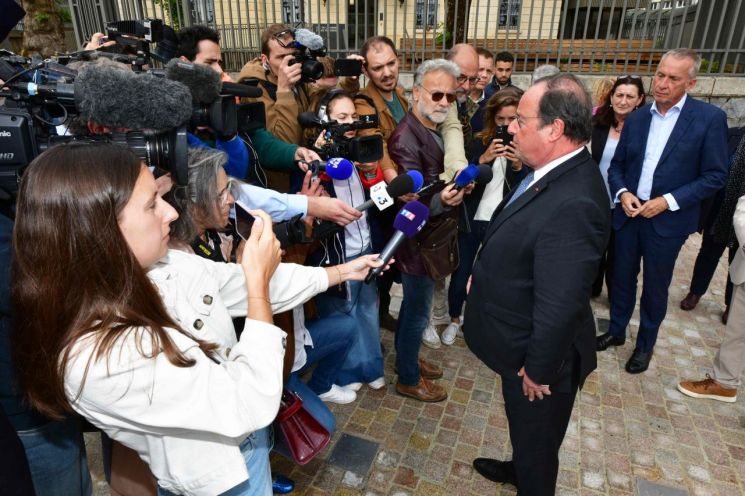 Former President Fran?ois Hollande Declares Candidacy for General Election
 [Image Source=AFP Yonhap News]
"Stop the Far-Right" Protests Continue Across France
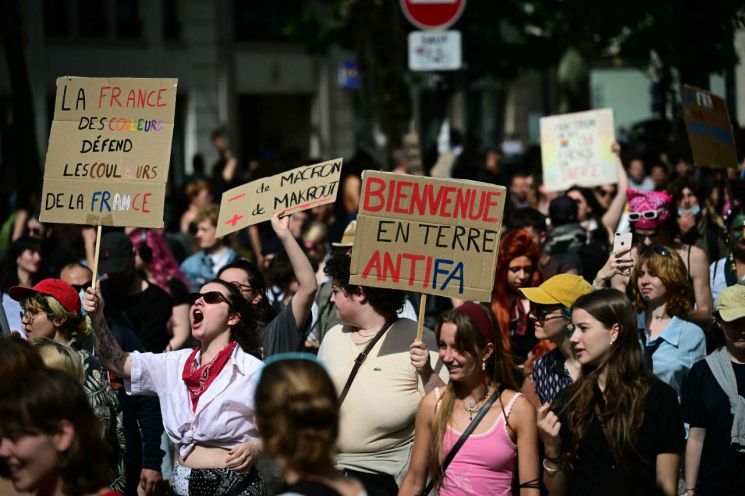
Voices calling to prevent far-right rule are growing louder in France. The Guardian, citing French police, estimated that 250,000 people protested nationwide on the 15th against the far-right government coming to power. Approximately 75,000 participated in the Paris protests. Florence David, who took part in the Paris protest, told The Guardian, "I never thought we would see far-right rule, but now it seems possible."
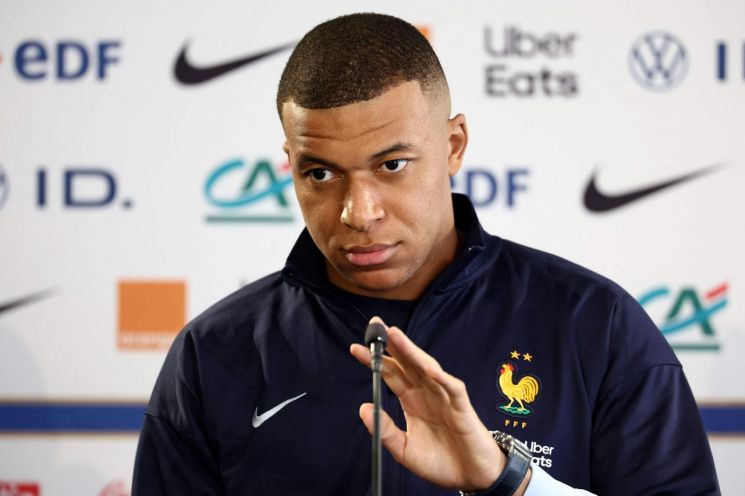
French national football player Kylian Mbapp? urged voting at a press conference held a day before France's match against Austria in the 2026 UEFA European Championship (Euro 2024), saying, "We are facing an unprecedented situation. We clearly see extremism at the door of power." The day before, Marcus Thuram, also a member of the French national team like Mbapp?, expressed shock at RN's victory and raised his voice to prevent far-right rule.
© The Asia Business Daily(www.asiae.co.kr). All rights reserved.
![Clutching a Stolen Dior Bag, Saying "I Hate Being Poor but Real"... The Grotesque Con of a "Human Knockoff" [Slate]](https://cwcontent.asiae.co.kr/asiaresize/183/2026021902243444107_1771435474.jpg)


















