Swedish Think Tank SIPRI Report Released
US and Russia Maintain or Reduce Nuclear Warheads, China Increases
Amid a global trend of nuclear power expansion, it is projected that China will possess as many intercontinental ballistic missiles (ICBMs) as the United States or Russia by 2030.
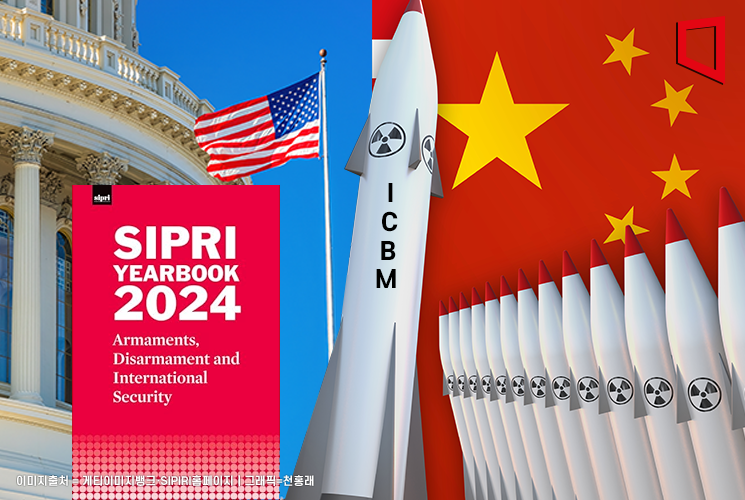
According to the Washington Post on the 16th (local time), the Stockholm International Peace Research Institute (SIPRI) stated in its annual report, 'SIPRI Yearbook 2024,' that "China is showing significant nuclear expansion capability" and "depending on how China structures its military power in the future, it could have as many ICBMs as Russia or the United States by at least 2030."
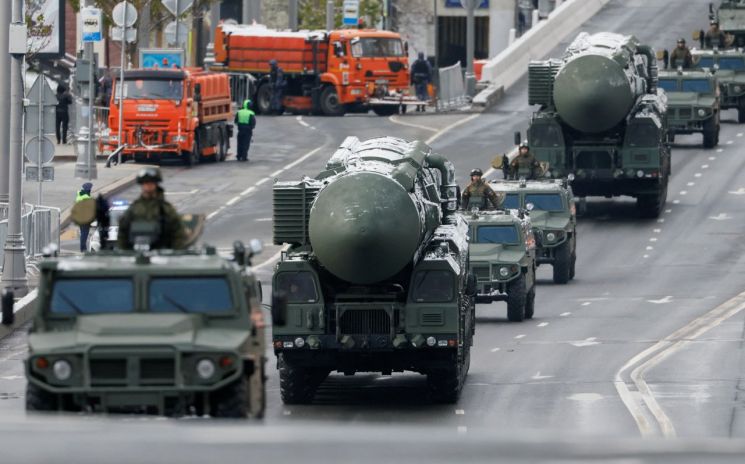
SIPRI estimates that China's nuclear warhead stockpile increased from 410 warheads last year to 500 as of January this year. This aligns with the content of a report submitted by the U.S. Department of Defense to Congress last year. At that time, the U.S. Department of Defense analyzed that "China had 500 operational nuclear warheads as of May last year, and with a nuclear expansion pace exceeding previous expectations, the number of nuclear warheads could reach 1,000 by 2030."
Of course, China's current nuclear warhead stockpile is still far behind that of the United States (3,708 warheads) and Russia (4,380 warheads). However, SIPRI focused on the increasing trend of China's nuclear power. While both the United States and Russia maintained or reduced their nuclear warhead stockpiles compared to last year, China increased by about 90 warheads. Hans Kristensen, senior researcher at SIPRI and head of the Nuclear Information Project at the Federation of American Scientists (FAS), explained, "Almost all nuclear-armed countries have plans to increase their nuclear forces or are already making significant efforts to do so," adding, "(Especially) China is expanding its nuclear weapons faster than any other country."
The background to China's nuclear power expansion appears to be the spread of armed conflicts worldwide, including in Ukraine and the Gaza Strip. SIPRI pointed out that the war in Ukraine has had a "negative impact" on the international community's discourse to control the nuclear arms race, stating that "the opportunity to reverse the trend of nuclear-armed states developing and deploying new weapon systems has diminished."
Tong Zhao, a nuclear expert at the Carnegie Endowment for International Peace, a U.S. think tank, said, "It is unclear what exactly caused China's recent change in attitude toward nuclear arms expansion," emphasizing, "China's nuclear expansion seems less about clearly defined military objectives and more about instilling the perception that China deserves to be treated as an equal nation by Western powers led by the United States."
Dan Smith, director of SIPRI, expressed concern, saying, "While the total number of nuclear warheads worldwide has continued to decline gradually as Cold War-era weapons are dismantled, unfortunately, the number of operational nuclear warheads continues to increase every year," adding, "This trend is expected to continue and even accelerate." As of January 2024, the total number of nuclear warheads worldwide is estimated at 12,121, of which 9,585 are stockpiled and operational for military purposes, excluding retired weapons.
© The Asia Business Daily(www.asiae.co.kr). All rights reserved.


















