Jusan-yeon Holds Seminar on 'Measures to Revitalize Housing Supply'
House Prices Expected to Soar in 2025-2026 Due to Supply Shortage
Rising House Prices Driven by Increase in Population Reaching 30s and Decrease in Housing Supply
"Possibility of Spread to Capital Area and Metropolitan Cities in Second Half of Year"
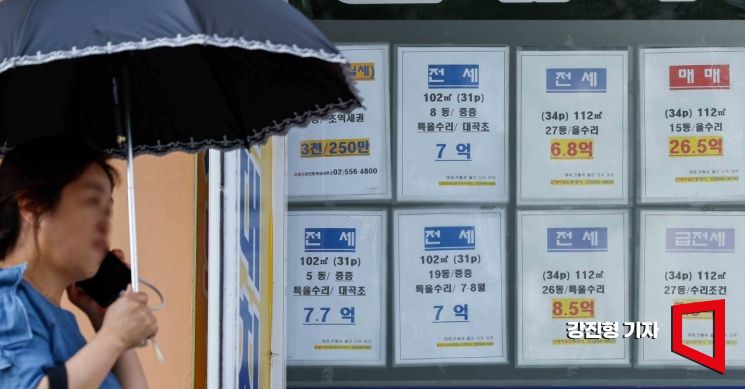 More than half of the jeonse contracts for the 'standard apartment size' in Seoul this year have jeonse prices exceeding 600 million KRW. On the 5th, a real estate office in Seoul displayed jeonse and sale price lists. Photo by Jin-Hyung Kang aymsdream@
There is a strong possibility that the upward trend in housing prices, which appeared mainly in Seoul during the first half of this year, will spread to the greater Seoul metropolitan area in the second half. It was also forecasted that if the recent decrease in supply volume continues, there is a high chance of another housing price surge occurring in 2025-2026.
The Korea Housing Industry Research Institute announced this on the 17th at a seminar on 'Measures to Revitalize Housing Supply' held at the National Assembly Members' Office Building in Yeouido, Seoul. The keynote presentation was delivered by Kim Deok-rye, head of the Housing Research Office at the Korea Housing Industry Research Institute. Kim stated, "Since March, housing prices in Seoul have turned to a firm upward trend. Based on apartments, housing prices in Seoul began rising from the end of March, and in Incheon from early April," adding, "The upward trend in housing prices is expected to spread throughout the entire Seoul metropolitan area."
Expected 650,000 Transactions This Year, 17% Increase from Last Year
Kim further explained, "The increase in housing prices will activate transactions, leading to a rise in transaction volume," and predicted, "This year's housing transaction volume is expected to reach 650,000, a 17% increase compared to last year's 555,000." It is analyzed that the participation of people in their 20s and 30s, who hesitated to buy homes over the past two years, may influence the increase in transaction volume.
National housing prices are expected to decrease by 1.8% compared to last year. The national housing sales price index recorded -4.7% in 2022 and -3.6% in 2023, showing a trend of decreasing decline over time.
Seoul and the metropolitan area are forecasted to rise by 1.8% and 0.9%, respectively, while provincial areas are expected to fall by 2.7%. However, apartments in provincial metropolitan cities with abundant jobs are likely to shift to a firm upward trend around September to October. If the first-phase new town redevelopment lead districts in the metropolitan area are designated in the second half of this year, apartment prices in those areas are expected to rise.
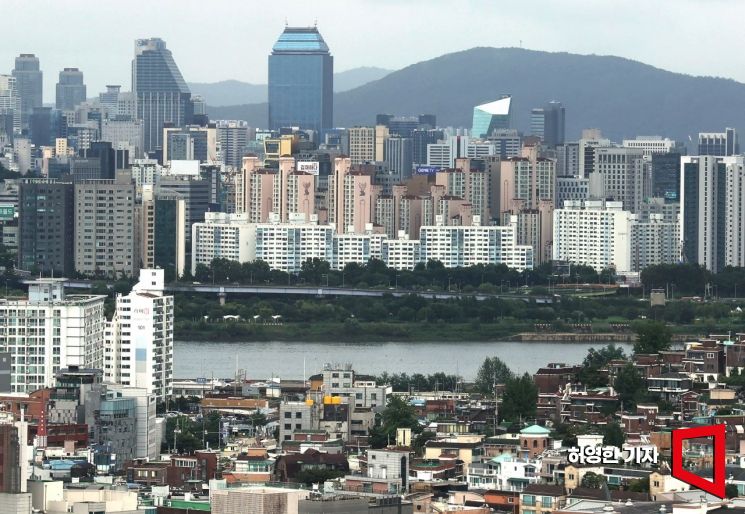
In particular, the recent poor performance in housing supply is cited as a factor that will fuel future price increases. As the number of permits and construction starts decreases, future housing supply will decline, causing prices to rise. Typically, it takes 1-2 years from permit approval to construction start, and 3 years from construction start to completion for apartments.
According to the Korea Housing Industry Research Institute, the average annual number of housing permits nationwide was 540,000 units from 2017 to 2021. This has steadily decreased to 520,000 units in 2022, 430,000 units last year, and an estimated 380,000 units this year. Construction starts have shown even weaker performance, dropping from an average of 520,000 units (2017-2021) to 380,000 units in 2022, 240,000 units last year, and an estimated 300,000 units this year.
This decline in volume is attributed to factors such as rising construction costs, accumulation of unsold units, problems with real estate project financing (PF), and increases in loan interest rates. Kim stated, "If the decline in housing supply continues this year as it did last year, there is a high possibility that a surge in housing prices caused by supply shortages will reoccur next year or the year after."
However, some of the permits previously approved but with delayed construction starts (250,000 units) are expected to begin construction mainly in areas where housing prices are turning upward, leading to an estimated 350,000 units of construction starts this year. This is expected to increase from 242,000 units last year. The number of housing units for sale is also projected to rise to 280,000 units, up from 192,000 units last year.
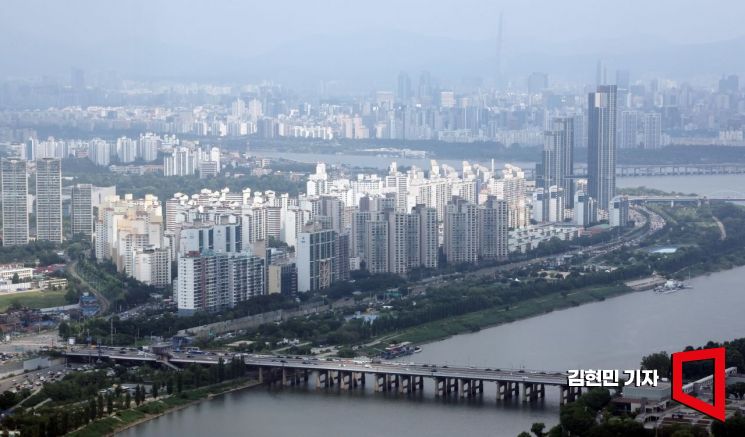 View of apartments in Ichon-dong, eastern Seoul, seen from the 63 Building observatory. Photo by Hyunmin Kim kimhyun81@
Rent and Jeonse Prices Expected to Rise Sharply
Nationally, the prices of Jeonse (long-term lease) housing are expected to continue rising. Kim explained, "Jeonse prices began to rise from July last year, and the increase has been steadily growing," adding, "With a decrease in move-in volumes and small housing supply this year, rent and Jeonse prices will continue to rise."
In particular, the increase in rent and Jeonse prices in the metropolitan area is expected to be significant. This is due to the growing population reaching their 30s, increasing the number of people entering the housing market, while the supply of small housing units for this demographic has sharply decreased. Additionally, with the four-year mark of the introduction of the contract renewal request right in July 2020 approaching this August, there is a high possibility of Jeonse prices rising.
Meanwhile, in a survey conducted by the Korea Housing Industry Research Institute from the 3rd to the 14th of this month targeting over 300 housing construction companies and developers, 70% of respondents answered that they plan to reduce the scale of housing projects within the next year.
They cited factors worsening business conditions such as "market stagnation and soaring construction costs," "difficulties in PF financing due to high interest rates and fees," and "avoidance of small housing purchases due to heavy taxation on multiple homeowners." They emphasized, "It is urgent to normalize bridge loans and PF, implement effective measures against unsold units, and ease restrictions on interim and final payment loans for apartments for sale."
© The Asia Business Daily(www.asiae.co.kr). All rights reserved.
![Clutching a Stolen Dior Bag, Saying "I Hate Being Poor but Real"... The Grotesque Con of a "Human Knockoff" [Slate]](https://cwcontent.asiae.co.kr/asiaresize/183/2026021902243444107_1771435474.jpg)


















