Ministry of Land Announces 'REITs Revitalization Plan'
"Aiming for REITs Scale Comparable to Advanced Countries"
Project REITs, Development Stage Registration System
Expanding Investment Targets to Healthcare, etc.
Allowing Monthly Dividends and Capital Reserves for REITs
Utilizing REITs for PF, Unsold Units, and Long-term Rentals
The government plans to expand the scale of Real Estate Investment Trusts (REITs) to the level of advanced countries such as the United States and Japan. As a measure, it will introduce 'Project REITs,' which allow registration during the development phase, to be used for the maintenance of aging planned cities like the first-generation new towns. The system will be revised by abolishing reporting and disclosure requirements that are unrelated or unnecessary for investor protection. Additionally, to expand REIT investment opportunities, monthly dividends will be permitted, and the introduction of 'Regional Win-Win REITs' will be promoted to ensure real estate profits benefit local residents. REITs will also be utilized for rescuing projects struggling with bridge loan repayments, resolving unsold housing, and fostering long-term rental housing.

On the 17th, the Ministry of Land, Infrastructure and Transport (MOLIT) announced the 'REITs Activation Plan' at the Economic Ministers' Meeting. The goal is to grow the REITs market, which currently has total assets of approximately 96 trillion won (16 trillion won in listed REITs), to provide stable income through high dividends to the public and support new industry investment bases for companies.
MOLIT decided to introduce 'Project REITs,' which allow REITs to directly develop, lease, and operate real estate. Registration will be permitted during the development phase (switching to a licensing system during the operation phase), and the single shareholder ownership limit, currently set at 50% or less to enable swift decision-making, will be lifted. Disclosure and reporting obligations will also be minimized. This breaks away from the inefficient method of 'PFV development followed by REIT acquisition' and allows starting with Project REITs and transitioning to general REITs. The regulation requiring 30% of shares to be publicly offered within two years after completion will be extended to a maximum of five years. Non-residential projects will be able to secure stable financing through project financing (PF) guarantees from the Construction Guarantee Association. Project REITs are expected to be used for maintenance of aging planned cities including first-generation new towns, urban development, and downtown complex development. MOLIT plans to propose amendments to the 'Real Estate Investment Company Act' and the 'Framework Act on the Construction Industry' related to this in the second half of this year.
The scope of REIT investment will be expanded to include healthcare and tech assets. By next year, more than three healthcare REIT projects in the form of senior housing and medical-commercial complexes will be publicly offered in second- and third-generation new towns. A MOLIT official said, "The healthcare REIT market size in the United States, a REIT advanced country, is about 125 trillion won," and added, "To enhance the consistency and efficiency of second- and third-generation new town development, prime office and commercial sites will be preferentially provided to REIT-based operators."
Efforts will also be made to diversify REITs' revenue structures. MOLIT plans to abolish the mortgage investment limit (30%) to allow investment not only in physical real estate but also in real estate finance. The amendment will also include provisions allowing publicly offered REITs to incorporate high-quality real estate held by exempted public offering REITs without separate fundraising. Exempted public offering REITs refer to REITs with more than 50% investment by pension funds or those holding more than 70% of assets as rental housing.
Monthly dividends for REITs will also be promoted. However, to secure new investment funds, shareholders' consent will allow dividends to be accumulated and used to purchase real estate, permitting fund retention. Currently, REITs are required to distribute at least 90% of profits to shareholders. The introduction of regional win-win REITs is being considered to ensure that profits generated from facilities such as data centers are provided to local residents. Related research services began in May.
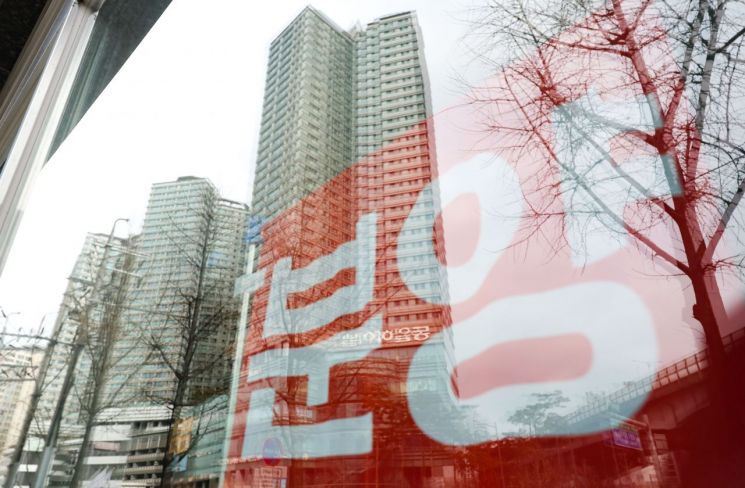
REITs will be actively utilized to stabilize the real estate market. First, land of auction-risk projects struggling to repay bridge loans and not converted to main PF will be acquired by public-supported private rental REITs. A total of 55 cases were received in the preliminary demand survey conducted in April. At this time, the requirement for construction company participation (performance) has been relaxed from 300 households over three years to 300 households over five years, considering the recent downturn in the construction market. The corporate restructuring (CR) REITs that purchase and operate unsold housing will also be promoted as previously announced by MOLIT. It is reported that about 5,000 unsold housing units have been submitted. CR REITs will receive tax benefits such as exemption from acquisition tax surcharges and comprehensive real estate tax relief.
Furthermore, REITs will be introduced for long-term rental housing. This is based on the judgment that there is a shortage of rental housing where the middle class can reside stably for a long period. Long-term rental housing is a housing type emphasized by Minister Park Sang-woo of MOLIT as an alternative to jeonse (key money deposit lease) since his early tenure. MOLIT plans to actively utilize REITs to professionalize, increase transparency, and scale up rental housing operators. A MOLIT official said, "We will introduce various types of rental housing such as autonomous and supported types to encourage early settlement," and added, "Next month, we plan to announce an introduction plan including appropriate support such as public land and fund investment, and inducing tenants to share REIT profits."
© The Asia Business Daily(www.asiae.co.kr). All rights reserved.
!["The Woman Who Threw Herself into the Water Clutching a Stolen Dior Bag"...A Grotesque Success Story That Shakes the Korean Psyche [Slate]](https://cwcontent.asiae.co.kr/asiaresize/183/2026021902243444107_1771435474.jpg)

















