UNIST Professors Park Taeun and Kwon Taejun's Team Discovers Drug Delivery Carriers Using Organ-on-a-Chip Technology
Organ-on-a-Chip as an Alternative to Animal Testing, Precise Biomimicry ... Presents Targeted Drug Delivery Method
To maximize the effectiveness of drug therapy, drug delivery technologies optimized for the bio-environment of organs and blood vessels are required.
A research team at UNIST has proposed a method to maximize drug delivery efficiency using 'Organ on a Chip' technology.
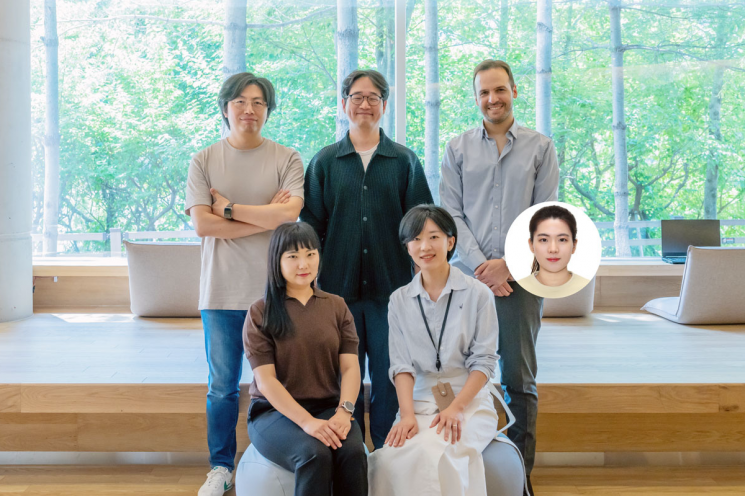 From the bottom left clockwise: Kyungha Kim (co-first author), Jinmyung Joo, Taejun Kwon, Jonathan Sabatdel Rio, Jungwon Choi (co-first author), Taeun Park.
The research team led by Professors Park Taeun and Kwon Taejun from the Department of Biomedical Engineering at UNIST (President Lee Yonghoon) demonstrated that an organ-on-a-chip, which recreates the blood-brain barrier (BBB) by culturing mouse cells, can enhance the permeability of therapeutic drugs. This was achieved by utilizing a cell-based phage display screening method that more accurately represents the physiological characteristics of organs.
By simulating the blood-brain barrier with an organ-on-a-chip the size of two finger joints, the team achieved significantly superior cerebrovascular permeability compared to the conventional Transwell model. The researchers expect that organ-on-a-chip technology will also contribute to the development of targeted therapeutics specialized for various organs such as the liver, kidneys, and lungs.
This achievement was made possible because shear stress, similar to frictional force, occurred as blood moved along the vessel wall inside the organ-on-a-chip. As a result, the structure and function of the glycocalyx on the vascular surface were accurately reproduced. Ultimately, the organ-on-a-chip effectively mimicked the bio-environment and succeeded in discovering effective drug delivery peptides (proteins).
Choi Jeongwon, a co-first author of the study, said, "This shows that organ-on-a-chip technology can serve as a powerful tool for discovering drug carriers with targeting functions by closely mimicking the in vivo environment."
Another co-first author, Kim Kyungha, stated, "We have demonstrated that organ-on-a-chip technology is highly likely to accurately model human tissues, opening up new possibilities for future research on drug delivery systems."
This research was supported by the Dementia Overcoming R&D Project, the National Research Foundation of Korea's Excellent Young Researcher Support Program, the Mid-Career Researcher Support Program, the University-Centered Research Institute Support Program, and the UNIST Leading Future Specialization Project. The results were published in the international journal 'ACS NANO' on May 22.
© The Asia Business Daily(www.asiae.co.kr). All rights reserved.

















