Government-Level Flexible Academic Operation Guidelines Established
Measures to Prevent Disadvantages Amid July 'Paid Deadline' Concerns
Operation of 'Medical Student Return Counseling Center' Within Universities
Medical Community's Strong Response with 'Full Strike Declaration' on 18th
The government has decided to implement an 'emergency academic operation' to support medical students facing the risk of collective failure due to their refusal to attend medical school classes. The main point is to operate flexibly so that there will be no academic issues when students return to classes, such as by offering additional courses for failed subjects or compensating for missed classes. They also explained that they will consider revising university academic operations, including restructuring the 6-year medical education curriculum, through detailed discussions in the future.
Ministry of Education: "We will do our best to bring students back in this difficult situation"
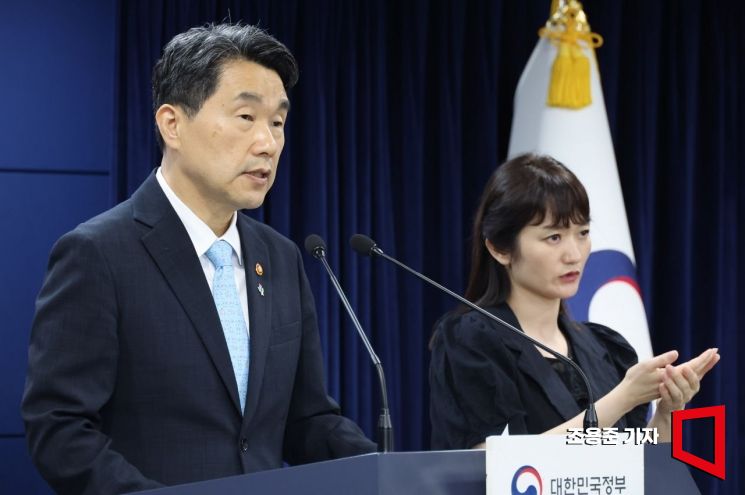 Lee Ju-ho, Deputy Prime Minister for Social Affairs and Minister of Education, is announcing measures to normalize medical school education on the 14th at the Government Seoul Office in Jongno, Seoul. Photo by Jo Yong-jun jun21@
On the morning of the 14th, Lee Ju-ho, Deputy Prime Minister for Social Affairs and Minister of Education, held an emergency briefing at the Government Seoul Office and announced the 'Medical Student Return Plan' containing such support measures. Minister Lee appealed to the medical students, saying, "Please come back to school now," and promised, "We will listen to the students' voices and reflect them in our policies."
In the education sector, there is an analysis that the deadline for collective failure is approaching around mid to late July as medical students show no signs of returning. In particular, concerns continue that with the increase in new students, more than 7,000 first-year medical students next year may have to attend classes all at once. In response, Minister Lee stated that he would accept the requests of university presidents and consult with universities and related ministries.
On the 12th, the Council of University Presidents for Medical School Advancement (UCPMSA), composed of presidents of universities operating medical schools, submitted a 'Government Proposal for Normalizing Medical School Academic Operations and Advancing Medical Education' to the Ministry of Education. The UCPMSA demanded ▲ stable financial support for medical schools ▲ preparation of a plan for the return of residents ▲ measures to prevent disadvantages in taking the national medical licensing examination ▲ institutional support measures for flexible class operations.
However, the Ministry of Education explained that it does not consider July as the deadline. Shim Min-cheol, Director of Talent Policy Planning at the Ministry of Education, said during the Q&A after the briefing, "We do not see mid to late July as the deadline," adding, "Our intention is to have students return to classes as much as possible rather than face failure or expulsion."
When asked if there is a way to change the students' minds, Minister Lee replied, "Rather than changing direction, I think we can create a situation where they definitely return by strengthening the measures we have taken so far, actively communicating to gain understanding, and further strengthening cooperation with individual universities."
Choi Eun-hee, Director of Talent Policy at the Ministry of Education, also said, "It is not easy and difficult, but the government has a mission to ensure they return," adding, "We will appeal to prioritize students' return and create conditions so that if they really come back, they can study while adjusting their academic burden as much as possible without disadvantages."
Ministry of Education: "Considering additional courses for failed subjects, etc."
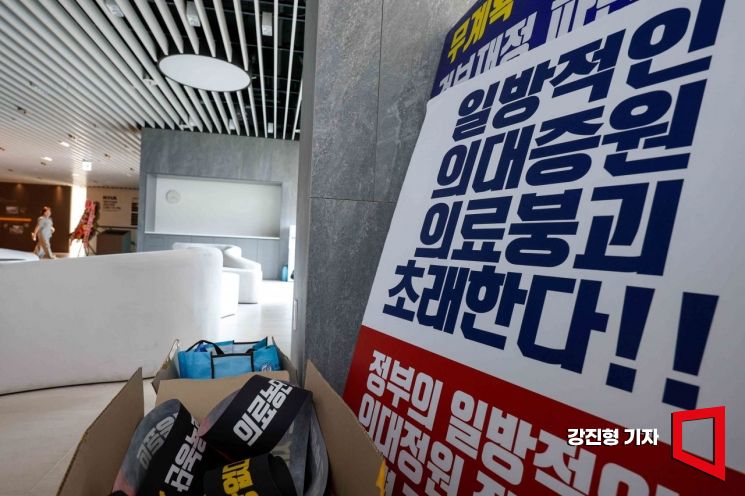 As the faculty of Seoul National University College of Medicine and the Korean Medical Association each announced collective strikes on the 17th and 18th respectively, on the 11th, a placard condemning the government's increase in medical school quotas was placed at the Korean Medical Association in Yongsan-gu, Seoul. Photo by Jinhyung Kang aymsdream@
To this end, the Ministry of Education explained that it will support university academic operations so that students returning to classes will not suffer disadvantages such as failure or academic burden. This goes beyond the 'flexible academic operation policies' autonomously set by each university, aiming to prepare specific academic operation measures at the government level. The Ministry plans to prepare and distribute an 'Emergency Academic Operation Guideline' to universities soon in consultation with them.
Minister Lee said, "For example, we will prepare and present measures such as offering additional courses for subjects students have not completed in the second semester, or allowing students to complete courses by compensating for missed classes until the end of the academic year without finalizing failure status at the end of the semester, thereby flexibly operating the curriculum," adding, "We will also consider more proactive measures such as securing class periods through additional semesters and partially restructuring the curriculum between academic years."
Minister Lee also said that a 'Medical Student Return Counseling Center' will be established and operated within universities to help medical students who have not participated in classes so far avoid mental difficulties when returning to school. He emphasized the position to strictly deal with collective acts or threats that block individual students from returning to classes.
In addition, he mentioned that the government’s plan to advance medical education, scheduled to be announced in September, will be promoted. He said, "We will guarantee the quality of medical education through groundbreaking investments in universities and hospitals," and "We will conduct in-depth reviews with various academic and field experts on improvement measures for curriculum, academic systems, and educational conditions that have been raised in medical education sites." However, he maintained the stance of not recognizing the medical students' 'alliance leave of absence.' Minister Lee said, "It is an important responsibility of universities to guide and protect students so that they can return to classes."
"There is no Plan B... Discussions on curriculum restructuring, etc."
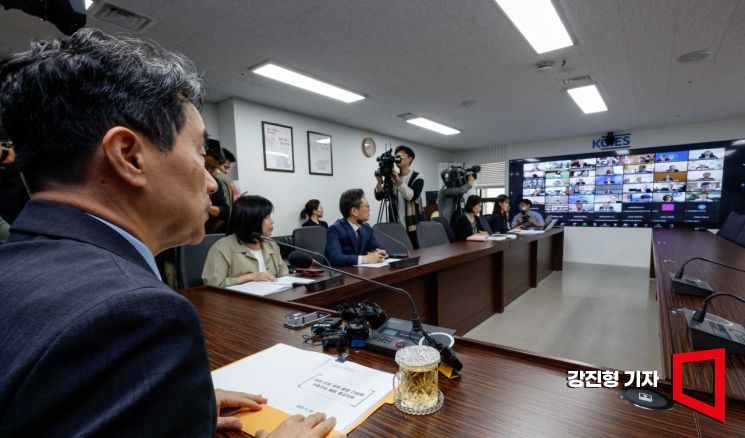 Lee Ju-ho, Deputy Prime Minister for Social Affairs and Minister of Education, attended the "Medical School Operating Universities Presidents' Meeting" held on the 20th at the Korea Educational Facilities Safety Institute in Yeongdeungpo-gu, Seoul, and shared opinions with the presidents of universities operating medical schools via video conference. Photo by Kang Jin-hyung aymsdream@
The Ministry of Education explained that it plans to "put heads together and come up with measures" regarding the detailed contents of the academic operation guidelines. Director Shim said, "There will be parts where curriculum restructuring is necessary," adding, "We plan to discuss with universities flexible operation aspects so that courses can be completed at any time through restructuring the 6-year curriculum."
Regarding the question of whether revising academic operations is institutionally possible, he said, "There are parts that can be commonly reflected in university regulations," and "There may be parts where the Ministry of Education needs to ease regulations, and we will concretize them while observing the discussion process." He also answered that the plan to offer additional semesters is possible through revising university regulations or academic operation rules.
When asked if it can go beyond the accreditation of the Korea Institute of Medical Education and Evaluation, he explained, "Each school has different conditions," and "There are parts that universities can quickly apply according to their conditions."
Regarding a 'Plan B' if students do not return between June and August, which is presumed to be the deadline for collective failure, Director Shim said, "It is not the time to consider Plan B at the moment," emphasizing again, "Right now, the priority is to focus on returning and to create and persuade conditions so that students can return."
© The Asia Business Daily(www.asiae.co.kr). All rights reserved.



















