Economic Recovery, Interest Rate Hikes, Adoption of Floating Exchange Rate System
Focus on Secondary Emerging Bond Markets like Turkey and Egypt
Prolonged High US Interest Rates Pose Variable
Emerging market bonds, which had been shunned in the market due to economic recession and inflation, are recently attracting investors again, according to major foreign media reports on the 11th (local time).
According to the reports, the holdings of Turkish lira-denominated government debt by foreign investors nearly quadrupled since the beginning of the year, reaching about $10 billion (14 trillion won) last month. T?rkiye recently raised its benchmark interest rate to 50% to curb inflation approaching 75%. Egypt, which is experiencing a severe shortage of foreign currency, has also received $15 billion from foreign investors into its bond market after attracting $35 billion from the Abu Dhabi sovereign wealth fund of the United Arab Emirates (UAE) in February.
The media evaluated, "Bonds in frontier markets such as Egypt, Pakistan, Nigeria, and Kenya are showing signs of recovery supported by a series of interest rate hikes and currency market liberalization moves," adding, "As interest rates fall in more mature emerging markets like Brazil, the double-digit yields offered in frontier markets are becoming more attractive to investors." Frontier markets refer to the second-tier emerging markets within emerging markets that have relatively smaller overall economies and stock market sizes but possess high growth potential.
Johnny Golden, head of emerging market bond strategy at JP Morgan, diagnosed, "Investors are trying to avoid betting solely on when the Federal Reserve (Fed) will cut interest rates," and added, "Many countries within emerging markets have unique investment drivers mixed with currency depreciation, interest rate hikes, policy reforms, and bailouts."
However, there is also analysis that the prolonged high interest rates in the U.S. could act as a headwind for emerging bond markets. International credit rating agency Moody’s pointed out that countries like Egypt, Nigeria, and Pakistan, which are expected to spend more than one-third of their revenues on bond interest payments until 2028, may face pressure for additional interest rate hikes to sustain foreign capital inflows. Recently, Kamau Thugge, Governor of the Central Bank of Kenya, stated, "Since global interest rates are still at levels that can lure investors’ cash out of Kenya, we cannot lower Kenya’s benchmark interest rate from the current 13%."
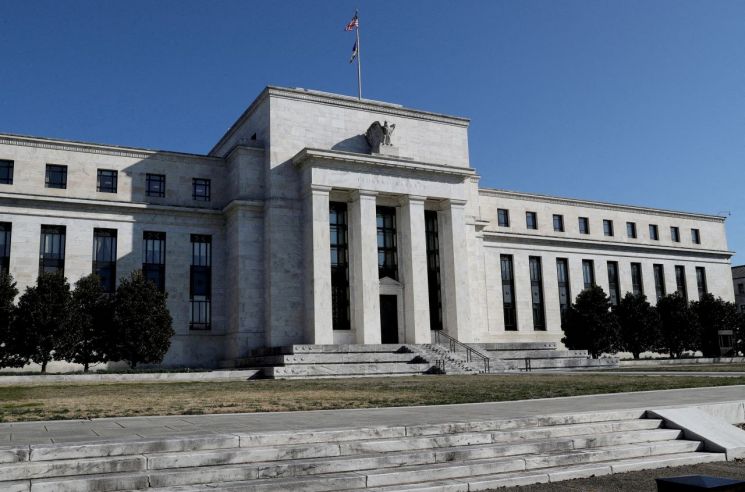
Meanwhile, the Fed will announce its benchmark interest rate immediately after the Federal Open Market Committee (FOMC) regular meeting held over two days starting today. The market widely expects the current benchmark rate of 5.25?5.5% to be held steady for the seventh consecutive time. The key issue is the revision of the dot plot reflecting FOMC members’ interest rate forecasts. In March, the Fed projected three 0.25 percentage point rate cuts this year in the dot plot, but it is now anticipated that the number of rate cut forecasts will be reduced to two or fewer in this meeting.
© The Asia Business Daily(www.asiae.co.kr). All rights reserved.
![Clutching a Stolen Dior Bag, Saying "I Hate Being Poor but Real"... The Grotesque Con of a "Human Knockoff" [Slate]](https://cwcontent.asiae.co.kr/asiaresize/183/2026021902243444107_1771435474.jpg)
















