Yeongdeok County in North Gyeongsang Province is conducting preventive education at village halls and other locations in each town and township, anticipating an increase in tick-borne infectious diseases this summer due to the hot and humid climate.
Severe Fever with Thrombocytopenia Syndrome (SFTS), a tick-borne infectious disease, is highly fatal, with 20 cases reported in North Gyeongsang Province alone last year, resulting in 10 deaths.
This year, the first SFTS case in North Gyeongsang Province was reported in Sangju on April 23, and a resident of Pohang died after contracting SFTS while clearing weeds.
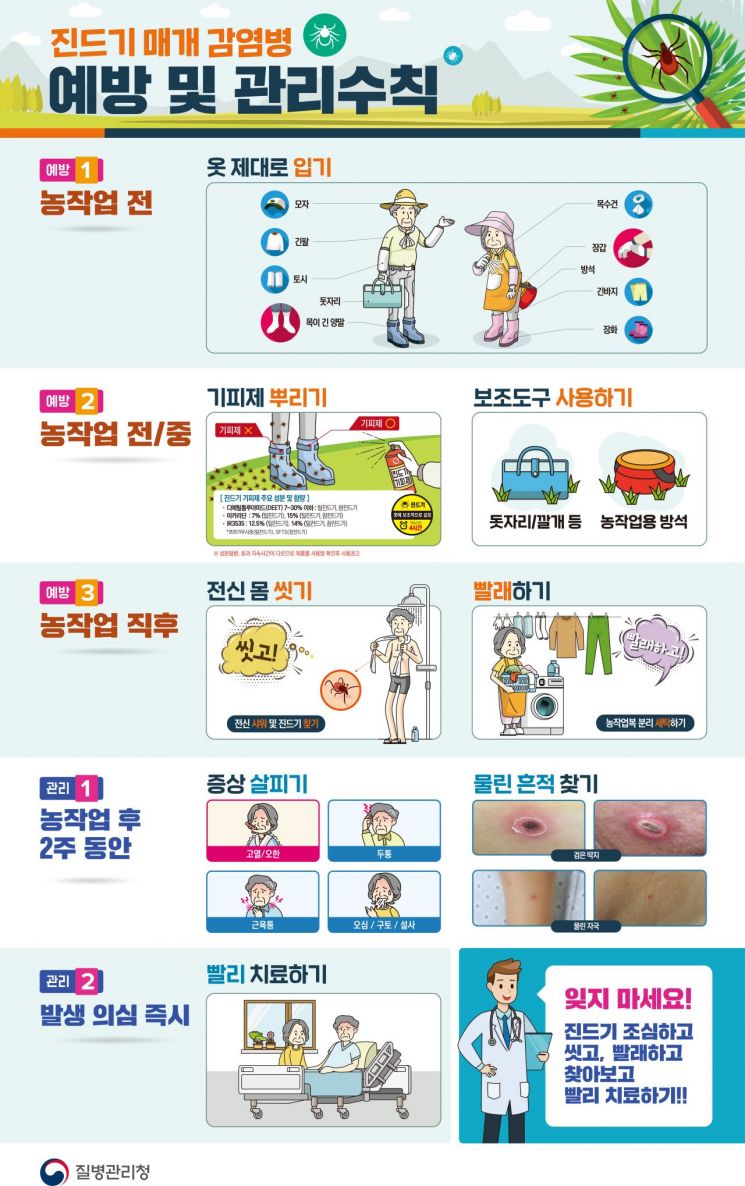
The incubation period for tick-borne infectious diseases is usually 4 to 15 days, with symptoms such as high fever, chills, vomiting, and diarrhea. If these symptoms appear after outdoor activities, it is important to visit a medical institution immediately for treatment.
Additionally, since there are no vaccines or treatments developed for tick-borne infectious diseases, the best prevention is to avoid being bitten. Therefore, people who work in agriculture, clear weeds, collect Songi mushrooms, hike, or frequently visit grassy areas or reservoirs are encouraged to use tick repellents.
To prevent tick-borne infectious diseases, you should: ▲ Avoid exposing skin during farm work or outdoor activities ▲ Spray tick repellent on clothing and shoes ▲ Wash clothes and shower after going out, and check for ticks.
Yoon Sawon, head of Yeongdeok County Public Health Center, said, "Personal hygiene management is the best prevention," and urged, "When working on farms or passing through grassy areas such as fields and lawns, please be sure to use tick repellents."
© The Asia Business Daily(www.asiae.co.kr). All rights reserved.

















