Ministry of Agriculture, Food and Rural Affairs to Recruit Target Farms Until the 15th of Next Month
Supporting Stable Market Access for Certified Livestock Products
The government will expand the scope of the 'Low-Carbon Livestock Product Certification System,' which certifies products that reduce greenhouse gas emissions by more than 10% compared to the average emissions per livestock species by applying low-carbon livestock technologies during the production process, to include pigs and dairy cows.
The Ministry of Agriculture, Food and Rural Affairs announced on the 11th that, to promote the Low-Carbon Livestock Product Certification System, the certification target items will be expanded from Hanwoo to pigs and dairy cows, and that applications from farms wishing to obtain low-carbon certification will be accepted until July 15.
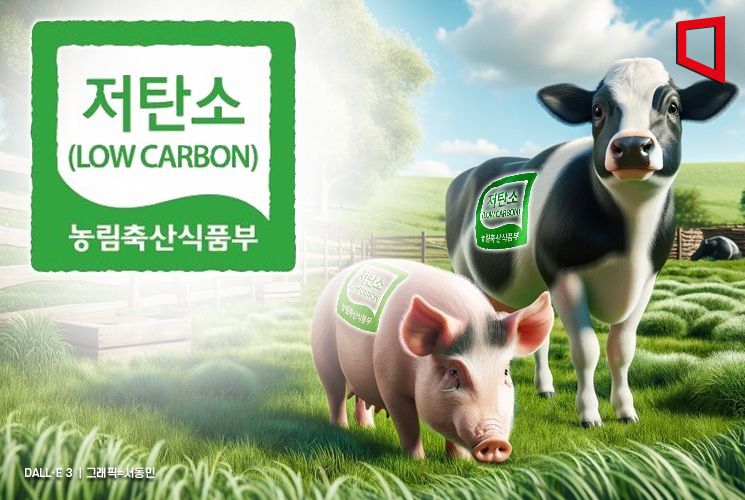
The Low-Carbon Livestock Product Certification System was introduced and implemented starting in 2023 with Hanwoo to encourage voluntary carbon reduction by livestock farms and to meet the values of consumers who prioritize carbon neutrality.
Pig and dairy cow farms included in the certification target this time must, similar to Hanwoo farms, have previously obtained antibiotic-free livestock certification. Additionally, pigs must meet either a baseline year finishing pig (pork) shipment performance of 1,800 kg or more or have at least 100 sows at the time of application. Dairy cows must have a baseline year milk production of 300 tons or more or have at least 40 multiparous cows that have given birth to calves at the time of application. Applications are possible if at least one carbon reduction technology such as feed management, manure treatment, or energy saving is applied during the production process of the certified livestock products.
According to the Ministry of Agriculture, Food and Rural Affairs, increasing the annual number of finishing pigs shipped per sow from an average of 18.5 to 25.0 results in a 2.8% carbon reduction effect, and improving milk production per dairy cow by 10% results in a 9.1% carbon reduction effect. Additional costs will be supported when nitrogen-reducing feed is given to pigs or low-methane feed is given to dairy cows in connection with the pilot project for the livestock sector carbon neutrality program.
Pig and dairy cow farms wishing to participate can apply to the Livestock Products Quality Evaluation Service. Final certification is granted after emission calculation consulting, on-site inspection, and expert review. The Ministry of Agriculture, Food and Rural Affairs plans to actively collaborate with consumer groups to raise awareness of low-carbon livestock products and support stable sales channels for certified livestock products through department stores, large supermarkets, and distributors.
Kim Jeong-wook, Director of Livestock Policy at the Ministry of Agriculture, Food and Rural Affairs, said, "We plan to continuously demonstrate and add new reduction technologies to help spread carbon reduction efforts in livestock farms. We hope for active participation from livestock farms leading carbon neutrality, and we ask consumers to show great interest in low-carbon certified pork and milk."
© The Asia Business Daily(www.asiae.co.kr). All rights reserved.

















