"Ramen unit price is much higher, so it's better" opinions also
Conflicting views even on the price itself
After ordering 17,000 won worth of golbaengi-muchim (spicy whelk salad) at a restaurant, a customer was surprised to receive ramen noodles instead of somyeon (thin wheat noodles), sparking mixed reactions from netizens. On the 8th, a post titled "Is this right for this price?" along with a photo was uploaded to the self-employed online community 'Apeunikka Sajangida' (Because It Hurts, I'm the Boss). The author, Mr. A, recently ordered golbaengi-muchim at a restaurant.
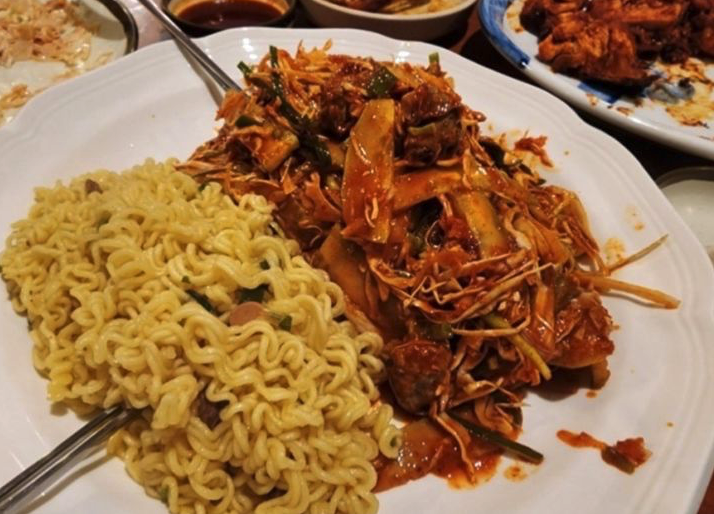 After ordering 17,000 won worth of golbaengi-muchim at a restaurant, a customer was surprised when ramen, not somyeon, was served. Opinions among netizens were divided. On the 8th, a photo along with a post titled "Is this correct for this price?" was uploaded to the self-employed online community "Apeunikka Sajangida."
 [Photo source=Online community "Apeunikka Sajangida"]
In the photo posted by Mr. A, the golbaengi-muchim is mixed with shredded cabbage, cucumber, and a few pieces of whelk, accompanied by ramen noodles. Mr. A expressed frustration, saying, "The ramen was served immediately after boiling, steaming hot, but it looked like warm food waste." He added, "I wanted to return it, but I held back because of my companions," and "There’s a reason why there were no customers during peak time."
The price of the golbaengi-muchim Mr. A ordered was 17,000 won, and netizens had divided opinions about the price. Some netizens said, "Above all, it’s shocking that ramen noodles were served instead of somyeon," "Regardless of the price, it looks like there was no effort put into it," "Food that looks good tastes good, but this is a bit hard to eat," and "Cold whelk with warm noodles shows the owner doesn’t understand flavor combinations." On the other hand, some netizens viewed it positively, saying, "Ramen noodles cost more than somyeon, so isn’t this a good deal?" "There seems to be plenty of whelk and vegetables, and it looks tasty," and "Since whelk and vegetables are expensive, this price isn’t bad."
Dining Out Price Inflation Rate Exceeds Average for 3 Consecutive Years
Recently, as controversies over restaurant and cafe food prices continue to rise on online communities, it has been revealed that the dining out price inflation rate has exceeded the average overall consumer price inflation rate for the past three years. In particular, the prices of basic ingredients such as cooking oil, soy sauce, sesame oil, red pepper paste, and soybean paste have seen significant increases.
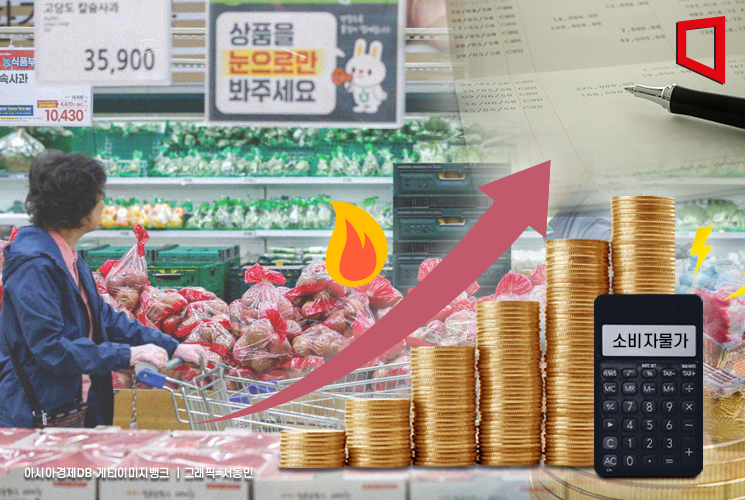 Amid ongoing controversies over the prices of restaurant and cafe food on online communities, it has been revealed that the rate of increase in dining-out prices has exceeded the average overall consumer price inflation rate over the past three years. In particular, the prices of basic ingredients such as cooking oil, soy sauce, sesame oil, gochujang, and doenjang have risen significantly.
 [Photo by Seodongmin, Asia Economy]
According to the National Statistical Office’s National Statistics Portal on the 6th, last month’s dining out price inflation rate was 2.8%, which is 0.1 percentage points higher than the overall consumer price inflation rate average of 2.7%. This marks 36 consecutive months since June 2021 that the dining out price inflation rate has exceeded the consumer price inflation rate average. Among 39 dining out items, more than half?23 items?had inflation rates above the average, and no items saw price decreases.
Tteokbokki (spicy rice cakes) had the highest increase at 5.4%, followed by lunch boxes (5.3%), gimbap (5.2%), bibimbap (5.2%), kalguksu (hand-cut noodle soup) (4.3%), pho (4.2%), kimchi jjigae set meals (4.1%), and cafeteria meal prices (4.0%). According to 'Chamgagyeok,' the comprehensive price information portal by the Korea Consumer Agency, the average price of gimbap in Seoul in April was 3,362 won, up 24.9% from 2,692 won three years ago. Bibimbap rose 21.7% from 8,846 won to 10,769 won during the same period. Kalguksu increased 22.7% from 7,462 won to 9,154 won, and kimchi jjigae set meals rose 19.9% from 6,769 won to 8,115 won.
© The Asia Business Daily(www.asiae.co.kr). All rights reserved.


















