Kim Kwang-rim (real name Kim Chung-nam), a senior literary figure who served as the president of the Korean Poets Association, has passed away at the age of 95.
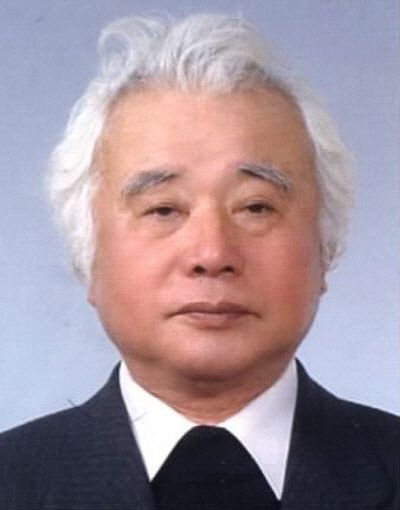
The bereaved family announced that Kim passed away on the 9th. Born in 1929 in Wonsan, South Hamgyong Province, the late poet moved south alone in 1948 and began his literary career that year by debuting with the poem "Munpungji" in the Yonhap Newspaper.
He graduated from Korea University with a degree in Korean literature. Having served as an army lieutenant during the Korean War, he later worked at the Ministry of Culture and Public Information, KBS, and the Korea Exchange Bank before serving as a professor at Jang-an University until his retirement in 1996.
In 1959, he published his first poetry collection, "Sangsimhaneun Jeopmok" (Heartbroken Grafting). In 1961, he participated as a founding member of the literary magazine "Hyundaesi" (Modern Poetry) alongside poets Kim Jong-sam and Kim Yo-seop. From 1992 to 1994, he served as the 28th president of the Korean Poets Association.
Kim is regarded as a modernist poet in the lineage starting from Jeong Ji-yong and Kim Ki-rim, through Kim Kwang-seop and Park Nam-su. Based on Western modernism, he pursued a clear poetic world through imagery and published works that inherited modernism, continuing the dominant trend of Korean poetry's subjectivism.
"If flowers are cut and placed in a vase / They soon fill it with fragrance / That is life / But if a person is once broken / Is that the end? (excerpt) If people only have places where they are fragrant / Aren't they flowers that can be placed, even if cut?"
His 1959 poem "Rebellion of Flowers," published in Sasanggye, contrasts the nature of flowers and humans against the backdrop of postwar devastation, expressing urban lyricism. He reflected on the Korean War, the greatest tragedy of the nation, and the absurdities of the postwar world, expressing the results of his contemplation through various poems.
Kim was also well known for his close relationship with painter Lee Jung-seop (1916?1956). Shortly after liberation, in 1947, Kim met Lee in Wonsan and maintained their connection until Lee's death in 1956.
During his military service as an officer, at Lee Jung-seop's request, he collected silver foil from cigarette packs found in supply boxes whenever he went out, which Lee used as materials for his paintings.
During his lifetime, Lee Jung-seop, tormented by extreme self-loathing, once asked Kim to burn his paintings, but Kim preserved them carefully and later returned them. This anecdote is included in Kim’s 2006 work "Between the Real and the Fake ? Thoughts on Painter Lee Jung-seop."
Additionally, Kim worked hard for the internationalization of Korean poetry, especially leading exchanges among Korean, Chinese, and Japanese poetry circles. His poetry collections include "Morning Cast Net," "Heavenly Flowers," and "Sick Man," and his critical works include "Longing for Existence," "The Poetics of Irony," and "Studies on Contemporary Japanese Poets." He received the Korean Poets Association Award, the Republic of Korea Literature Award, the Order of Cultural Merit, and the Cheongma Literary Award.
His survivors include sons Kim Sang-su (chairman of Baum Communication), Kim Sang-il (sculptor), Kim Sang-ho (dean of Taiwan University of Science and Technology and president of the Taiwan Modern Poets Association), and daughter Kim Sang-mi. The funeral is being held at Seoul National University Hospital Funeral Hall, Room 2, with the funeral service scheduled for 10 a.m. on the 11th.
© The Asia Business Daily(www.asiae.co.kr). All rights reserved.
!["The Woman Who Threw Herself into the Water Clutching a Stolen Dior Bag"...A Grotesque Success Story That Shakes the Korean Psyche [Slate]](https://cwcontent.asiae.co.kr/asiaresize/183/2026021902243444107_1771435474.jpg)
















