District aims to reduce 4,682 tons of waste, a 10% increase from last year, with comprehensive 2024 waste reduction plan
Strengthening business waste discharge reporting, recycling coffee grounds and waste textile fabrics, expanding zero-incineration stores
District Chief Park Gang-su urges residents' active participation during the golden time for new incinerators and climate crisis response this year
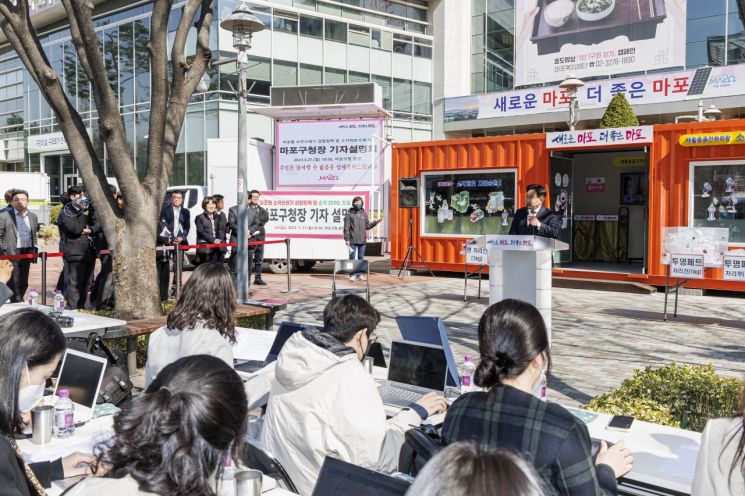
Mapo-gu (District Mayor Park Gang-su) is promoting a reduction of more than 4,682 tons (10% of the total) of household waste in 2024 as part of its comprehensive household waste reduction plan.
With the upcoming ban on direct landfill of household waste in the metropolitan area starting in 2026, and Seoul City's plan to build an additional resource recovery facility for waste incineration in Sangam-dong, the district announced that it will focus on waste policy implementation this year.
The district proposed the "Mapo-type Household Waste Reduction Policy" as an alternative to Seoul City's incinerator installation plan, achieving a reduction of more than 1,055 tons compared to the previous year last year.
This year, based on the Seoul Metropolitan Government Mapo-gu Ordinance on Waste Reduction, which was promulgated last March, the district plans to take a more decisive approach to reducing household waste.
The main points of the 2024 Mapo-gu Household Waste Reduction Comprehensive Plan are ▲strengthening the obligation to report business waste emitters ▲promoting recycling of coffee grounds and waste sewing fabrics ▲expanding recycling of transparent PET bottles and clothing ▲expanding installation and operation of incineration-zero stores.
First, buildings that emit more than 300 kg of household waste per day, rather than by individual business waste emitters, will be regarded as business waste emitters and required to report and manage their waste disposal independently.
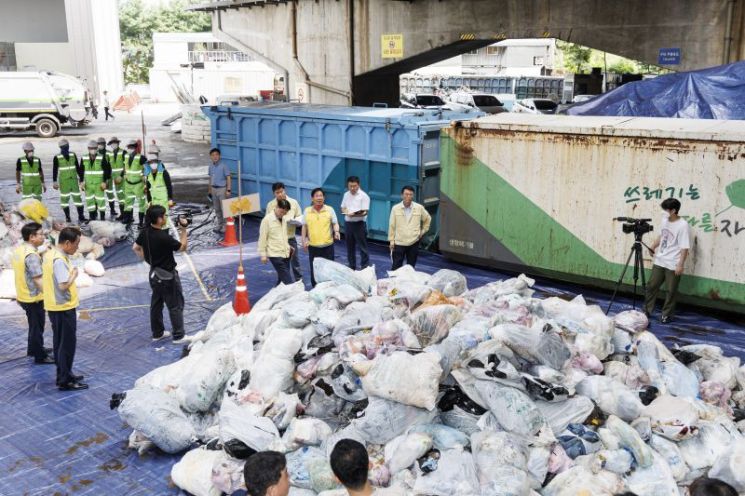
To this end, the district will closely identify business waste emitters, focusing on Sangam-dong and Gongdeok-dong where large buildings are concentrated, and reduce more than 1,750 tons of incinerated waste annually through self-management.
Also, reflecting Mapo-gu’s characteristics with many coffee shops and small sewing factories, coffee grounds and waste sewing fabrics, which were previously classified as household waste and incinerated or landfilled, will be separately collected and recycled starting this year.
If 1,585 coffee shops in the area recycle 3.5 kg of coffee grounds daily, it will reduce 5.5 tons per day and about 2,000 tons annually of household waste. Additionally, 94 companies’ waste sewing fabrics are expected to be recycled at 780 tons annually.
Furthermore, the district plans to increase recycling rates by expanding transparent PET bottle collection points and clothing collection bins, and significantly reduce incinerated waste by establishing a culture of using reusable products.
In the future, the district will gradually expand the "Incineration-Zero Stores," a Mapo-type recycling separation facility, in the second half of the year by utilizing public facilities, apartment complexes, and new building sites within the district.
Park Gang-su, Mayor of Mapo-gu, said, “With the ban on direct landfill of household waste in the metropolitan area starting in 2026, this year is the golden time to prevent new incinerators and the climate crisis.” He added, “We ask for the active participation and cooperation of Mapo residents and institutions so that Mapo-gu’s efforts to reduce waste and promote recycling can expand beyond Seoul to the entire country and lead to remarkable results.”
© The Asia Business Daily(www.asiae.co.kr). All rights reserved.


















