Kubo and Push-ups Cannot Be Performed in Full Combat Gear
First-Come, First-Served Running Is Not Included in Military Discipline Regulations
A trainee soldier from the 12th Division in Inje, Gangwon Province, was confirmed to have died while undergoing 'military discipline training' (commonly known as Eolcharyeo), prompting the police to launch an investigation. Since the incident, there has been growing debate among citizens about the severity of Eolcharyeo.
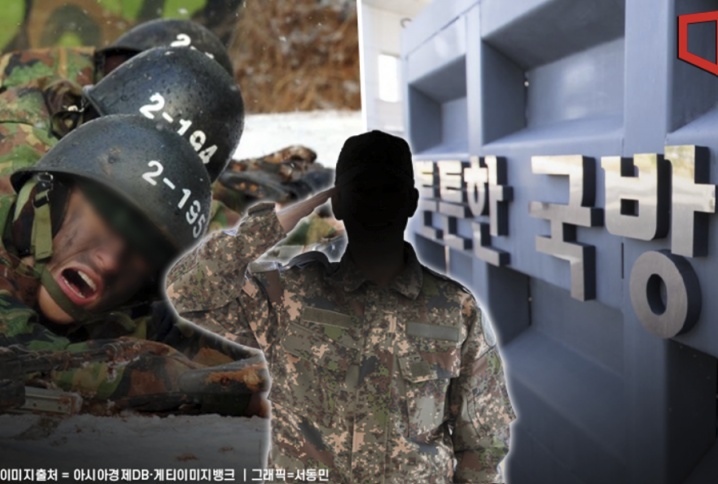 Military training can be conducted to cultivate soldiers' mental discipline and improve physical fitness.
So, how severe is Eolcharyeo as specified in the actual Army regulations? For example, a representative form of Eolcharyeo before the 2000s was the Wonsan Bombardment. It involved standing at attention with hands clasped behind the back, then placing the head on the ground and enduring the position. Mr. A, who enlisted in 1999, said that during the early days of his military service, he did the Wonsan Bombardment about once a week. At that time, the Wonsan Bombardment was one of the typical forms of Eolcharyeo. Of course, nowadays, it is considered abuse rather than Eolcharyeo. We reviewed the 'Military Life Regulations' currently adopted by the Republic of Korea Army, specifically the section on military discipline training.
Discipline Training with Eolcharyeo Allowed for Soldiers Showing Laxity
Military discipline training is actually a 'training' conducted by superiors to discipline subordinates. It should be applied to soldiers who have shown lax discipline and generally consists of physical training and mental cultivation. In other words, Eolcharyeo conducted for disciplinary purposes is not considered abuse.
However, clear limits exist. The regulations state that when conducting military discipline training, △ there must be no risk of human rights violations, and △ the trainee must be able to feel a sense of achievement in improving their mental and physical strength. This means Eolcharyeo should not be imposed simply as a form of punishment. Also, the intensity of Eolcharyeo varies depending on the soldier’s rank and physical condition.
Comparison Between Actual Regulations and the 12th Division New Recruit Training Center’s Eolcharyeo
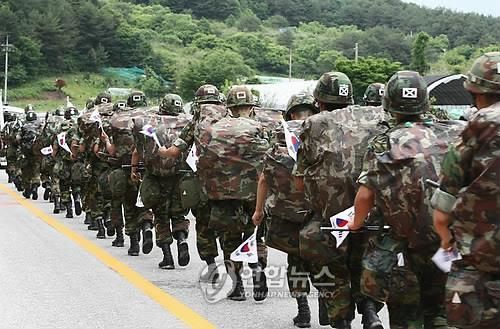
Now, let’s compare the military discipline training conducted at the recruit training center where the trainee died on the 23rd of last month with the actual regulations. According to reports from multiple media outlets including KBS, the deceased trainee, along with five fellow trainees, performed marching and running (total distance 1.5 km) while carrying full combat gear weighing approximately 24 kg, followed by push-ups and a sprint race.
According to current regulations, Eolcharyeo is divided between privates (trainees) and corporals/sergeants. Push-ups should be limited to 20 repetitions per set, with trainees allowed up to 4 sets (80 repetitions). The same applies to sit-ups. However, these exercises must be performed without any military gear, i.e., in a bare body state.
Marching and running should be limited to 1 km and 2 km respectively per session. For marching, the soldier may wear either light or full combat gear, but running is only allowed with light combat gear. Light combat gear consists of the uniform, gas mask bag, water canteen, ammunition pouch belt, and weapon, and is distinguished from full combat gear which includes a backpack weighing over 20 kg. Sprint races are not even listed as a form of military discipline training in the regulations.
Additionally, military discipline training includes various mental cultivation methods such as cleaning a specific area for one day, writing a reflection paper of up to 500 characters once, or meditating for up to 20 minutes once. This is the background behind claims that soldiers should be disciplined through mental cultivation rather than excessive physical training.
Police Conducting Witness Interviews
However, the exact nature of the military discipline training conducted at the recruit training center, and whether it crossed into severe abuse, will only be revealed after the investigation is complete. According to Yonhap News on the 3rd, following the transfer of the case to the Gangwon Police Station and witness interviews, claims that the trainee’s health condition was ignored during the Eolcharyeo training were found to be untrue.
Other claims, such as the trainee foaming at the mouth or passing black urine, were also found to be inaccurate. While it appears that some military discipline training exceeding the regulations was conducted, the specific facts have not yet been clarified.
The police plan to cooperate with the military authorities to provide psychological treatment to the fellow trainees who underwent Eolcharyeo with the deceased trainee. They are also continuing to conduct witness interviews with those involved in the case, focusing on clarifying the exact circumstances of the incident and determining the cause of the trainee’s death.
© The Asia Business Daily(www.asiae.co.kr). All rights reserved.


















