Statistics Korea, Consumer Price Trends
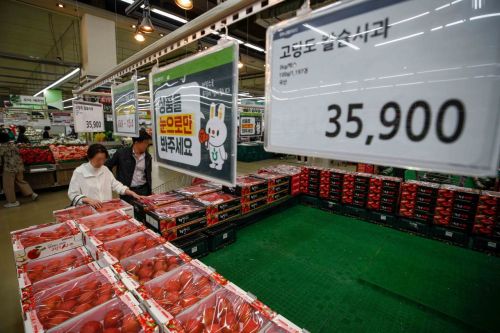 According to the 'March Consumer Price Trends' announced by the National Statistical Office, fruit prices surged by 40.9% compared to a year ago. In particular, apple prices rose by 88.2%, significantly increasing from the previous month (71%). On the 23rd, a customer visiting the Hanaro Mart Yangjae branch in Seocho-gu, Seoul, is purchasing apples. Photo by Jinhyung Kang aymsdream@
Last month, the consumer price inflation rate recorded 2.7%, continuing the 2% range increase for the second consecutive month. However, the sharp rise in prices of fruits such as pears and apples persisted.
According to the 'May Consumer Price Trends' released by Statistics Korea on the 4th, the consumer price index last month rose by 2.7% compared to the same month last year.
The consumer price inflation rate, which had slowed down to 2.8% in January this year, surged again above 3% in February (3.1%) and March (3.1%) due to the soaring prices of fruits and vegetables, then dropped back to the 2% range for two consecutive months in April (2.9%) and last month.
The core inflation index, excluding agricultural products and petroleum, rose by 2.0% compared to the same month last year. The index excluding food and energy increased by 2.2% compared to the same month last year.
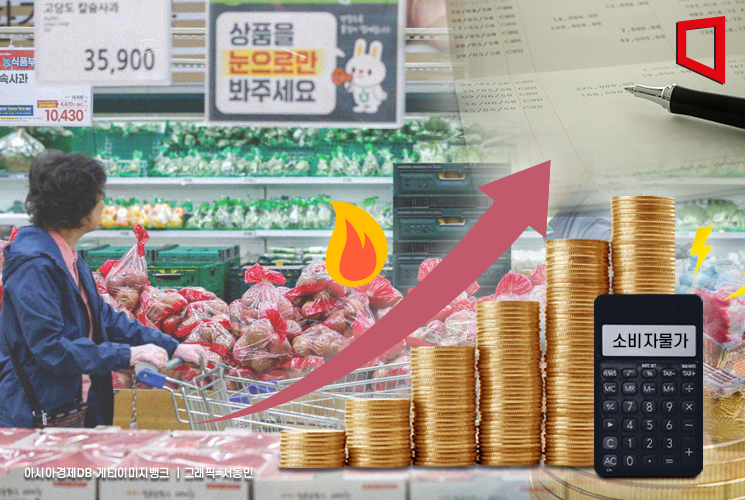
The living cost index rose by 3.1% compared to the same month last year. The living cost index is calculated based on 144 items out of a total of 458 items, which are frequently purchased and have a large expenditure share, making price changes more sensitive.
The living cost index peaked at 4.5% last October, then the rate of increase slowed down until January this year (3.4%), and since then it has fluctuated around the 3% range.
Among these, food prices rose by 3.9% compared to a year ago. Non-food items increased by 2.5%. The living cost index including rent rose by 2.6%.
The fresh food index surged by 17.3% compared to the same month last year. Fresh fruits rose the most sharply by 39.5%. The increase in fresh fruit prices slightly expanded compared to last month (38.7%). Compared to a year ago, fresh vegetables rose by 7.5%, while fresh fish and shellfish fell by 1.3%.
By item, pears, which have seen increased consumption as a substitute for apples, recorded the largest increase ever at 126.3%. Apples rose by 80.4%, tomatoes by 37.8%, napa cabbage by 15.6%, sweet potatoes by 18.7%, and rice by 6.7%. On the other hand, chicken fell by 7.8%, mackerel by 6.3%, pork by 5.2%, and domestic beef by 2.3%.
© The Asia Business Daily(www.asiae.co.kr). All rights reserved.


















