Waiver of Member Rights When Converting from Membership to Public
Obligation to 'Succession of Agreement with Members' under the Sports Facilities Act Does Not Apply
The Supreme Court overturned the conclusion of a damages claim lawsuit filed by three founding members of Pagannica CC in Chuncheon, Gangwon Province, who had acquired the golf course when it was converted into a public golf course in 2016, against Daewoo Construction for failing to honor the 'discount agreement.'
The court ruled that if, during the process of converting a membership golf course into a public golf course, members agreed to receive half of their entrance deposit back and future fee discounts in exchange for relinquishing the remaining membership rights, they can no longer be considered members.
Previously, the first and second trials found it difficult to conclude that the members lost their status based solely on such an agreement and held that the golf course acquirer assumed obligations toward the members. However, the Supreme Court's judgment differed.
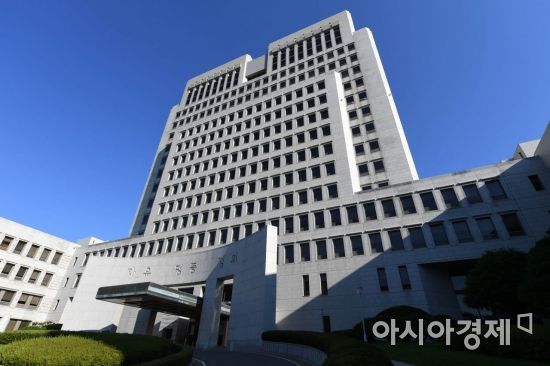
According to the legal community on the 3rd, the Supreme Court's First Division (Presiding Justice Seo Kyunghwan) overturned the appellate court's partial ruling in favor of the plaintiffs in a damages claim lawsuit filed by two corporations and one individual holding Pagannica CC memberships against Daewoo Construction, real estate investment company A, and Golfmon Co., Ltd., and remanded the case to the Seoul High Court.
The court stated, "The appellate court held that the plaintiffs' status under the agreement in this case corresponded to 'members' as defined in Article 2, Clause 4 of the former Physical Fitness Facilities Act, and that the defendant, the transferee of the golf course business, succeeded the obligations under the agreement pursuant to Article 27, Paragraph 1 of the former Physical Fitness Facilities Act. This appellate ruling contains errors in interpreting the term 'member' under the former Physical Fitness Facilities Act, which affected the judgment," explaining the reason for reversal and remand.
The plaintiffs had signed membership contracts with Chuncheon Development one year before the opening of the membership golf course Pagannica CC in 2010, purchasing one founding membership each for 280 million KRW and paid the subscription fees. However, as the golf course faced financial difficulties due to poor profitability, Chuncheon Development expressed its intention in 2015 to convert the golf course operation to a public system and obtained consent from each plaintiff.
The agreement drafted between Chuncheon Development and the plaintiffs stipulated that upon receiving 50% of the entrance deposit, 140 million KRW, the plaintiffs would relinquish the rights to the remaining entrance fees and golf course membership rights but would receive discounted fees three times a month for life for one member of their family (two employees for corporations). Chuncheon Development actually refunded 140 million KRW, half of the membership subscription fee, to each plaintiff. The golf course was converted to a public course in May 2016.
Subsequently, in July 2016, Chuncheon Development entered into an asset transfer contract with Daewoo Construction, the contractor, to settle unpaid construction fees of 70 billion KRW and loan debts by transferring golf course assets. Daewoo Construction sold the golf course facilities to Company A in December 2019, and Company A leased the golf course to Golfmon to operate it as a public golf course. However, when Golfmon notified the plaintiffs in 2020 that it could not provide the agreed discounts, the plaintiffs filed a lawsuit claiming the remaining subscription fees, naming Chuncheon Development as the primary defendant and Company A and Golfmon as secondary defendants. During the lawsuit, Golfmon's defendant status was succeeded by Leisure Plus, which currently operates Pagannica CC.
The key issue in the trial was whether the plaintiffs, who originally agreed to receive half of the subscription fee back and partial lifetime fee discounts in exchange for relinquishing the rest of their membership rights, should still be considered 'members' under the Physical Fitness Facilities Act.
Article 27, Paragraph 1 of the Physical Fitness Facilities Act (Succession of Physical Fitness Facility Business, etc.) states that when a physical fitness facility operator dies, transfers business, or merges, the successor inherits the rights and obligations related to the registration or notification of the physical fitness facility business, including agreements made with members under Article 17.
In other words, the law stipulates that the transferee of a physical fitness facility business assumes the obligations agreed upon with members by the transferor. Therefore, if the plaintiffs' membership status remains, the promised fee discounts must continue; if the membership status is terminated, the obligations no longer apply.
The first trial court recognized the plaintiffs' membership status. The court dismissed the primary claims against Daewoo Construction, which acquired the golf course from Chuncheon Development, and the claims against Leisure Plus, the secondary defendant, but partially ruled in favor of the plaintiffs against Company A, ordering payments between 118.95 million KRW and 125.2 million KRW.
The court reasoned, "Since the plaintiffs' status, who agreed to relinquish existing memberships and receive preferential fees, can be considered 'members' under Article 2, Clause 4 of the Physical Fitness Facilities Act, it is difficult to conclude that the plaintiffs lost their membership status solely based on the agreement. Therefore, the agreement falls under the 'agreements between physical fitness facility operators and members' stipulated in Article 27, Paragraph 1 of the Physical Fitness Facilities Act."
Article 2, Clause 4 of the Physical Fitness Facilities Act defines 'member' as "a person who has agreed with the physical fitness facility operator to preferentially use the facilities or related instruction services for a period of one year or more under more favorable conditions than general users."
The second trial court also recognized the plaintiffs' membership status and ordered Daewoo Construction, the primary defendant, to pay each plaintiff 70 million KRW, half of the unpaid subscription fees.
The court stated, "Although Daewoo Construction only acquired the physical assets of the golf course from Chuncheon Development, it succeeded the personnel organization of the golf course through its subsidiary and operated the golf course. Considering that Article 27 of the Physical Fitness Facilities Act aims to maintain the public law management system related to business permits despite changes in business operators and to protect the interests of numerous members who have contractual relationships with the operator, denying the business succession of the golf course on the grounds that the operator is a separate corporation from the parent company operating the golf course through a subsidiary would undermine the purpose of the provision."
Furthermore, the court held, "The plaintiffs' status, who agreed to relinquish existing memberships and receive lifetime fee discounts under the agreement, corresponds to 'members' under Article 2, Clause 4 of the former Physical Fitness Facilities Act. The agreement falls under 'agreements between physical fitness facility operators and members' under Article 27, Paragraph 1 of the former Physical Fitness Facilities Act, and Daewoo Construction, as the transferee of the golf course business, succeeded the obligations under the agreement pursuant to Article 27, Paragraph 1."
The court concluded, "However, Company A, which purchased the golf course facilities from Daewoo Construction, and Leisure Plus, the successor of Golfmon, which leases and operates the golf course, have refused to fulfill the obligations under the agreement toward the plaintiffs. Therefore, Daewoo Construction is liable to compensate the plaintiffs for damages caused by non-performance of the obligations under the agreement."
However, the Supreme Court's judgment differed.
Relying on Supreme Court precedents, the court stated, "The so-called 'deposit-type golf membership' refers comprehensively to the contractual status or creditor's rights under the membership contract that a member holds against the golf course facility operator. This includes individual rights such as the right to preferential use of the golf course facilities and the right to claim the return of the deposit paid as an entrance fee upon withdrawal."
The court further explained, "Considering that the former Physical Fitness Facilities Act specifically regulates recruitment procedures and protection methods for members it protects, and that deposit-type golf memberships generally include preferential facility use rights and deposit refund claims, even if the golf course operating the deposit-type membership system abolished it and refunded part of the entrance fees to members including the plaintiffs while granting fee discounts as in the agreement, it is difficult to regard those receiving fee discounts as 'members' under the former Physical Fitness Facilities Act. The plaintiffs clearly understood that they would no longer hold membership status after the agreement, as they agreed to 'relinquish all membership rights' in the agreement."
Finally, the court stated, "With the golf course business changing to a regular public golf course business, there are no members as defined by the former Physical Fitness Facilities Act, and the agreement was drafted during this process. Daewoo Construction subsequently acquired the golf course and related assets."
The court concluded, "Since the agreement was drafted for the purpose of converting to a public physical fitness facility business without recruited members, it is difficult to view it as directly aimed at maintaining and protecting membership status. Considering that the golf course was operated as a public physical fitness facility without members to maintain or protect at the time Daewoo Construction acquired it, even if Daewoo Construction acquired the golf course business, the obligations under the agreement cannot be regarded as rights and obligations agreed upon with members that Daewoo Construction succeeded from Chuncheon Development under Article 27, Paragraph 1 of the former Physical Fitness Facilities Act."
© The Asia Business Daily(www.asiae.co.kr). All rights reserved.
!["The Woman Who Threw Herself into the Water Clutching a Stolen Dior Bag"...A Grotesque Success Story That Shakes the Korean Psyche [Slate]](https://cwcontent.asiae.co.kr/asiaresize/183/2026021902243444107_1771435474.jpg)
















