Taiwan with High System Semiconductor Industry Share
Strong Fabless-Design House-Foundry
TSMC's Foundry Market Share 62% in Q1
CEOs of major global semiconductor companies such as Intel, Nvidia, AMD, and Qualcomm have all gathered at Taiwan's 'COMPUTEX 2024.' This rare scene of industry giants coming together reflects Taiwan's significant importance not only in PCs but also in the foundational semiconductor sector.
Taiwan holds the largest share in the system semiconductor market. According to a report released last month by the Semiconductor Industry Association (SIA) and Boston Consulting Group (BCG), Taiwan accounted for 69% of advanced logic semiconductor production at 10nm (1nm = one billionth of a meter) or below as of 2022. Taiwan's share of 10?22nm logic semiconductor production was also 40%, the highest among global regions.
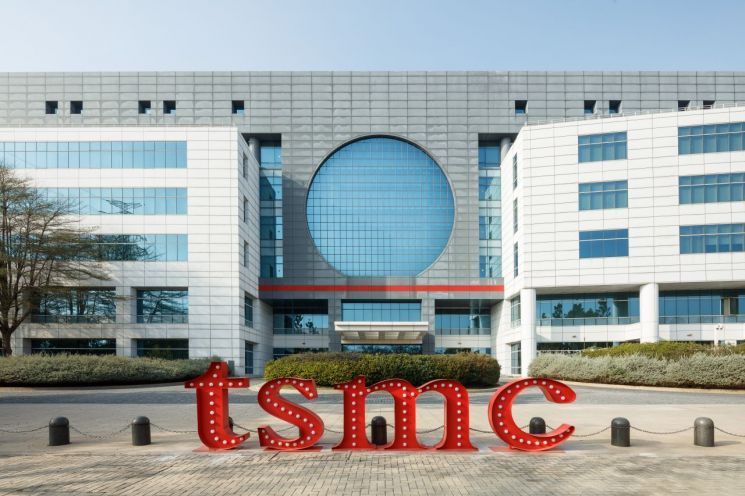
The reason behind Taiwan's strong presence in the system semiconductor market, which is larger than the memory semiconductor market, lies in the solid ecosystem centered around TSMC. The system semiconductor industry is characterized by a tightly intertwined value chain involving fabless (semiconductor design specialists), design houses, foundries (semiconductor contract manufacturing), and back-end processing. Taiwan boasts leading companies in all these fields. These companies are interconnected like one body, supporting and pushing each other, which is said to enhance the overall competitiveness of Taiwan's industry.
An industry insider said, "Since we focus on memory, our main areas differ, so simple comparisons are difficult, but when you visit Taiwan, you feel envious. Taiwan has built a strong collective centered around the leader TSMC, collaborating and sharing responsibilities to nurture the ecosystem." He added, "This ecosystem was not built overnight; it has been developed since the early days of semiconductor history."
Taiwan's strength is reflected in the expanding position of TSMC. According to market research firm Counterpoint Research, TSMC held a 62% share of the foundry market in the first quarter, nearly 50 percentage points ahead of second-place Samsung Electronics (13%). In particular, TSMC is increasing the dependency of major companies such as Apple and Nvidia by leveraging its advanced process and packaging technologies. In Nvidia's case, even if they want to produce more AI accelerators, TSMC's production capacity is limited, restricting manufacturing.
The Taiwanese government is actively working to support the country's semiconductor competitiveness. Through the 'A+ Industrial Innovation Research and Development (R&D) Program,' subsidies are being provided to attract investments from various overseas companies, including fabless firms like Nvidia and AMD, as well as semiconductor manufacturing equipment maker ASML, to establish R&D centers in Taiwan. The government expects these companies to make significant direct and indirect contributions and has introduced proactive inducement measures.
© The Asia Business Daily(www.asiae.co.kr). All rights reserved.

















