Take a Look into the History and Past of Mangu-dong
Enjoy Various Contents Including 'Mangu-dongji,' a Seoul Metropolitan City Tangible Cultural Heritage
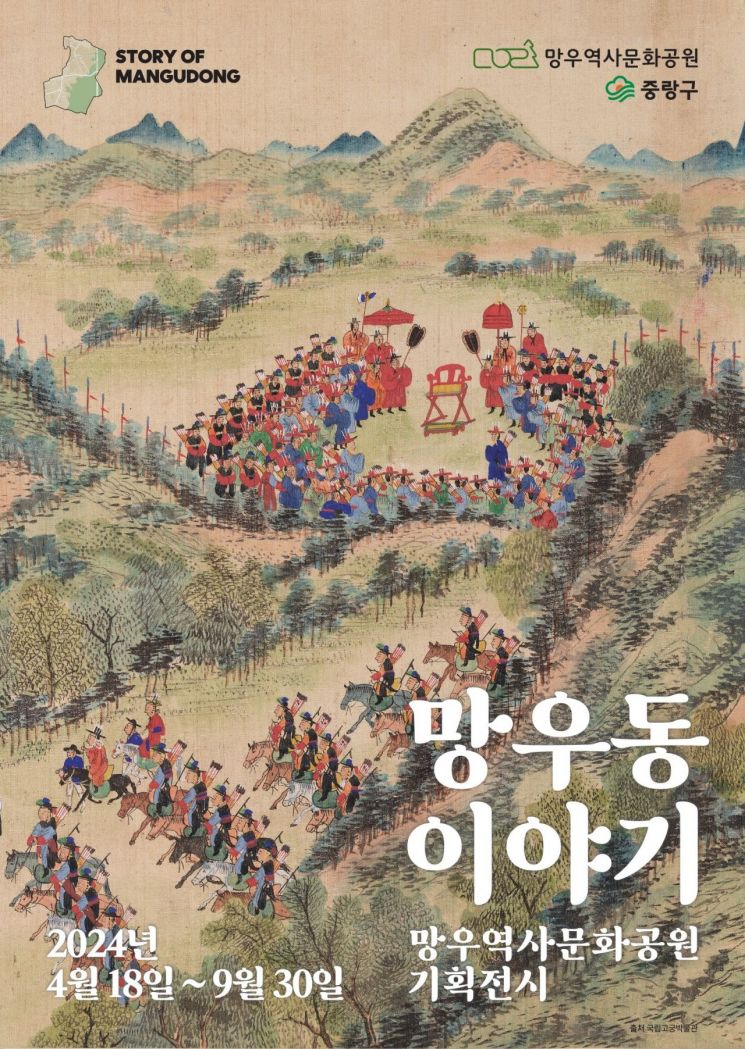
Jungnang-gu (Mayor Ryu Kyung-gi) will hold the 2024 first half planned exhibition "Stories of Mangu-dong" at Mangu History and Culture Park Jungnang Mangu Space until September 30.
"Stories of Mangu-dong" is a traveling exhibition of the Seoul Half-Century Comprehensive Exhibition "Nagimangu 樂以忘憂 - Stories of Mangu-dong," which was held at the Seoul Museum of History until March this year. The district reorganized and presents the exhibition content.
Mangu-dong, the background of the exhibition, was a path used by kings to visit their ancestors' tombs during the Joseon Dynasty. During the Japanese colonial period, a communal cemetery was established here, but it has now transformed into the nationally renowned Mangu History and Culture Park, reflecting its historical significance.
As the title suggests, the exhibition allows visitors to appreciate the history and past appearance of Mangu-dong.
Upon entering the exhibition hall, visitors can first see the "Mangu-dongji," a detailed geographical record of Mangu-dong during the Joseon Dynasty. The "Mangu-dongji" has been recognized for its value and historical significance and designated as a tangible cultural asset of Seoul.
The exhibition also introduces three families who have lived in Mangu-dong for generations?the Dongnae Jeong clan, Uiryeong Nam clan, and Pyeongsan Shin clan?as well as three roads from the Joseon era that passed through Mangu-dong: Pyeonghae-ro, Neunghaeng-ro, and Gukjang-ro, offering a glimpse into the past.
Additionally, the exhibition features the "Taejo Mangu Ryeong Gahaengdo," depicting the scene where Taejo Yi Seong-gye, on his way back after deciding the location of his tomb, said that his worries had disappeared, which is the origin of the name "Mangu." Also on display are the "Myojeok Daejang" and "Bunmyo Domyeon," hand-made records used to manage the Mangu-ri communal cemetery.
Visitors can also see how the Mangu-ri communal cemetery, established after the 20th century, has transformed into the current Mangu History and Culture Park. A digital signage guide map introduces notable figures resting in the park and allows visitors to overview the park at a glance.
The exhibition runs until September 30, with visiting hours from 10 a.m. to 5 p.m. on weekdays and 9 a.m. to 5 p.m. on weekends. Admission is free.
Mayor Ryu Kyung-gi said, "I hope this exhibition serves as an opportunity to revisit the stories of Mangu-dong from past to present and to further recognize the value of Mangu-dong and Mangu History and Culture Park." He added, "We will continue to strive to prepare various exhibitions and programs that widely promote the historical significance of Mangu History and Culture Park and Jungnang-gu."
© The Asia Business Daily(www.asiae.co.kr). All rights reserved.

















