Increased US Supply and Slowed Chinese Demand Expected
Brent Oil Down 9% from April Peak
Saudi Arabia and Others Extend Production Cuts to Support Oil Prices
The Organization of the Petroleum Exporting Countries (OPEC) and the non-OPEC major oil-producing countries coalition, OPEC Plus (+), have decided to extend the crude oil production cut of 3.36 million barrels per day until the end of 2025. The voluntary production cut of 2.2 million barrels per day will be extended until the third quarter of this year and then gradually reduced. This measure aims to defend oil prices, which have fallen to around $80 per barrel, amid rising U.S. oil production and slowing demand from China.
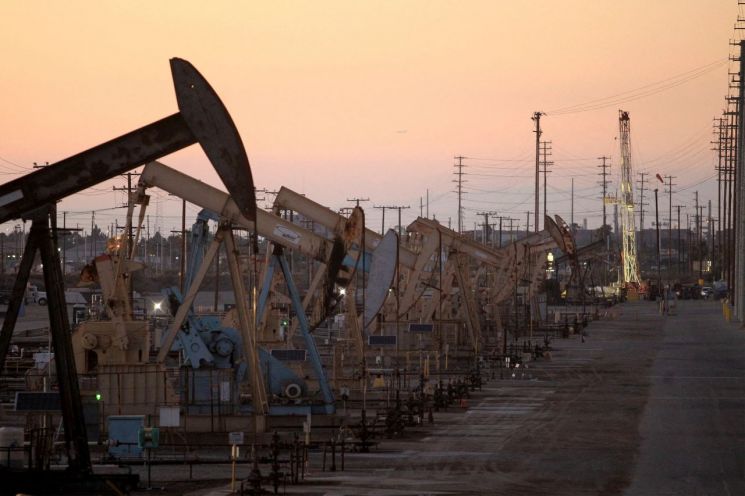
On the 2nd (local time), OPEC+ member country ministers agreed to extend the existing oil production cut measures at a ministerial meeting held both online and offline in Riyadh, the capital of Saudi Arabia.
OPEC+ member countries have maintained the production cut policy since October 2022. They had agreed to cut production by 3.36 million barrels per day until the end of this year, and at this meeting, they decided to maintain this until the end of 2025. Additionally, the voluntary additional production cut of 2.2 million barrels per day, agreed upon by some members in November last year, will be extended until the third quarter and gradually reduced over the next 12 months. The countries participating in the voluntary cuts, originally scheduled to end in the second quarter, include Saudi Arabia, Russia, the United Arab Emirates (UAE), and five other countries.
This extension of production cuts is a measure to prevent global oversupply and defend oil prices. Oil prices have been falling due to increased U.S. oil production and concerns over demand slowdown caused by high interest rates. The global oil benchmark Brent crude is trading around $83 per barrel, down 9% from this year's high of $91.17 on April 5. West Texas Intermediate (WTI) is also trading around $79 per barrel.
In particular, Saudi Arabia needs higher oil prices to fund large national development projects such as Neom City. The International Monetary Fund (IMF) has analyzed that oil prices need to be around $100 per barrel for Saudi Arabia to sufficiently raise the necessary project funds. Saudi Arabia is focusing on raising funds, including selling shares of the state-owned Aramco to raise up to $12 billion.
However, despite instability in the Middle East, oil prices are expected to decline, leading to the extension of OPEC+ production cuts. According to the U.S. Commodity Futures Trading Commission (CFTC), New York investors reduced their net long positions on WTI by 20.6% in April and increased their short positions by 97.5%. As a result, the Wall Street Journal (WSJ) predicts that WTI prices will trade at around $73 per barrel, more than 5% lower than current levels within a year.
The market is closely watching the possibility of oil price increases due to this extension of production cuts. However, some opinions suggest that it remains to be seen whether the production cut commitments will be successfully implemented, as some member countries have not adhered to the agreement. Russia reportedly exceeded production by 200,000 barrels per day in April, while Iraq and Kazakhstan are estimated to have exceeded production by 240,000 barrels and 72,000 barrels per day, respectively.
© The Asia Business Daily(www.asiae.co.kr). All rights reserved.
!["The Woman Who Threw Herself into the Water Clutching a Stolen Dior Bag"...A Grotesque Success Story That Shakes the Korean Psyche [Slate]](https://cwcontent.asiae.co.kr/asiaresize/183/2026021902243444107_1771435474.jpg)
















