Only One District in Seoul, None in New Towns, and Five in Gyeonggi·Incheon Show Weakness
Rising Jeonse and Monthly Rent, Sale Prices, and Transaction Volumes Continue to Fuel Price Increases
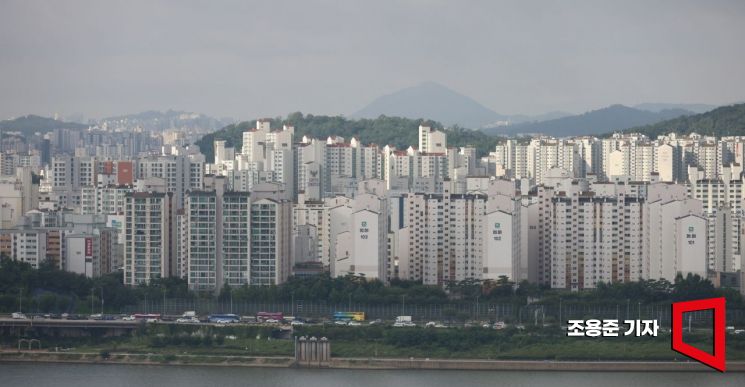
Leading indicators of price movements in sales, such as rising jeonse and monthly rent prices, soaring construction costs leading to higher sale prices, and the highest number of apartment transactions in Seoul since 2021, suggest a continued buildup for price increases in the metropolitan area.
On the 2nd, Real Estate R114 stated in its "Apartment Market Analysis for the Last Week of May" that "Among the 64 individual areas (cities and districts) in Seoul, new towns, and Gyeonggi·Incheon, which are included in the metropolitan price survey, only 6 areas showed declines in the last week of May, indicating a minimal bearish trend." Furthermore, as apartment sale prices in high-priced areas such as the Gangnam 3 districts of Seoul have virtually recovered to previous peak levels, it is expected that a price catch-up phase will continue in mid- and low-priced areas.
The overall apartment sale prices in Seoul remained flat (0.00%). Both reconstruction and general apartments showed no significant price changes. New towns and Gyeonggi·Incheon also remained flat (0.00%). A Real Estate R114 official commented, "It can be seen as a tense tug-of-war phase between rises and falls for several months."
Among individual areas in Seoul, Mapo rose by 0.03%, while Gangseo fell by 0.01%. The rest of the areas remained flat (0.00%). All individual areas in new towns recorded flat prices (0.00%). In Gyeonggi and Incheon, Hwaseong (0.03%), Uijeongbu (0.02%), and Suwon (0.02%) rose, but Icheon (-0.03%), Siheung (-0.02%), Incheon (-0.01%), Goyang (-0.01%), and Osan (-0.01%) declined.
The metropolitan jeonse market has shown a steady upward trend since July last year, rising by 0.01% this week as well. Among these, Seoul and Gyeonggi·Incheon each rose by 0.01%, while new towns remained flat (0.00%).
In Seoul, none of the 25 districts declined. Individual areas such as Mapo (0.07%), Gangbuk (0.05%), Seodaemun (0.04%), Guro (0.04%), and Dobong (0.01%) saw increases. In new towns, Gwanggyo fell by 0.02%, but Pyeongchon (0.03%) and Bundang (0.01%) rose. Individual areas in Gyeonggi and Incheon saw rises in Uijeongbu (0.13%), Suwon (0.04%), Goyang (0.03%), Hwaseong (0.02%), Uiwang (0.01%), and Gwacheon (0.01%). Conversely, Anseong (-0.09%) and Osan (-0.04%) declined.
A Real Estate R114 official said, "According to apartment price surveys, high-priced areas along the Han River such as the Gangnam 3 districts and Mayongseong (Mapo, Yongsan, Seongdong) have virtually recovered to the previous peak prices recorded between 2021 and 2022." He added, "When measuring the price recovery level compared to the previous peak, Seoul averages about 95%, with Gangnam, Seocho, Yongsan, Jongno, Yeongdeungpo, and Yangcheon forming prices at about 97-99% of their past peaks."
On the other hand, "Mid- to low-priced representative areas such as Nodogang (Nowon, Dobong, Gangbuk) and Geumgwan-gu (Geumcheon, Gwanak, Guro) are at about 85-91% of their previous peaks, indicating a deepening price polarization between high-priced and mid- to low-priced areas. However, since the increase in apartment transactions in March and April is also being driven by mid- to low-priced areas, the widened price gap is expected to narrow again over time," he explained.
© The Asia Business Daily(www.asiae.co.kr). All rights reserved.











