Inverse Relationship Between Pohang and Gumi
Focus on Care and Housing Support
According to a survey conducted by North Gyeongsang Province on the status of childbirth support funds and total fertility rates across its 22 cities and counties over the past 10 years, it was concluded that childbirth support funds did not have a significant impact on increasing the total fertility rate.
The analysis by North Gyeongsang Province showed that while childbirth support funds increased in all 22 cities and counties, the total fertility rate continued to decline rather than rise. In the cases of Pohang and Gumi, there was even an inverse relationship between childbirth support funds and the total fertility rate.
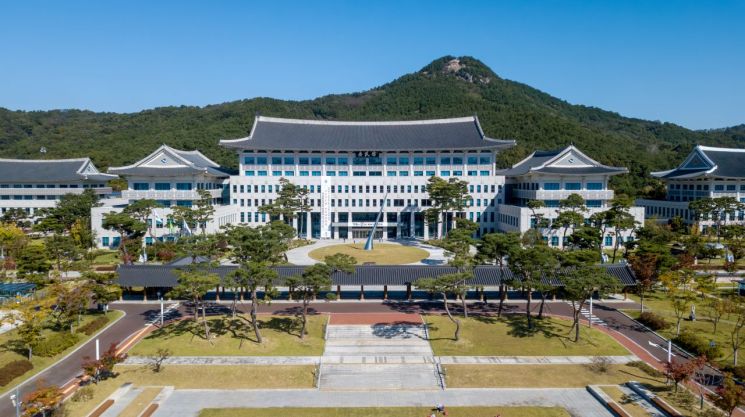
While the province's total fertility rate has steadily decreased from 1.46 in 2015 to 0.86 in 2023, childbirth support funds by city and county have consistently increased, leading to ongoing calls for verification of the effectiveness of these funds and the establishment of new measures.
There have also been significant concerns at the local level that excessive competition over childbirth support funds has devolved into a situation where neighboring municipalities are competing to attract residents from each other.
In particular, Lee Cheolwoo, Governor of North Gyeongsang Province, who has been actively addressing the low birth rate issue, has consistently emphasized that cash payments do not help increase the birth rate and that unique projects focused on care infrastructure and services should be promoted instead.
In response, North Gyeongsang Province has reviewed a decade’s worth of analysis on the effectiveness of childbirth support funds, the preferred forms of support as expressed by local governments, and overseas cases where birth rates have rebounded, and is working to devise new measures.
First, the province analyzed cases from advanced countries that succeeded in reversing declining birth rates, as well as research data from national policy institutions.
In Germany, for example, the central government provides child allowances until the age of 18, while local governments focus on care and child-rearing service policies. Similarly, in France, the central government leads cash support policies such as basic allowances and childcare fee assistance, while local governments prioritize support for care services.
The core policy direction of Tottori Prefecture in Japan, which raised its birth rate from the lowest in 2008 to the highest nationwide (1.6) in 2022, also focuses more on "childbirth and child-rearing services" that help people have children, rather than "cash support."
Additionally, a study released last year by the Korea Local Tax Institute found that, for the same budget expenditure, expanding local care infrastructure and services such as care centers and kids' cafes is three times more effective in raising the birth rate than providing childbirth support funds.
Accordingly, North Gyeongsang Province has determined that expanding care infrastructure and services tailored to each region, rather than cash payments, is more helpful in boosting the total fertility rate, and is focusing on related projects.
The province also surveyed cities and counties regarding the form of childbirth support payments, and found that 82% (18 out of 22) considered differentiated payments by city or county to be inappropriate.
These cities and counties identified nationwide uniform payment as the most appropriate method for providing childbirth support funds.
On May 27, North Gyeongsang Province visited the Presidential Committee on Ageing Society and Population Policy to request that the government standardize the recipients and appropriate amounts for cash support such as childbirth support funds, and received a positive response that effectiveness verification would be conducted.
Lee Cheolwoo, Governor of North Gyeongsang Province, stated, "North Gyeongsang Province will establish the necessary infrastructure and services for the entire low birth rate cycle, such as care and housing, as demanded by local communities, rather than focusing on cash payments. We aim to create a model for overcoming low birth rates and spread it nationwide."
In this regard, a city or county official emphasized, "It is important for the state to provide cash support uniformly, while local governments should quickly establish care infrastructure and services that meet on-site needs."
The 22 cities and counties in North Gyeongsang Province set and pay childbirth support funds according to their own ordinances, with the amount varying widely: from a maximum of 7 million won to a minimum of 0 won for the first child, and from a maximum of 26 million won to a minimum of 1.4 million won for the third child, depending on the city or county.
© The Asia Business Daily(www.asiae.co.kr). All rights reserved.
!["The Woman Who Threw Herself into the Water Clutching a Stolen Dior Bag"...A Grotesque Success Story That Shakes the Korean Psyche [Slate]](https://cwcontent.asiae.co.kr/asiaresize/183/2026021902243444107_1771435474.jpg)
















