Financial Supervisory Service Meets with Financial Investment Industry and Tax Experts
"1% Taxable Target" VS Considering Bond Investors
Points Out Impact on Qualitative Factors Like Investment Sentiment
Unusual Tax Discussion by Supervisory Agency Financial Supervisory Service

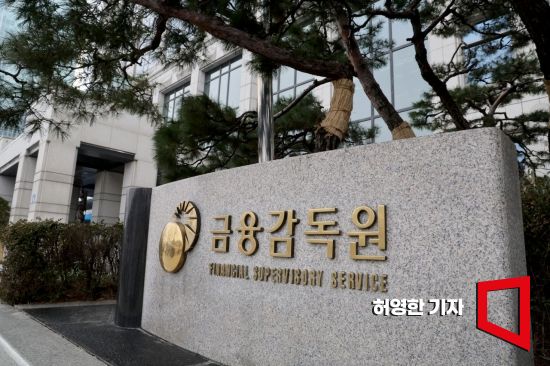
Lee Bok-hyun, Governor of the Financial Supervisory Service (FSS), held a roundtable meeting on the Financial Investment Income Tax (FIIT) by inviting stakeholders from securities firms and the financial investment industry, as well as academic experts in the field of financial taxation. As opposition to the FIIT, which will be introduced next year, grew mainly among individual investors, the FSS listened to opinions from the related industry and academia. The FIIT falls under the jurisdiction of the Ministry of Economy and Finance, which handles tax policy, making the FSS's involvement in tax-related issues unusual.
The FSS announced on the 2nd that it held a "Market Experts Roundtable on FIIT" on the 31st at the FSS office in Yeouido, Seoul, inviting experts from securities firms, asset management companies, and academia specializing in financial taxation.
The roundtable was organized to directly hear market experts' evaluations of the direct and indirect impacts of the FIIT implementation on individual investors, the financial investment industry, and the capital market, as well as academic opinions on whether to implement the FIIT.
The FIIT is a system that taxes capital gains arising from financial investments such as stocks, bonds, funds, and derivatives. It was first proposed in 2020 as part of the "Capital Market Advancement Plan," and the related legislation was passed. Originally scheduled to be implemented in 2023, it has been postponed for two years and will be introduced next year.
The introduction of the FIIT was supported by both the ruling and opposition parties, but it became an issue again when President Yoon Seok-yeol pledged to abolish the FIIT as part of his presidential campaign promises. The abolition of the FIIT has become a significant issue this year thanks to President Yoon. The discussion has intensified since President Yoon attended the Korea Exchange's New Year opening ceremony for the securities and derivatives markets this year and announced his intention to abolish the FIIT.
Reanalysis of Taxation Targets Needed... Qualitative Factors Such as Investment Sentiment Should Also Be Considered
At the roundtable, experts pointed out that the FIIT disadvantages private equity fund investments due to the calculation of personal exemptions for dependents and the taxation of fund distributions as dividend income.
There was also an opinion that a thorough analysis of the taxation targets should precede. When the FIIT was discussed in 2020, the Ministry of Economy and Finance estimated the taxable population to be about 150,000, or approximately 1% of all investors. It concluded that only a small portion would be subject to taxation due to the high basic exemption amount for stock investments.
However, considering the significant increase not only in individual investors' stock investments but also in bond investments, which have a lower basic exemption limit, some opinions suggested that the taxable population would increase substantially.
A notable point raised at the roundtable was the need to consider qualitative factors such as the psychological impact felt by investors. The FSS explained, "Investors participate in the capital market with expectations and hopes for future investment returns, and a reduction in after-tax expected returns could not only dampen overall investment sentiment but also discourage potential investors from participating."
This effect could impact all investors regardless of asset size. The FSS assessed that the impact would be particularly significant for younger generations seeking to accumulate wealth in the capital market.
Above all, there were strong concerns about demand for profit realization to avoid taxation. This could potentially limit the upward trend of the capital market and intensify short-term trading and volatility. It is known that many investors are already weighing the timing of sales or inquiring about methods to sell to avoid taxation. Therefore, opinions were expressed that abolishing the FIIT and resolving uncertainties are necessary to strengthen the capital market's resilience and scale, which are pressing challenges.
"Tax Filing Procedures Are Also Challenging"... Disadvantageous for Small Securities Firms
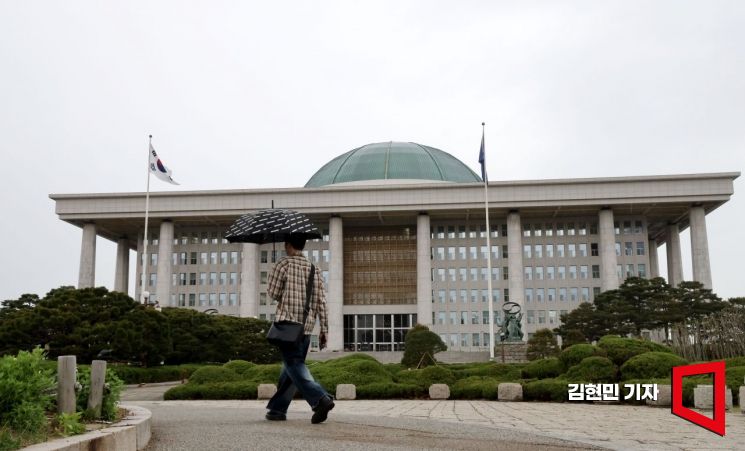 On the 15th, dark clouds heavily covered the National Assembly building. With the 22nd general election having concluded on the 10th, attention is focused on how the 21st National Assembly, with just over a month left in its term, will resolve pressing issues such as pension reform and the abolition of the financial investment tax. Photo by Hyunmin Kim kimhyun81@
Experts also anticipated many difficulties in tax filing procedures. Within the industry, the readiness of IT systems varies by company, and differences in financial resources and human capital exist, so implementing the FIIT could cause significant confusion on the ground.
There was also an opinion that investors holding accounts at multiple securities firms might concentrate their transactions in large securities firms for ease of tax filing, which could disadvantage small securities firms.
Governor Lee said, "Although the FIIT is a tax-related matter, it can affect individual investors and the overall capital market, so the FSS, as the capital market supervisory authority, needs to maintain continuous interest."
He added, "Since our capital market has experienced dynamic changes that were difficult to predict at the time of the FIIT introduction, a thorough review and sufficient discussion of the environmental changes and the impact on individual investors and the capital market are necessary. We will actively participate in the FIIT discussions as part of seeking the sustainable development direction of our capital market."
© The Asia Business Daily(www.asiae.co.kr). All rights reserved.



















