National Heritage Cheong's 'Direction for Sustainable National Heritage Development'
Adjustment of 'Historic and Cultural Environment Preservation Area' Scope
Enactment of 'National Heritage Industry Promotion Act' and Project Discovery
The government is developing national heritage as a new industrial driving force. It plans to introduce the 'K-Heritage Pass (tentative name),' which offers discounts at local restaurants and accommodations when visiting, and to hold state guest or national memorial events at historic palaces such as Gyeongbokgung and Changdeokgung.

On the 30th, the Cultural Heritage Administration reported the 'Sustainable National Heritage Development Direction' at the State Affairs Ministerial Meeting chaired by Prime Minister Han Duck-soo at the Government Seoul Office. Having reorganized the system to focus on 'national heritage' instead of the term 'cultural properties' used for over 60 years, the plan is to envision a new future beyond mere preservation.
An official stated, "We plan to establish basic principles such as value creation through national heritage, public participation and enjoyment, sustainability, and regional development, and move toward a future-oriented system."
The most notable change is the adjustment of the scope of the 'Historic and Cultural Environment Preservation Area,' which is set based on 1,692 national heritage items. The Historic and Cultural Environment Preservation Area is a zone designated to protect cultural heritage. The mayor or governor sets the ordinance within 500 meters from the outer boundary of the heritage site in consultation with the Cultural Heritage Administration.
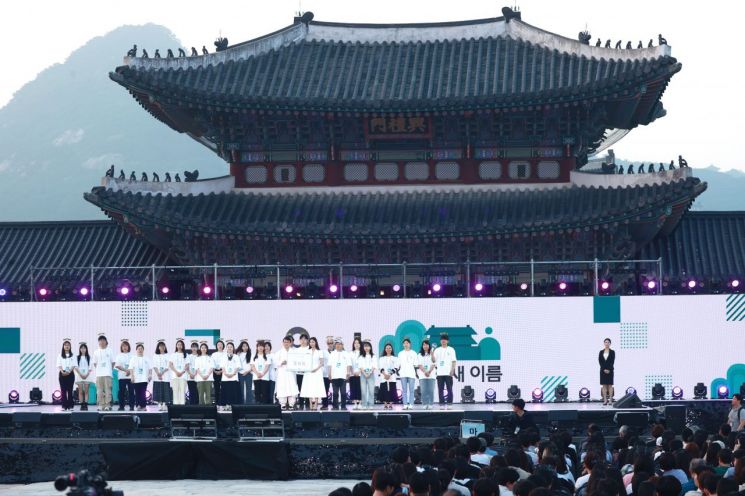
Previously, a uniform 500-meter standard was applied. Since 2022, the Cultural Heritage Administration has been adjusting the scope to 200 meters by classifying areas into residential, commercial, and industrial zones. By this month, adjustments and maintenance have been completed for 661 national heritage items (39.1%).
The Cultural Heritage Administration is also seeking changes in heritage preservation. It plans to increase the number of targets for direct repair and maintenance, such as national treasures and treasures, and manage natural heritage?including flora and fauna, geological heritage, scenic sites, and traditional landscaping?according to their characteristics.
Additionally, to foster various industries utilizing national heritage, it will enact the 'National Heritage Industry Promotion Act (tentative name)' and discover new business fields through research and development (R&D).
Efforts will also focus on widely promoting the value of national heritage. In particular, it is considering hosting the World Heritage Committee, which reviews and decides on UNESCO World Heritage listings, in Korea in 2026. Since its first meeting in 1977, the World Heritage Committee has never been held in Korea.
The Cultural Heritage Administration will establish a base office in Europe to repatriate and strengthen the management of Korean cultural heritage overseas. It will also widely promote the concept of 'K-Gongyu Heritage,' which shares historical and cultural values with other countries.
© The Asia Business Daily(www.asiae.co.kr). All rights reserved.
!["The Woman Who Threw Herself into the Water Clutching a Stolen Dior Bag"...A Grotesque Success Story That Shakes the Korean Psyche [Slate]](https://cwcontent.asiae.co.kr/asiaresize/183/2026021902243444107_1771435474.jpg)


















