NYT "Confusion Over Pro-Palestinian Anti-War Protests"
Fewer Business Speeches... Alternative Remarks Prepared Amid Chaos
"Don't waste your time living someone else's life. Don't fall into the trap of living according to the results others have thought out. The most important thing is to have the courage to follow your heart and intuition... Always stay hungry, stay foolish."
This speech by Apple founder Steve Jobs at the 2005 Stanford University commencement ceremony in the United States is still regarded as a great speech even 15 years later. His remarks, made one year after being diagnosed with pancreatic cancer, moved the hearts of people worldwide at the time.
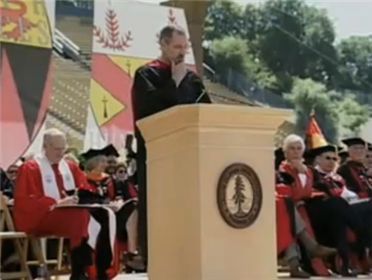
According to a recent report by The New York Times (NYT), speeches by business leaders and celebrities, once symbolic at American college graduations, are rapidly disappearing this year. Among the 50 top business leaders selected by Fortune this year, only three appeared as college commencement speakers. This is due to concerns that the commencement speech itself could pose a kind of risk as pro-Palestinian anti-war protests urging a halt to Israel's Gaza Strip attacks have spread across U.S. campuses since April.
This contrasts with the past when not only business leaders like Microsoft founder Bill Gates and JP Morgan CEO Jamie Dimon but also celebrities such as 'Queen of Talk Shows' Oprah Winfrey frequently appeared as college commencement speakers. So far, including founder Steve Jobs, Apple CEO Tim Cook has taken the podium at college graduations at least seven times.
David Murray, director of the Professional Speechwriters Association, said it does not seem easy for corporate CEOs to speak in such a university environment, adding, "This year, the fewer such situations, the better." He explained that the current moment is "a time when words that were previously accepted smoothly, like telling employees to 'vote,' sound partisan to some."
Unlike Korea, U.S. universities mainly hold graduation ceremonies in May. They inevitably bear the full impact of ongoing protests. At the University of Michigan's graduation, Palestinian flags were displayed, and at Harvard's commencement, hundreds of graduates collectively walked out. Most of this year's commencement speakers, from Nobel Peace Prize-winning Filipino journalist Maria Ressa to football player Harrison Butker, faced controversies over political intentions in their remarks, and some even became involved in lawsuits.
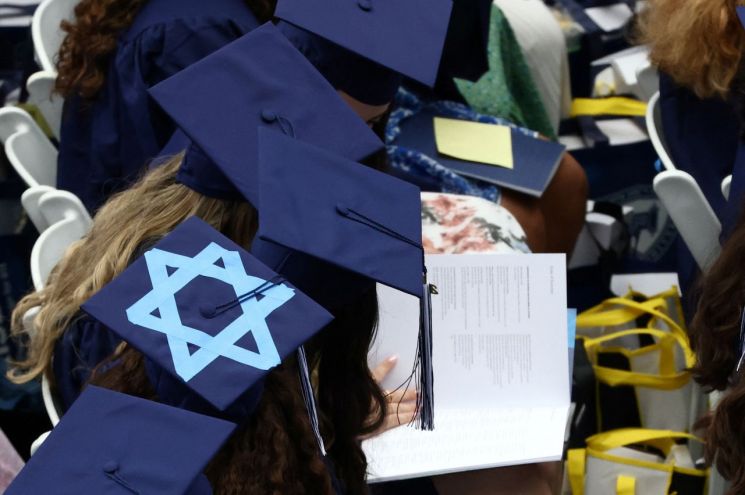
To avoid such controversies, Columbia University canceled its full graduation ceremony scheduled for May 15, and New York City Law School announced in advance that there would be no commencement speaker.
With the situation like this, professional speechwriters are receiving requests to prepare alternative remarks in case disruptions occur during this year's ceremonies. Some business leaders prefer to have light conversations with university officials such as presidents rather than giving speeches. For example, Satya Nadella, Microsoft CEO, received an honorary doctorate from Georgia Tech this year and instead of delivering a commencement speech, gave a brief five-minute talk at a January event, then took off his graduation gown and conversed with Georgia Tech President ?ngel Cabrera.
Kate Linchus, senior vice president in charge of corporate reputation at Edelman, a U.S. PR consulting firm, noted that keynote speeches at conferences are also tending to be replaced by lighter, informal talks, saying, "Commencement speeches are one of the few remaining long-form speeches."
© The Asia Business Daily(www.asiae.co.kr). All rights reserved.
![Clutching a Stolen Dior Bag, Saying "I Hate Being Poor but Real"... The Grotesque Con of a "Human Knockoff" [Slate]](https://cwcontent.asiae.co.kr/asiaresize/183/2026021902243444107_1771435474.jpg)
















