Increase in 'Adverse' Opinions After 3 Years
Rise in Internal Accounting Audit 'Adverse' Opinions Too ↑
In the 2023 audit report, the number of listed companies receiving non-standard opinions such as 'disclaimer of opinion' was recorded at 65. The number of listed companies receiving non-standard opinions had been decreasing, with 71 in 2020, 68 in 2021, and 53 in 2022, but it has increased again.
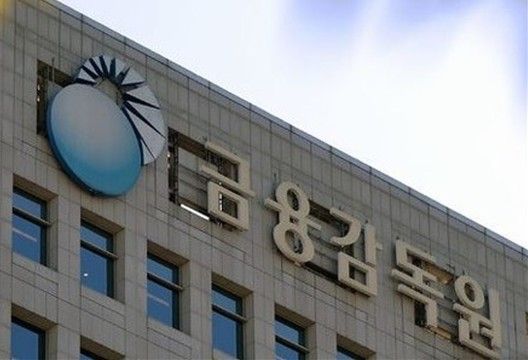
On the 30th, the Financial Supervisory Service analyzed the audit reports for the last fiscal year of 2,537 domestic listed corporations, finding that the rate of standard audit opinions was 97.5%. The subjects included 793 companies listed on the KOSPI, 1,624 on the KOSDAQ, and 120 on KONEX.
The rate of standard audit opinions has remained in the 97% range annually since the implementation of the new External Audit Act (fiscal year 2019). The rate of standard opinions was proportional to company size. Listed companies with less than 100 billion KRW in capital had the lowest rate of standard opinions at 96.1%. Smaller companies tend to have weaker financial structures and insufficient internal control levels.
Even among companies receiving standard audit opinions, 98 listed companies (3.9%) explicitly stated that there were 'significant uncertainties related to going concern.' This suggests a high investment risk regardless of the audit opinion.
A Financial Supervisory Service official pointed out, "Among listed companies that received a 'standard opinion' in 2022 but had 'going concern uncertainties' noted (85 companies), 25.9% received a 'non-standard opinion' in 2023. This is significantly higher than the 1.8% for companies without such notes."
The number of companies receiving non-standard opinions also slightly increased to 65 (2.5%) compared to 53 (2.1%) in the previous year. Although the number had been decreasing since peaking in 2020, it has risen again. Among the companies with non-standard opinions, 21 received 'non-standard' opinions for two consecutive years, including 2022. The number of 'disclaimer of opinion' cases also increased by 11 to 57 compared to the previous year, and 'qualified opinions' rose by one to 8.
Reasons for receiving non-standard opinions last year included 'going concern uncertainty' (21.6%), 'subsidiary relationships' (14.4%), 'basic financial statements' (10.5%), and 'related party transactions' (7.8%), among others.
Meanwhile, among listed companies undergoing internal accounting audits, 43 out of 1,587 analyzed companies (2.7%) received 'non-standard' opinions, slightly up from 38 (2.5%) in the previous year. The number of 'adverse opinions (significant weaknesses)' was 17, down by 3 from the previous year, while 'disclaimer of opinion (scope limitation)' increased by 8 to 26. Companies receiving 'standard' opinions numbered 1,544 out of 1,587 analyzed (97.3%), similar to 97.5% in the previous year.
The Financial Supervisory Service stated, "We will provide guidance to operate the internal accounting management system evaluation and reporting more effectively." Additionally, they added, "We will utilize reasons for non-standard financial statements and significant internal accounting weaknesses in selecting accounting review themes to prevent accounting errors and encourage appropriate accounting treatment."
© The Asia Business Daily(www.asiae.co.kr). All rights reserved.

















