Ministry of Industry Discusses 'Measures to Minimize Output Control and Resolve Grid Saturation'
Strengthening Management of Power Grid Reservation Operators
Securing Up to 9.3GW Reserve Capacity by 2027
To address the issue of grid saturation in certain regions such as Honam, Jeju, and the East Coast?where the speed of power grid construction is unable to keep up with the expansion of renewable energy?the government has decided to promote the early construction of key transmission lines.
On the 30th, the Ministry of Trade, Industry and Energy announced that Lee Ho-hyun, Director of the Energy Policy Office, presided over a Power Grid Innovation Task Force (TF) meeting to discuss "region-specific measures to resolve grid saturation minimizing output control."
An official from the Ministry of Trade, Industry and Energy explained, "With the continuous expansion of renewable energy expected to realize carbon neutrality and energy security, the government is significantly expanding investment plans for transmission and substation facilities. However, since the speed of power grid construction is lagging behind the pace of renewable energy deployment, there is concern that if additional power generation facilities enter certain areas where renewable energy is concentrated, output control may become a regular measure to stabilize the grid."
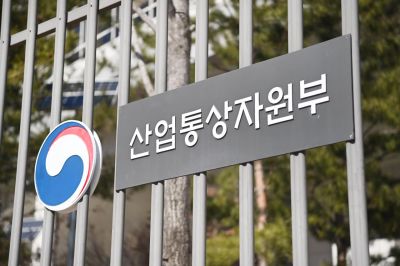
Accordingly, the Ministry will promote the early construction of key transmission lines to minimize output control caused by grid instability. Efforts will be focused on shortening the construction period of the Honam-Sudogwon flexible transmission line by one year. The ministry also plans to enact the "Special Act on Expansion of National Power Grid" and operate regional power grid consultative bodies to facilitate prompt permits and approvals from local governments.
Since the establishment and reinforcement of power grids require considerable time, priority will be given to measures that efficiently utilize the existing grid. Management of power grid hoarding operators?who reserve grid capacity but do not proceed with actual projects?will be strengthened. Additionally, the ministry will introduce grid stabilization facilities and a flexible connection system that allows conditional priority connection with output control. Through these efforts, up to 9.3GW of reserve capacity will be secured by 2027 and allocated to lower-priority and new project developers.
Korea Electric Power Corporation (KEPCO) plans to disclose "grid management substations minimizing output control (with output control rates of 3% or higher)" to encourage power generation project applications in regions where the grid has relatively more capacity.
Director Lee stated, "To ensure that grid saturation is resolved early, we will support the expansion and dissemination of renewable energy by promoting early power grid construction, additional facility reinforcement for grid stabilization, and the establishment of related systems. To this end, we have provided local governments with briefings (February 15) and held the Jeonnam-Gwangju power grid consultative meeting (March 18) to inform them of regional grid issues and request cooperation. Moving forward, we will implement tailored measures through the operation of regional power grid consultative bodies."
© The Asia Business Daily(www.asiae.co.kr). All rights reserved.
!["The Woman Who Threw Herself into the Water Clutching a Stolen Dior Bag"...A Grotesque Success Story That Shakes the Korean Psyche [Slate]](https://cwcontent.asiae.co.kr/asiaresize/183/2026021902243444107_1771435474.jpg)
















