As it marks the 100th day since residents left hospitals in protest against the government's increase in medical school quotas, it has been revealed that about 2,900 residents have applied for the livelihood support program sponsored by the Korean Medical Association (KMA). Additionally, approximately 390 residents have applied for a program where senior doctors lend 250,000 KRW per month to one resident at zero or low interest rates.
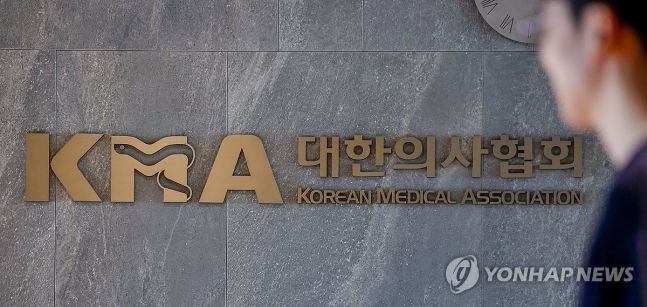
According to Yonhap News on the 29th, the KMA reported that about 2,900 residents had applied for the 'Livelihood Support Program,' which provides 1 million KRW per resident, as of 9 a.m. on the 27th. After verifying identities and reviewing applications, the KMA stated that by the 23rd, about 280 residents had received 1 million KRW each.
Earlier, the KMA began accepting applications for the livelihood support program from the 2nd through a 'Resident Support Dedicated Call Center' and other channels. This was to assist residents who are struggling to maintain their livelihoods because their resignation letters submitted to hospitals have not been accepted, preventing them from finding other jobs.
Im Hyun-taek, the newly inaugurated president of the KMA this month, reportedly donated his entire first salary to the livelihood support program. So far, 60 million KRW has been raised for this program.
Furthermore, the KMA is promoting a 'Matching Support Program with Senior Doctors,' which connects senior doctors and residents one-on-one to lend 250,000 KRW monthly at zero or below 2% interest rates. Applications for this program have been accepted since the 23rd. About 390 residents and 270 senior doctors have participated. The KMA plans to support residents through future matching.
On the same day, about 700 residents submitted entries to the 'Handwritten Essay Contest' conducted by the KMA to gather residents' opinions on improving health and medical policies. The KMA plans to award 500,000 KRW prizes to selected residents.
Meanwhile, residents collectively resigned and left hospitals on February 20 in protest against the government's increase in medical school quotas. Despite the quota increase being confirmed for the first time in 27 years, they have yet to return. According to the Ministry of Health and Welfare, as of the 23rd of this month, only 839 out of 10,501 residents at 211 training hospitals have reported to work (attendance rate of 8.0%), with the attendance rate at 100 major training hospitals, where most residents belong, even lower at 6.8%.
Residents who have left their affiliated hospitals are not allowed to work at other medical institutions, and some are reported to be barely making ends meet through tutoring, hospital administrative jobs, or delivery part-time work. A resident at a hospital in the Seoul metropolitan area told Yonhap News, "There are people who are struggling financially because their income has stopped," but added, "They are receiving some support here and there, so financial hardship does not seem to have a major impact on whether they return."
© The Asia Business Daily(www.asiae.co.kr). All rights reserved.

![Clutching a Stolen Dior Bag, Saying "I Hate Being Poor but Real"... The Grotesque Con of a "Human Knockoff" [Slate]](https://cwcontent.asiae.co.kr/asiaresize/183/2026021902243444107_1771435474.jpg)















