US Washington Post Column
"Han-Mi-Il Trilateral Progress Must Be Further Strengthened"
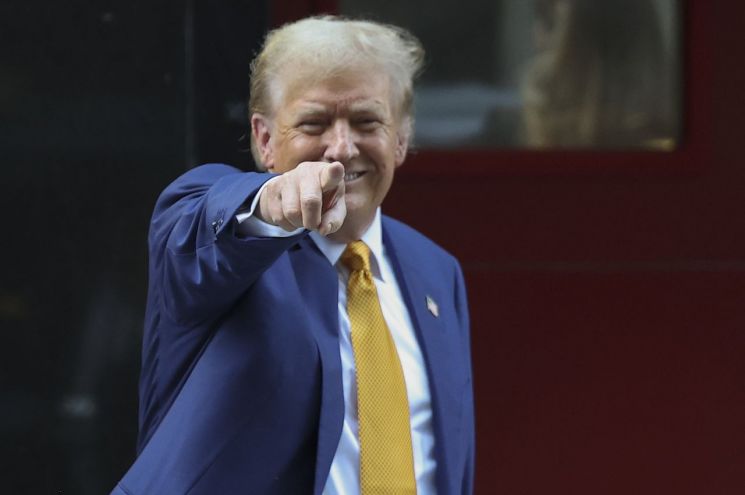
There is speculation that if former President Donald Trump, who is running in the upcoming U.S. presidential election this November, re-enters the White House, he could overturn the trilateral cooperation among South Korea, the U.S., and Japan, and negotiate with North Korean Supreme Leader Kim Jong-un on the condition of withdrawing U.S. troops from South Korea.
Max Boot, a columnist for the U.S. daily The Washington Post (WP), co-wrote a column on the 27th (local time) with Sumi Terra, a senior researcher at the Korea Foreign Relations Association (CFR), regarding the trilateral cooperation among South Korea, the U.S., and Japan. They stated, "This relationship has been formed very recently and could be threatened if the leadership of these countries changes."
They added, "Trump's return to the White House would cause serious disruptions to the overall U.S. alliances, including the South Korea-U.S.-Japan trilateral cooperation. Trump seems likely to overturn the trilateral cooperation simply because his adversaries initiated it, and he will not use diplomatic assets to preserve it." They continued, "Trump is obsessed with the defense cost-sharing for U.S. troops stationed in South Korea, and it seems he does not even notice that South Korea contributes 2.7% of its GDP to defense costs, which is more than NATO. He has previously halted joint South Korea-U.S. military exercises and is unlikely to bear the costs of joint South Korea-U.S.-Japan exercises," they criticized.
The column forecasted, "Trump could negotiate with Kim Jong-un even if it means making the decision to withdraw U.S. troops from South Korea. If Kim Jong-un launches another provocation, Trump might again use expressions like 'fire and fury' and take a completely different direction."
They cited U.S. Ambassador to Japan Rahm Emanuel, noting that more than 50 engagements among the three countries?South Korea, the U.S., and Japan?have taken place since the Camp David meeting, but emphasized, "There is still much to be done to solidify trilateral cooperation, including real-time information sharing, integration of missile defense systems, and expansion of defense industry cooperation."
They also mentioned the recent South Korea-China-Japan summit, diagnosing that China is also actively trying to create cracks in the South Korea-U.S.-Japan trilateral cooperation.
The column concluded, "Leaders Yoon, Biden, and Kishida have invested in this, but their successors may not, which could ruin important diplomatic achievements," and suggested, "The three leaders must act more urgently now to secure trilateral progress."
© The Asia Business Daily(www.asiae.co.kr). All rights reserved.

















