Differentiated Battery Procurement and Supply Plans by Region
Procurement Plans Vary for the Three Emerging Countries
Kia EV3 Equipped with Indonesian NCM Batteries
China Strengthens Collaboration with Local Companies like CATL
Hydrogen Fuel Cells Applied to Next-Generation UAM
Hyundai Motor Company and Kia have differentiated their battery procurement strategies by price and region. They have established different electric vehicle battery procurement strategies not only for the domestic and U.S. markets but also for emerging countries such as China, India, and Indonesia. This is because battery raw material prices are highly volatile and supply chain conditions, policies, and regulations vary significantly by country. Kim Chang-hwan, Executive Vice President in charge of Electrification Energy Solutions at Hyundai Motor Company and Kia, emphasized in an interview with Asia Economy that differentiated response strategies are necessary depending on the situations faced by countries like India and China.
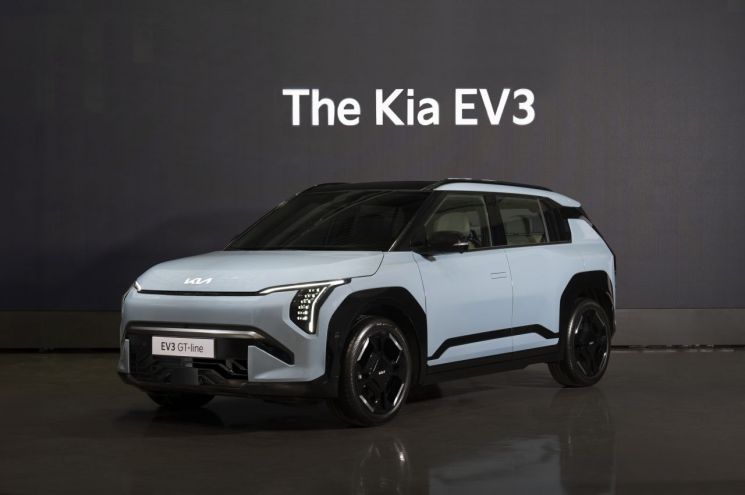
◆ Three-Color Strategy for Emerging Countries= Kia recently equipped its small electric sports utility vehicle (SUV), the EV3, with NCM (Nickel-Cobalt-Manganese) batteries made in Indonesia. These batteries were produced at a joint venture factory established by Hyundai Motor Company and LG Energy Solution in Indonesia. Kia was able to reduce the production cost of electric vehicles by procuring batteries produced in Indonesia, where raw materials like nickel are abundant and labor costs are low, for domestic use.
In India, production was entrusted to local battery companies to secure price competitiveness. Last month, Hyundai Motor Company and Kia announced that their India-exclusive electric vehicle model would be equipped with LFP (Lithium Iron Phosphate) batteries produced by Exide Energy, a specialized Indian battery company. Executive Vice President Kim explained, "India's electric vehicle market is expected to grow rapidly, so an early entry to gain a first-mover advantage was necessary," adding, "The Indian government is also actively supporting domestic production to supply affordable batteries."
The situation in China is different. While price and technology are important, building a ‘brand image’ through active collaboration with Chinese companies is also essential. This is because Chinese consumers have increasingly shown a preference for domestic brands in the electric vehicle sector. Existing automakers are seeking opportunities through joint development and production with local Chinese companies. Executive Vice President Kim emphasized, "To develop products that meet the preferences and expectations of Chinese consumers, it is important to utilize local value chains and infrastructure."
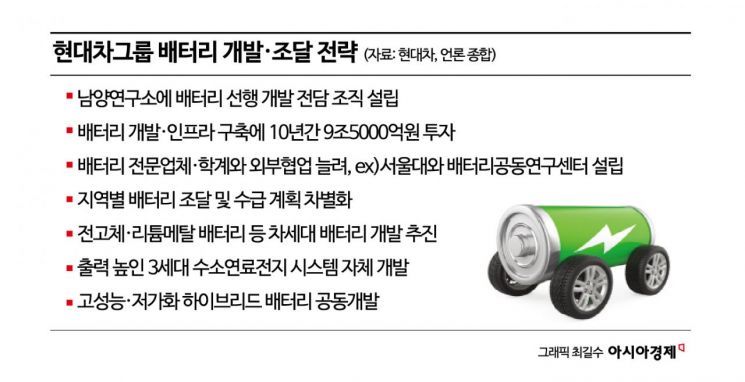
◆ Application to Hydrogen Fuel Cell UAM= Hyundai Motor Group is a company that develops a wide range of batteries, from lithium-ion and lithium-metal batteries to all-solid-state batteries and hydrogen fuel cells. Only Hyundai Motor Group and Toyota have such diverse battery development portfolios.
Hyundai Motor Group sees high potential in hydrogen fuel cells for the urban air mobility (UAM) market. Initially, lithium-ion batteries, which have been sufficiently verified for durability and safety, will be mainly installed, but as the market matures, hydrogen fuel cells, which are lighter and have longer range, could become an alternative. According to industry sources, Hyundai is also considering equipping UAM with a hydrogen-electric hybrid battery system that uses both electric batteries and hydrogen fuel cells.
Executive Vice President Kim said, "From the next-generation aircraft in the market maturity phase, range will be a key differentiating technology, and hydrogen is the energy solution that makes this possible." He added, "Of course, the hydrogen fuel cells must be lighter than they are now."
© The Asia Business Daily(www.asiae.co.kr). All rights reserved.
![Clutching a Stolen Dior Bag, Saying "I Hate Being Poor but Real"... The Grotesque Con of a "Human Knockoff" [Slate]](https://cwcontent.asiae.co.kr/asiaresize/183/2026021902243444107_1771435474.jpg)

















