Over 10 Million Expected to Travel to Japan This Year
Top Rankings in Animation Box Office
Office worker Mr. Lee (34) is planning another trip after visiting Japan last month. It is cheaper than domestic travel, and he likes the unique sensibility of Japan. Mr. Lee said, "I never understood the past boycott movement" and "I have no strong aversion to Japan. I also enjoy watching anime."
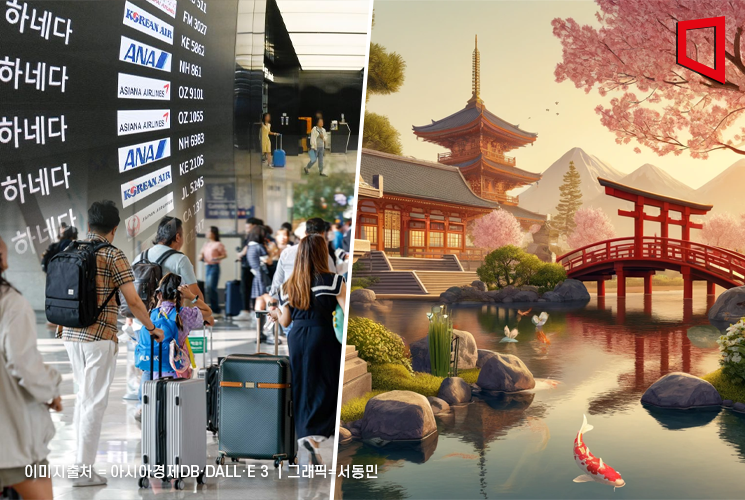
Recently, among the MZ generation (Millennials + Generation Z), Japan's atmosphere, culture, and food as soft power have been positively received, increasing favorability. In fact, with the ongoing yen depreciation (the phenomenon of the yen's value decreasing), the number of travelers to Japan is rising, and Japanese animated films are ranking high at the box office. Most people perceive the consumption of Japanese culture and content as a matter of personal choice and preference.
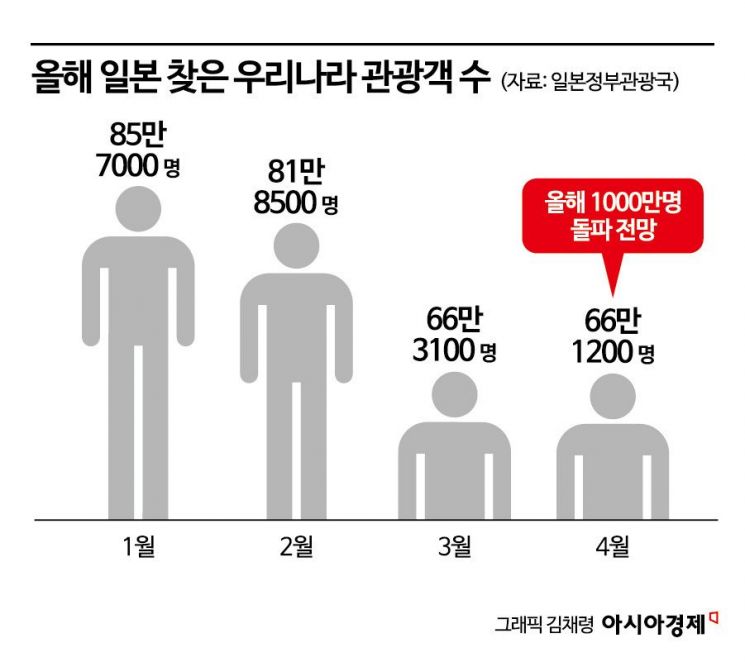
According to the Japan National Tourism Organization (JNTO) on the 27th, the number of foreign tourists visiting Japan from January to April this year was 11,600,600, of which 2,999,800 were from South Korea. By month, the numbers were 857,000 in January, 818,500 in February, 663,100 in March, and 661,200 in April, maintaining the top rank by country. If this trend continues, the number of travelers to Japan this year is expected to exceed 10 million.
Japanese animation is popular in movie theaters. Looking at the monthly box office rankings from the Korean Film Council, in February this year, "Demon Slayer: The Miracle of the Connection and Joint Strengthening Training" ranked 5th with a cumulative audience of 497,320. "Haikyuu!! The Movie: The Decisive Battle at the Trash Heap," released on the 15th of this month, ranked 4th and attracted 425,378 viewers as of the 23rd.
Hostility toward Japan is decreasing and favorability is increasing, especially among people in their 20s and 30s. According to a survey conducted by Embrain Trend Monitor from the 17th to 19th of last month targeting 1,000 adults aged 19 to 59 nationwide, the percentage of people who said "I cannot forget the cultural and historical damage caused by Japan" dropped sharply from 80.3% in 2020 to 67.2% in 2024, and those who said "I get angry when I think of Japan" fell from 55.0% to 30.2%.
In particular, the response "I usually like Japan's sensibility" was recorded at 55.6% for people in their 20s, 50.8% for those in their 30s, 30.0% for those in their 40s, and 24.4% for those in their 50s. The reasons for favoring Japan were "cultural content is interesting (46.5%, multiple responses allowed)," "unique atmosphere is good (40.8%)," and "I like Japanese food (36.5%)," in that order.
Professor Eunhee Lee of Inha University's Department of Consumer Studies said, "People in their 20s and 30s use social networking services (SNS) a lot and consume many characters and content. That emotional aspect fits well with Japanese culture," adding, "The lower favorability toward Japan among people in their 40s and 50s seems to reflect political tendencies."
© The Asia Business Daily(www.asiae.co.kr). All rights reserved.
![Clutching a Stolen Dior Bag, Saying "I Hate Being Poor but Real"... The Grotesque Con of a "Human Knockoff" [Slate]](https://cwcontent.asiae.co.kr/asiaresize/183/2026021902243444107_1771435474.jpg)

















