Resolution of the May Monetary Policy Direction Meeting
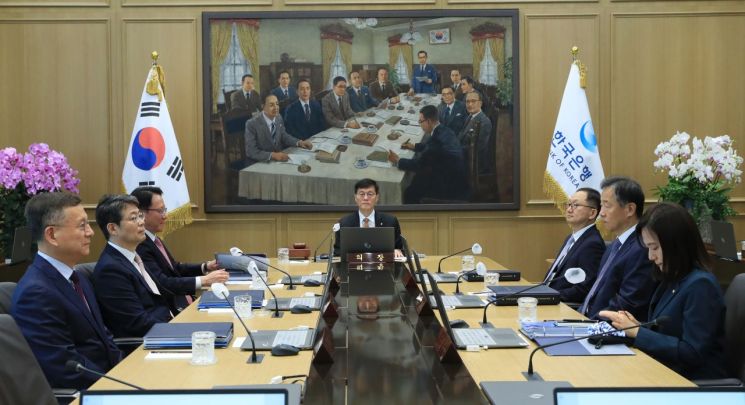
The Monetary Policy Committee of the Bank of Korea announced on the 23rd that it has kept the base interest rate steady at 3.5% for the 11th consecutive time, stating, "Although the inflation rate continues to slow down, upward risks to inflation have increased due to improved growth momentum, expanded exchange rate volatility, and ongoing geopolitical risks," and added, "We will maintain a sufficiently tight monetary policy stance until we are confident that inflation will converge to the target level."
In the resolution of the monetary policy direction meeting held that morning, the Monetary Policy Committee stated, "Domestic inflation is expected to face upward pressure due to improved growth momentum, but the impact is likely to be limited due to a moderate recovery in consumption."
The committee also said, "The consumer price inflation and core inflation rates for this year are expected to be 2.6% and 2.2%, respectively, in line with the February forecast," adding, "There remains high uncertainty regarding future inflation paths due to factors such as international oil prices, exchange rate movements, agricultural product price trends, and the ripple effects of growth improvements."
The domestic economy is expected to continue its export growth trend, with consumption adjusting in the second quarter and then gradually recovering in the second half of the year. The committee projected, "This year's growth rate is forecast at 2.5%, significantly exceeding the February forecast of 2.1%," and explained, "Future growth trajectories will be influenced by the pace of IT sector expansion, consumption recovery trends, and monetary policies of major countries."
The Bank of Korea mentioned that from November last year through January and February this year, it maintained a "sufficiently long" monetary tightening stance. However, from April this year, it stated it would maintain the tightening stance "sufficiently" without the term "long."
The Monetary Policy Committee said, "We will closely monitor the inflation slowdown and growth improvement trends, financial stability risks, household debt increases, differentiation in major countries' monetary policy operations, and developments in geopolitical risks," adding, "We will operate monetary policy with attention to financial stability while ensuring that inflation stabilizes at the target level over the medium term."
Below is the full text of the monetary policy direction resolution
The Monetary Policy Committee decided to maintain the Bank of Korea’s base interest rate at the current level (3.50%) until the next monetary policy direction decision, operating monetary policy accordingly. Although the inflation rate continues to slow, upward risks to inflation have increased due to improved growth momentum and expanded exchange rate volatility, and geopolitical risks persist. Therefore, it was deemed appropriate to maintain the current tightening stance while reviewing domestic and external policy conditions.
The global economy continues to grow moderately, and inflation is trending downward, but the economic conditions and pace of inflation slowdown vary among major countries. In international financial markets, expectations regarding the timing and extent of the U.S. Federal Reserve’s rate cuts caused major countries’ government bond yields and the U.S. dollar index to rise significantly before falling back. Going forward, the global economy and international financial markets are expected to be influenced by the inflation slowdown trends and differentiated monetary policy operations of major countries, as well as developments in geopolitical risks.
The domestic economy saw continued export strength in the first quarter, with easing weakness in consumption and construction investment, leading to growth significantly exceeding expectations. Employment remains generally favorable, with steady increases in the number of employed persons. Looking ahead, the domestic economy is expected to maintain export growth, with consumption adjusting in the second quarter and then gradually recovering in the second half. Accordingly, this year’s growth rate is forecast at 2.5%, significantly exceeding the February forecast of 2.1%. Future growth paths will be influenced by the pace of IT sector expansion, consumption recovery trends, and monetary policies of major countries.
Domestic inflation in April saw the consumer price inflation rate fall to 2.9% due to a slowdown in price increases for personal services and agricultural, livestock, and fishery products, while the core inflation rate (excluding food and energy) slowed to 2.3%. Short-term inflation expectations rose to 3.2% in May. Going forward, domestic inflation is expected to face upward pressure due to improved growth momentum, but the impact is likely to be limited due to a moderate recovery in consumption. Accordingly, consumer price inflation and core inflation for this year are expected to be 2.6% and 2.2%, respectively, in line with the February forecast. There remains high uncertainty regarding future inflation paths due to factors such as international oil prices, exchange rate movements, agricultural product price trends, and the ripple effects of growth improvements.
In financial and foreign exchange markets, long-term government bond yields rose and then fell in response to changing expectations about domestic and foreign monetary policies. The won/dollar exchange rate fluctuated significantly at a high level, influenced by movements in the U.S. dollar, yen, and other neighboring currencies, as well as geopolitical risks. Household loans increased, mainly in housing-related loans. Housing prices generally continued to decline, and risks related to real estate project financing (PF) remain latent.
The Monetary Policy Committee will continue to monitor growth trends and operate monetary policy with attention to financial stability, ensuring that inflation stabilizes at the target level over the medium term. Although the domestic economy’s growth has improved more than expected and the inflation rate is expected to continue slowing, upward risks to inflation forecasts have increased, making it premature to be confident that inflation will converge to the target level. Therefore, the committee will maintain a sufficiently tight monetary policy stance until such confidence is established. In this process, it will closely monitor the inflation slowdown and growth improvement trends, financial stability risks, household debt increases, differentiation in major countries’ monetary policy operations, and developments in geopolitical risks.
© The Asia Business Daily(www.asiae.co.kr). All rights reserved.
![User Who Sold Erroneously Deposited Bitcoins to Repay Debt and Fund Entertainment... What Did the Supreme Court Decide in 2021? [Legal Issue Check]](https://cwcontent.asiae.co.kr/asiaresize/183/2026020910431234020_1770601391.png)















