North Korea Abolishes United Front Department, Reorganizes into 'Party Central Committee's 10 Bureaus'
Experts Say "Possibility of Strengthened Covert and Offensive Functions"
Kim Jong Un's Justification to Replace 'Unification' Needs Further Observation
After North Korea designated the South as an 'enemy state,' it is understood to have abolished the United Front Department, which had been overseeing its policy toward the South. Since Chairman Kim Jong-un reset inter-Korean relations to a hostile stance, there are expectations that operations targeting the South will be intensified to a level comparable to wartime.
According to the Ministry of Unification on the 21st, North Korean authorities have abolished the United Front Department and reorganized its functions into the '10th Bureau of the Central Committee of the Workers' Party.' Minister of Unification Kim Young-ho confirmed this fact at a press briefing the day before, stating, "Functions such as psychological warfare against the South are being carried out without change." A senior government official added, "It is believed that North Korea made some changes to certain functions while reorganizing the United Front Department."
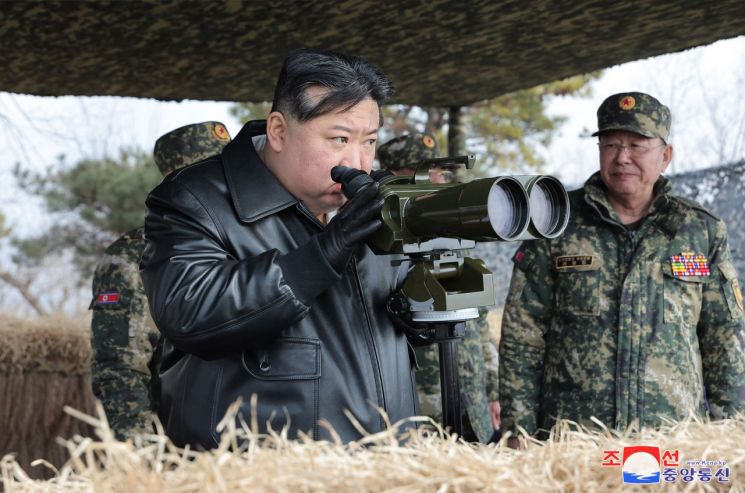
The United Front Department was a specialized department of the Workers' Party dedicated to affairs related to the South. It rose to prominence as an organization overseeing inter-Korean policy and talks through high-level inter-Korean meetings in the 1990s. Later, the Committee for the Peaceful Reunification of the Fatherland (CPRF), which was under it, was elevated to a state agency under the State Affairs Commission in 2016, transferring dialogue and exchange functions to the CPRF. The United Front Department is known to have focused on intelligence gathering and covert operations targeting the South.
North Korea began streamlining its organizations related to the South this year. At the 9th plenary meeting of the 8th Central Committee of the Workers' Party held at the end of last year, Chairman Kim Jong-un ordered a fundamental shift in policy toward the South, saying, "It is not befitting our national dignity and status to discuss reunification issues with strange creatures who are nothing but colonial lackeys of the United States, just because of the rhetorical expression that we are one people." It was at this time that inter-Korean relations were newly defined as relations between two hostile states. On the 17th, state media also began replacing the term 'inter-Korean relations' with 'Joseon-Korea relations.'
After North Korea defined the South not as a special 'one people' but as an 'enemy state,' some speculated that the Ministry of Foreign Affairs would absorb the functions of the United Front Department. However, there were counterarguments that it would be difficult for the Ministry of Foreign Affairs, a cabinet agency, to absorb the Workers' Party organ United Front Department in terms of status, personnel, and expertise. Ultimately, the organization was downgraded from a 'department' to a 'bureau,' but its functions appear to have been preserved within the Workers' Party structure.
"Offensive comparable to wartime"... Will pro-North forces' activities change?
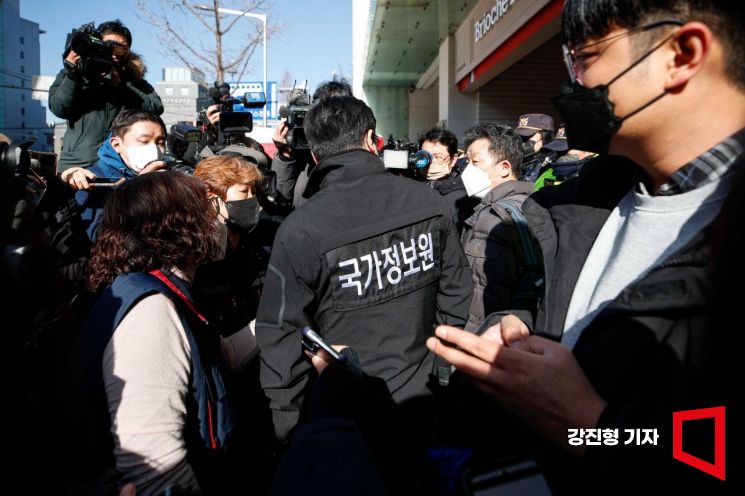 On the 18th, when the National Intelligence Service conducted a search and seizure of the headquarters office of the Korean Confederation of Trade Unions (KCTU), an NIS employee was moving in front of the KCTU headquarters in Jung-gu, Seoul. Photo by Jinhyung Kang aymsdream@
Regarding this organizational restructuring, there are expectations that it will lead to strengthening offensives and covert operations in line with North Korea's shift in policy toward the South, going beyond merely removing the name 'unification.' Apart from streamlining organizations related to the South and the enemy, since Chairman Kim Jong-un has ordered strengthening the capabilities of the relevant sector, it is anticipated that attempts at terrorism against the South and new struggle activities by pro-North forces will be encouraged.
Cho Han-bum, Senior Research Fellow at the Korea Institute for National Unification, said, "Since North Korea has abandoned the 'united front' tactic and defined inter-Korean relations as a wartime relationship, the mission of the United Front Department must have been transformed into a wartime form," expressing concern, "We now need to seriously worry about a 'North Korean version of jihad.'"
When asked whether there might be operational conflicts since the military's Reconnaissance General Bureau handles covert operations, he predicted, "If the Reconnaissance General Bureau takes charge of military (covert) functions, the 10th Bureau will divide roles by managing various South-targeted lines previously handled by the United Front Department, as well as pro-North forces within our society and overseas pro-North forces." This suggests that changes in the United Front Department could lead to changes in the activities of spies and pro-North forces.
North Korea has yet to find justification to replace 'national reunification'
However, there is also a view that these changes should be cautiously observed for now. Just as South Korea's constitution defines North Korea as an anti-state organization, North Korea has not recognized the South as a state until now. The justification of 'national reunification' has been important for the existence of the party and leadership. Although the relationship was redefined as an 'enemy state,' it is pointed out that it will not be easy for North Korea to find a justification to replace the goal of 'unification.'
Professor Park Won-gon of Ewha Womans University’s Department of North Korean Studies focused on the lack of internal changes following the shift in the 'policy toward the South.' He said, "If such a major shift had occurred, there should have been follow-up processes such as publishing editorials in Rodong Sinmun to inform internally about the reasons for the change and to educate the residents, but such follow-up processes are not visible. North Korea has valued the concept of 'national reunification' most importantly, and it seems difficult to find a new vision to replace it. We need to observe the changes a bit longer."
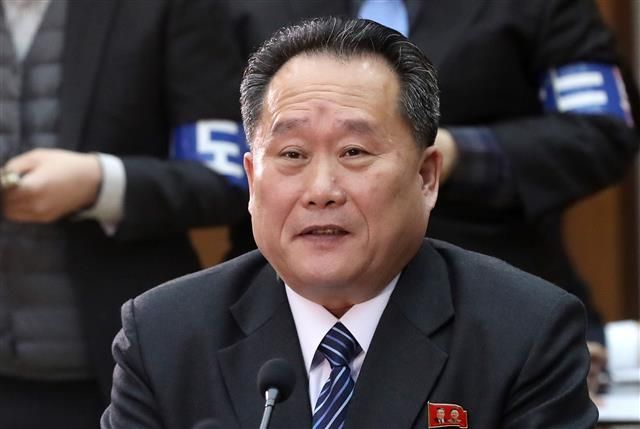
A Ministry of Unification official said, "Advisors Kim Yong-chol and Ri Son-gwon were listed as members of the state funeral committee for the recently deceased former propaganda and agitation secretary Kim Ki-nam," adding, "Since key figures of the United Front Department are still active, it is presumed that there is not much change in the status of the 10th Bureau within the party after the reorganization of the United Front Department." He further added, "It is presumed that the content of the work targeting the South has been reorganized to focus on psychological warfare."
© The Asia Business Daily(www.asiae.co.kr). All rights reserved.



















