The Largest Museum in the US South Highlights Joseon Life and Culture
Showcasing Items from Lee Geon-hee's Donated Jar to Buddhist Statues and Furniture
A 56.5cm tall white porcelain jar decorated with a blue dragon and a Tae jar used to store and record the placenta when a descendant of the Joseon royal family was born will meet American visitors.
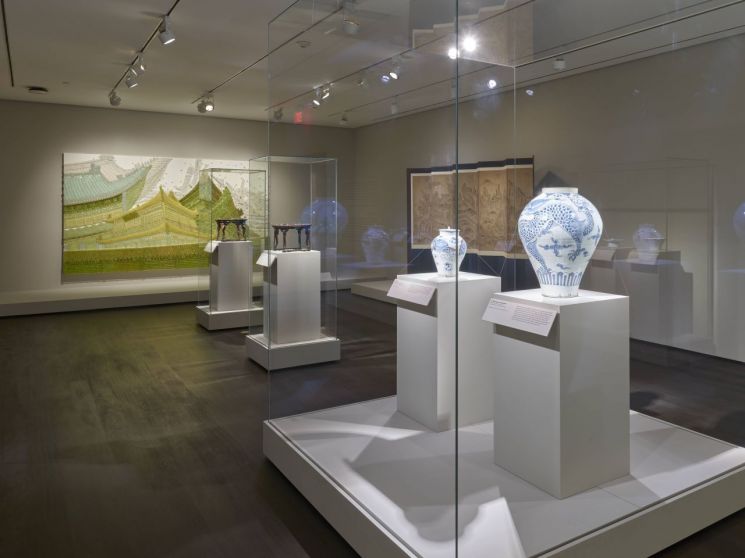
The National Museum of Korea announced on the 20th that the Korean Gallery at the Museum of Fine Arts, Houston, the largest museum in the southern United States, has completed renovations with the theme of Joseon Dynasty art and reopened on the 16th.
The Museum of Fine Arts, Houston, Texas, holds about 70,000 pieces in its collection and is the largest museum in the southern United States. As of 2019, it recorded 1.25 million visitors. Since the Korean Gallery opened in 2007, the National Museum of Korea has loaned 72 sets and 82 pieces of its own collection for about 15 years until 2022.
The reopening of the Korean Gallery at the Houston Museum was promoted according to the Korean Gallery support agreement signed between the National Museum of Korea and the Houston Museum in December 2022. The previous Korean Gallery exhibition was a comprehensive historical exhibition covering Korean history and culture from prehistoric times to the Joseon Dynasty.
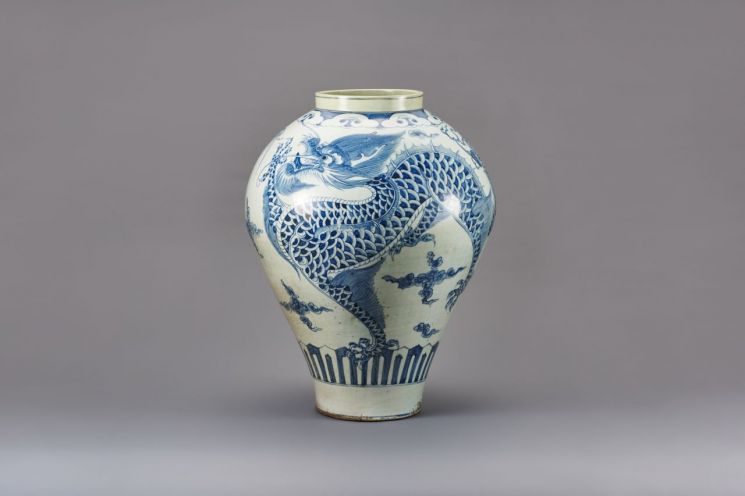 Jar with cloud and dragon patterns. Donated by the late Lee Kun-hee, former chairman of Samsung [Photo provided by the National Museum of Korea]
This time, the Korean Gallery has been reorganized into a thematic exhibition that deeply shows the life and culture of the Joseon Dynasty. The 29 sets and 31 pieces selected from the National Museum of Korea’s collection for this renovation are all white porcelain made at official kilns that produced royal ceramics.
In particular, the Joseon royal Tae jar, placenta plate, and ritual vessels attract attention as representative exhibits showing Confucian ideas about life and death in the Joseon period. The white porcelain ritual vessels, made of pure white porcelain without patterns, embody the Joseon Dynasty aesthetics that exclude unnecessary elements and emphasize function.
The blue-and-white porcelain jar donated by Lee Kun-hee, adorned with dragon patterns symbolizing the royal family, was highlighted as the centerpiece of the Korean Gallery. At the entrance of the exhibition hall, visitors are greeted by a moon jar by artist Lee Ki-jo in the Houston Museum’s collection and a Joseon Dynasty Buddhist statue from the National Museum of Korea’s collection.
Additionally, visitors encounter a modern artwork by artist Hwang Ran that reinterprets the Joseon palace, followed by a 'Tiger Leg-shaped Soban' set against the backdrop of the Joseon Dynasty folding screen painting 'Chilbosan-do' depicting Mount Geumgang. Various forms of inkstones and brush cases reflecting the tastes of 18th-century literati are also on display.
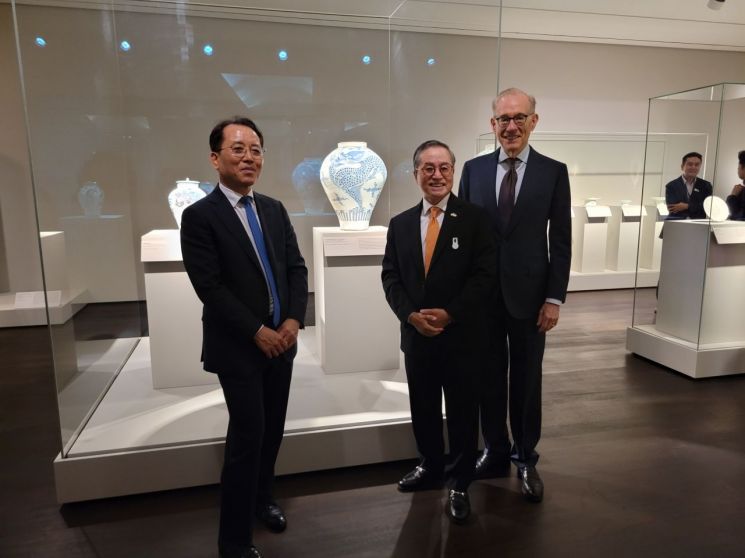 The reopening event held on the 16th
 From the left, Yoon Seong-yong, Director of the National Museum of Korea; Jung Young-ho, Consul General in Houston; Director of the Houston Museum
Photo by National Museum of Korea
The Korean Gallery also includes 11 treasured items donated by three donors to the National Museum of Korea. Five pieces including the 'Dragon-patterned Blue-and-white Porcelain Jar' donated by former Samsung Group Chairman Lee Kun-hee, three pieces including the 'Ritual Plate' donated by Dr. Park Byung-rae, the founding director of Seongmo Hospital, and three pieces including the 'White Porcelain Incense Container' donated by collector Lee Hong-geun, who donated over 10,000 items, are introduced to local visitors.
The main artifacts in the Houston Museum Korean Gallery are scheduled to be loaned for about two years until March 2026. The museum will promote Korean culture through various public programs such as public lectures on Korean history and culture and Korean film screening projects.
Yoon Sung-yong, director of the National Museum of Korea, said at the reopening ceremony of the Houston Museum Korean Gallery, "The Houston Museum, which has cooperated with our institution for a long time, is expected to greatly contribute to promoting Korean culture and enhancing its status by expanding its influence through various exchange projects that differentiate from the past."
© The Asia Business Daily(www.asiae.co.kr). All rights reserved.
![User Who Sold Erroneously Deposited Bitcoins to Repay Debt and Fund Entertainment... What Did the Supreme Court Decide in 2021? [Legal Issue Check]](https://cwcontent.asiae.co.kr/asiaresize/183/2026020910431234020_1770601391.png)

















